
A parent’s guide to sensory-friendly learning breaks: timing, movement, and re-entry
Learn how to plan sensory breaks for children, choose useful movement, and help your child return to learning without turning the break into another demand.
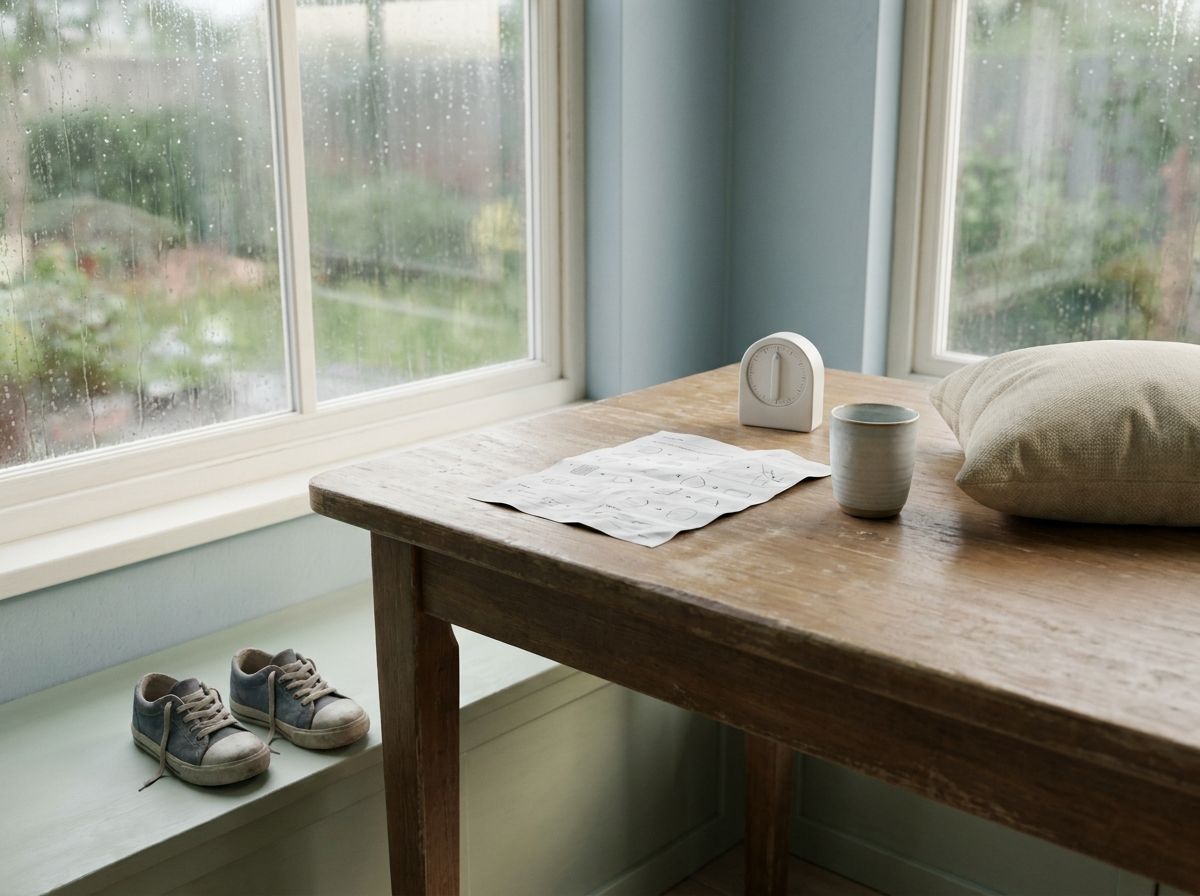
At 4:17 on a rainy Tuesday, Priya found Leo under the kitchen table with one sock off, both hands over his ears, and a maths worksheet folded into a tiny square. The pasta water was boiling. Her phone was buzzing. Nobody had the spare bandwidth for a grand educational strategy.
Sensory breaks for children work best when they happen before the nervous system reaches its limit. A useful break lowers demand, gives the body a safe way to move or settle, and includes a gentle path back to learning.
You do not need a perfect schedule or a cupboard full of therapy equipment. You need to notice patterns, offer a small menu of sensory regulation activities, and let re-entry happen in steps. Some days, the worksheet can wait. That is not failure. That is information.
Why learning breaks can change the whole afternoon
A child may look like they are refusing to learn when their body is actually saying, "This is too much." Bright lights, chair pressure, background noise, hunger, tiredness, a scratchy sleeve, a difficult instruction-these things pile up quietly. Then the pencil drops, the body gets wiggly, or the child disappears under the table.
This is where sensory-friendly learning helps. It treats comfort and attention as connected rather than separate. A child who needs to push, sway, hum, chew, stretch, or hide for a few minutes may be gathering just enough calm to think again.
A break is not a reward for finishing work. It is support for staying available to the work. You can offer one before the difficult task, between tasks, or at the first signs of overload. You can also stop the lesson altogether when your child's body is sending a very loud message.
What counts as a sign that a break is needed?
Look for a change from your child's usual pattern. The sign may be loud or barely visible. You know the small details better than any chart can.
Possible signs include:
- Faster movement, repeated sounds, or sudden silliness
- Pushing materials away or tearing paper
- Covering ears, hiding, squinting, or leaving the room
- A sharp drop in language or ability to follow a familiar step
- Slumping, staring, rubbing eyes, or becoming unusually quiet
- Asking the same question over and over
A break can also be planned before a predictable strain. If reading after school nearly always ends in tears, try a short body break before opening the book. If handwriting becomes hard after ten minutes, pause before the pencil grip turns into a wrestling match.
You are not trying to catch every signal perfectly. You are building a little curiosity: What happened just before this? What did the body seem to need? What helped, even a tiny bit?
How to time sensory breaks for children
There is no universal timer that works for every child. A five-minute break may be generous for one child and far too short for another. The useful question is not, "How long should a sensory break be?" It is, "What length helps my child return with less strain?"
Start with a small, predictable window. Two to five minutes is enough to test an idea. Set a gentle end signal, but do not treat the timer as a command that overrides distress. A timer is a bridge, not a tiny plastic boss.
You can try breaks at three points:
- Before learning, when your child arrives tired, hungry, or full of school-day energy
- During learning, when attention or body comfort starts to wobble
- After a hard task, when your child needs to release effort before facing another demand
Watch what happens after the break. If your child returns more settled, the timing may be useful. If they become more frantic when the break ends, the break may need a slower finish, a different activity, or more time.
Some children do better with frequent short pauses. Others become frustrated when the flow stops. A child who loves drawing may prefer one longer creative pause, while a child who is already restless may need quick movement before each small task.
A simple note can help you spot the pattern. Write down the activity, the body signs, the break, and what happened next. You only need a few words. "Spelling, humming and chair tipping, wall pushes, returned for two words" tells you more than a colour-coded spreadsheet you abandon by Thursday. (I have abandoned many such spreadsheets. No judgment here.)
Should you schedule a break or wait for signs?
Try both. Scheduled breaks reduce surprise, while responsive breaks meet the child in the moment. Many families use a planned pause before a known hard activity and a flexible pause when early signs of overload appear.
You can say, "We are taking a body break before reading," or "I see your hands covering your ears. Let's pause." Keep your voice low and your words short. A child who is overloaded may not be able to process a long explanation, even if you prepared it in a colour-coded document at midnight.
The goal is not to make every break look calm. A child may still stomp, flap, bounce, or talk loudly. Regulation does not always look quiet from the outside.
Movement breaks for neurodivergent kids
Movement can help a child shift from stuck to ready, but movement is not one single thing. Fast movement may wake up a tired body. Slow, firm pressure may help an overloaded body feel more organised. The same activity can help on Monday and feel like way too much on Wednesday.
Offer movement that matches what you see. If your child is sluggish, try a short active task. If your child is rushing, crashing, or unable to stop, choose slower movement with clear edges.
Ideas to test include:
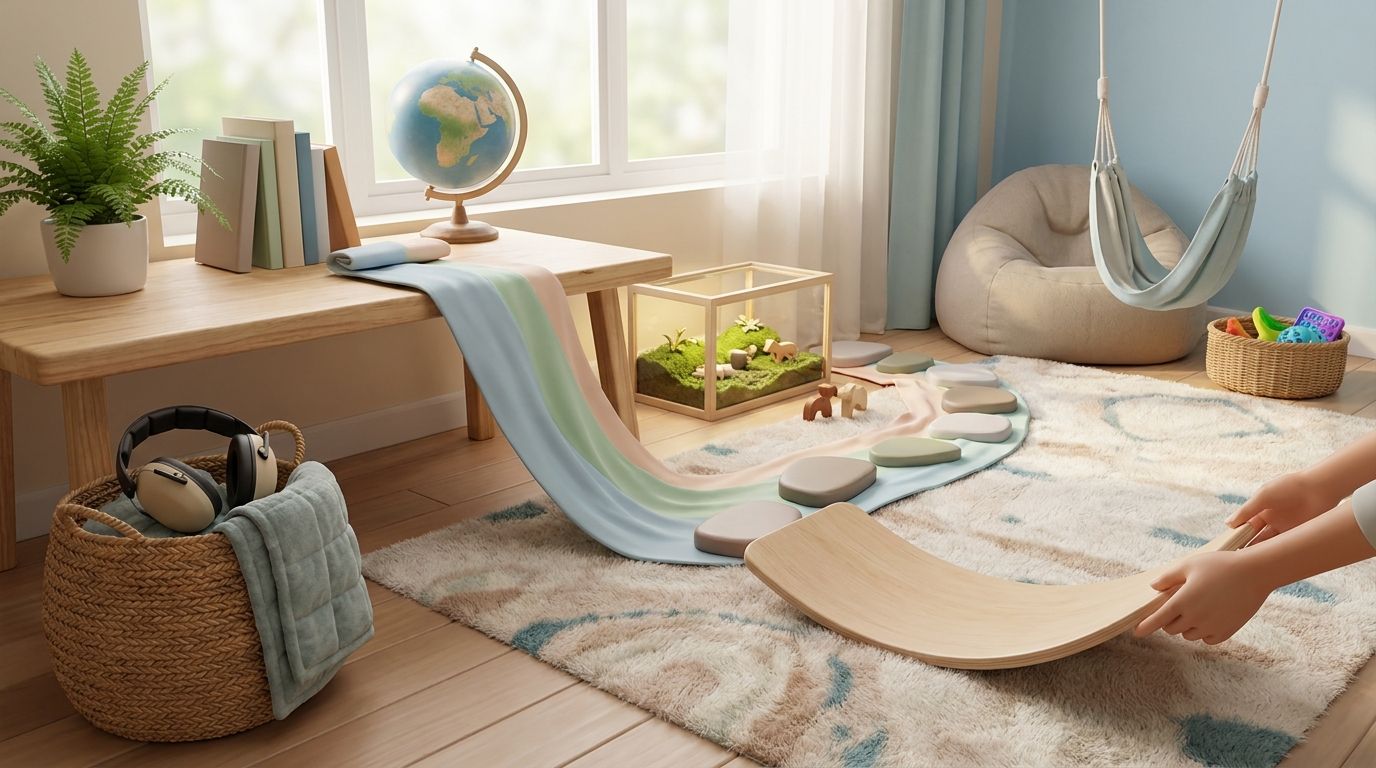
- Pushing hands against a wall for ten slow counts
- Carrying books from one room to another
- Animal walks across a hallway, if that feels fun rather than demanding
- Jumping five times, then pausing with both feet on the floor
- Stretching under a blanket or curling up with a cushion
- Walking to the mailbox and back while noticing three sounds
- Rolling a ball toward a target and retrieving it
You can make the break feel less like an interruption by connecting it to the next task. After wall pushes, your child might choose between reading on the sofa or at the table. After a walk, you might begin with one question answered aloud instead of a full page written down.
Safety matters. Avoid pushing, swinging, spinning, or deep pressure if your child dislikes it, becomes dizzy, or has a medical reason to avoid it. You do not need to guess your way through discomfort. An occupational therapist can help you understand sensory needs and choose safer options when home experiments keep going badly.
How do you choose a sensory regulation activity?
Start with the body signal, not a trendy list. Ask what seems too high or too low: sound, movement, touch, light, effort, or the number of instructions. Then offer one small choice.
You might say:
- "Do you want wall pushes or a slow walk?"
- "Would headphones help, or should we move to the quiet room?"
- "Do you want to stretch on the rug or carry the laundry basket?"
If your child cannot choose, make a calm guess and keep the demand tiny. "I am turning the light down. We are sitting here for two minutes." This is support, not surrender.
With Ziggyloo's adaptive learning system, a parent can use the child's visible learning patterns and parent-visible chat transcripts to notice when a lesson may need a pause. The app is not a replacement for knowing your child. It can simply give you one more place to notice what helps.
How to return to learning after a break
Returning is often harder than taking the break. The body may feel better while the original task still looks enormous. If you say, "Back to work," and point at the whole worksheet, you may accidentally drop the full weight of the problem back onto the table.
Re-entry works better when it is gradual. Use a short bridge between the break and the lesson. Offer water, name what comes next, reduce the first step. Your child does not need to leap from bouncing to long division like a tiny academic superhero.
Try this re-entry sequence:
- Mark the break as finished without scolding or rushing
- Show one small next step, such as circling one answer
- Offer a choice about where or how to begin
- Stay nearby while your child starts
- Pause again if the early signs return
You can use a simple script: "Your body had a break. Now we will do one part together. You can start with the top question or the picture question." Keep the first return task familiar when possible. Familiar work gives the brain somewhere steady to land.
A visual cue may help. Use a card that says "break," "one step," or "finished," but only if your child finds visual reminders useful. Some children feel safer when they can see the sequence. Others feel more pressured when another card appears. The tool has to serve the child, not the other way around.
What if my child refuses to return?
Treat refusal as information before treating it as behaviour to defeat. The break may have been too short, the next task may still be too hard, or the child may need food, sleep, connection, or a complete stop.
Try lowering the demand again:
- Replace writing with pointing, choosing, or answering aloud
- Do one problem instead of the whole page
- Read together instead of asking for independent reading
- Move the lesson to a softer or quieter place
- End the task and record what made re-entry difficult
You can also repair the moment without turning it into a lecture. "That was too much to come back to. We are going to make the next step smaller." Your child learns that needing support does not remove their dignity.
If breaks consistently lead to distress, note the setting, time, task, sensory load, and recovery. Share those observations with your child's teacher or care team. A pattern can point to a needed change in workload, seating, lighting, communication, or expectations.
Building a break routine that survives real life
The best routine is the one you can use when the baby is crying, dinner is late, and you have just stepped on a building brick. Keep the plan visible and small. Two movement options, one quiet option, one re-entry phrase. That is genuinely enough.
A home break menu could include:
- Move: wall pushes or a short hallway walk
- Settle: blanket, headphones, or dimmer light
- Connect: a drink of water and two minutes beside you
- Return: one familiar question before anything harder
Ask your child for feedback when they are calm. "Which break helps your body?" is easier to answer than "Why did you melt down?" You can notice preferences without demanding a perfect explanation.
Try the routine for a week, then adjust it. Keep what helps. Drop what becomes another battle. Sensory-friendly learning is not about making your home look like a therapy room. It is about making enough room for your child's nervous system to participate.
And please make room for your own reset, too. A parent who has been repeating "shoes on" for twelve minutes may need three slow breaths before offering the next choice. You are part of the learning environment. Your steadiness does not need to be flawless to matter.
FAQ
How often should my child take sensory breaks?
There is no set number that fits every child. Begin with planned breaks around predictable hard moments, then add responsive breaks when early signs of overload appear. Adjust the timing based on whether your child returns with more comfort and access to learning.
What are good movement breaks for neurodivergent kids?
Useful movement breaks include wall pushes, carrying safe objects, walking, stretching, jumping briefly, and rolling a ball. Match the movement to your child's state, since fast movement may energise one child and overwhelm another.
How do I help my child return to learning after a break?
Start with one small, familiar step and offer a choice about how to begin. Use a short phrase such as, "One part together," and reduce writing or instructions if needed. If distress returns, pause and reconsider whether the task should continue that day.
Are sensory breaks only for autistic children or children with ADHD?
No. Any child can need a pause when noise, effort, movement, tiredness, or frustration becomes too much. Neurodivergent children may show these needs more often or more clearly, but sensory support can help many children take part in learning.
The next time learning falls apart at the kitchen table, you do not have to rescue the entire afternoon. Notice the body signal. Offer one safe break. Make the return smaller than the task that went wrong.
And if the worksheet stays folded under the table, you can try again tomorrow. Leo's pasta still needed draining. Priya still had a phone buzzing on the counter. The family was not failing at learning. They were learning what support looked like that day.
Join the conversation
Subscribe to comment
Join the Ziggyloo family newsletter to leave a comment — and get gentle learning tips and community stories in your inbox. No spam, unsubscribe anytime.