
Character Spotlight: Brisa and the first feelings routine for when words are hard
When your neurodiverse child can’t find the word, the “first feelings” routine gives you a simple emotional bridge.
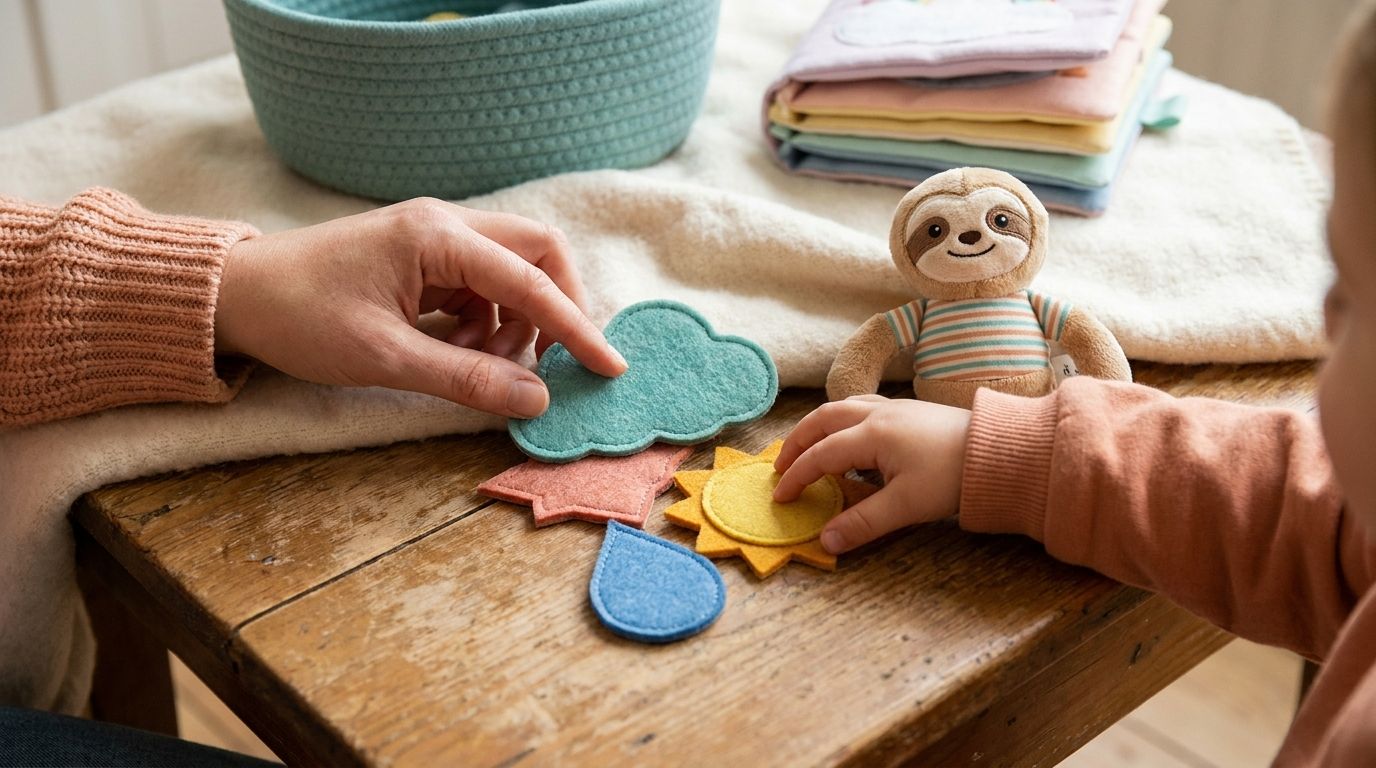
You're standing at the kitchen counter with a spoon in your hand and a question that feels harmless. "What's wrong, love?"
Your neurodiverse child looks at you like the answer is right there, but their mouth can't open the right door. The tears start anyway. The frustration follows. And you feel your own brain doing that panicky math: say the wrong thing, and you'll both go under.
Then Brisa shows up in your week, the way Ziggyloo characters do. Not as magic, but as a script you can actually use. You slow down, you name the "first feeling" you can see, and you let the words come in later.
With Ziggyloo's adaptive learning system, Brisa becomes a gentle communication support for the exact moment when feelings vocabulary is there in their body, but not in their mouth.
What "first feelings" means (and why it works)
In the middle of a hard moment, your child is doing two jobs at once: feeling something big and trying to translate it into words.
For a lot of neurodiverse kids, that translation is the bottleneck. It's not stubbornness. It's not "not trying." It's more like the feelings are showing up on the inside screen, and the talking part of the brain is lagging two steps behind.
The "first feelings" routine keeps you out of the guessing game. Instead of asking for the full story, you go for the first clear signal you can see.
Brisa is built for this. She is the evolved Gloom paired with Whispa, and her whole job is courage and openness. That matters because when kids feel unsafe in the trying, they shut down. When you make the first step small, they can actually step onto it.
Here's what the routine looks like in real life.
You choose one "first feeling" that matches what you see in their body. Not what you wish they could say. Not what happened five minutes ago. What is happening right now.
Then you offer two options, not a whole menu.
You might say:
- "Your face looks like it is feeling upset. Is it upset or is it mad?"
- "Your body looks tense. Is it worried or is it frustrated?"
- "You seem overwhelmed. Is it too much or is it scary?"
Notice the shape. You are not demanding a perfect word. You are giving a starting ramp.
When your child can't find the exact word yet, they can still point, nod, shrug, or pick between two. That counts. It is still emotional regulation work.
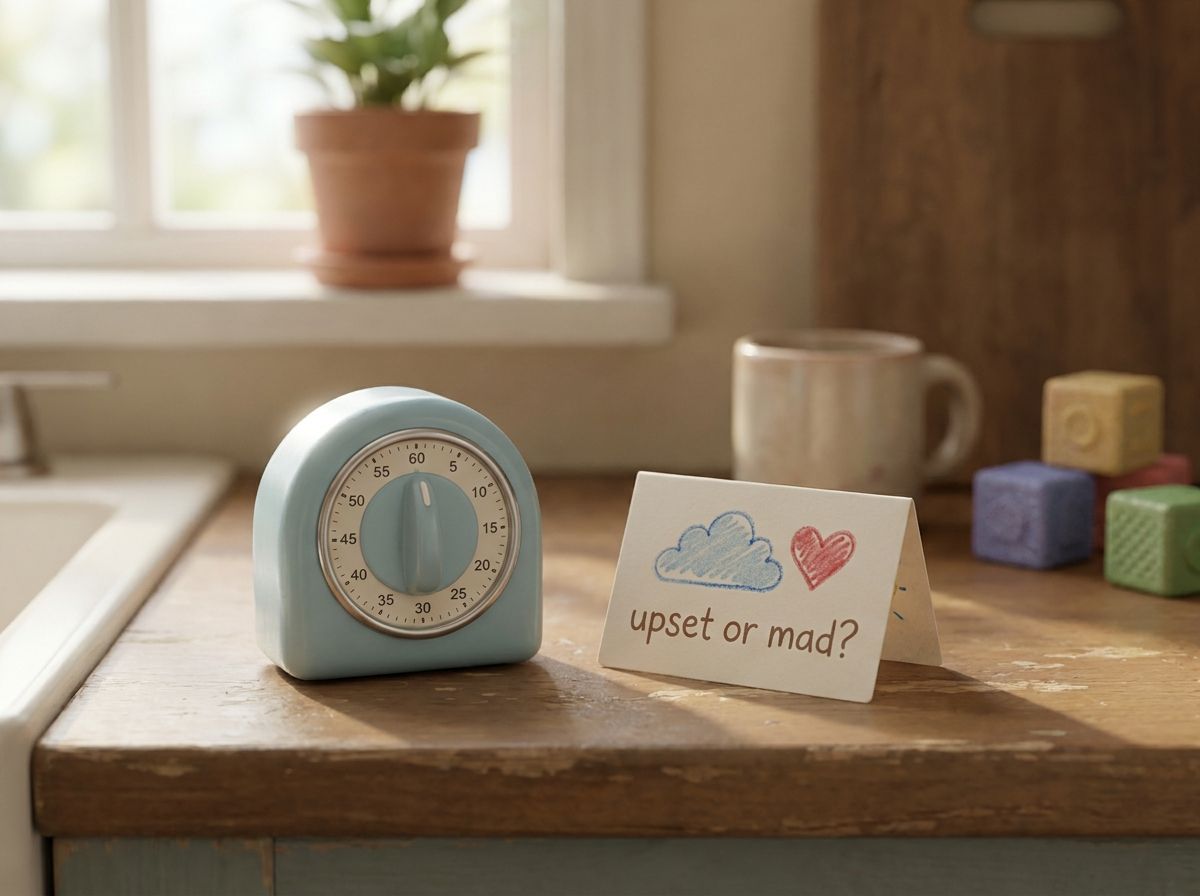
A timer and a tiny choice are a low-pressure way to turn a big moment into a first step. That is what the routine does: it gives your child a doorway, not a spotlight.
Brisa's "first feelings" routine you can use in 60 seconds
You do not need a whole plan that takes over your day. You need a repeatable script for the moments that usually derail you.
Here is a simple version you can run in under a minute.
Step 1: Notice the body signal
Look for one of these quick clues. You are not diagnosing. You are checking the temperature.
- Tight shoulders or clenched hands
- Fast voice or sudden silence
- Crying that seems "stuck" or anger that seems "too big"
- Pacing, rocking, tapping, or hiding
Pick one clue. Keep it simple.
Step 2: Name the first feeling you can see
Use plain words. Keep it close to what you observe.
You can borrow from what you already know about your child:
- "Your body looks upset."
- "You look worried."
- "You look frustrated."
- "You look angry."
If you are not sure, that is okay. You can say, "I can't tell yet, but I know you feel something big." Then you offer two options.
Step 3: Offer two feeling choices
This is the communication support part that reduces the language load.
Try:
- "Is it upset or is it mad?"
- "Is it worried or is it frustrated?"
- "Is it too much or is it scary?"
Two options helps kids who can't find the word yet. It gives them a way to respond without needing a full sentence.
Step 4: Validate the feeling, then pause
Validation is not agreeing with every action. Validation is saying, "I see you."
So you might say:
- "Yes. That feels upset."
- "Of course your body feels tense."
- "That makes sense. This is a lot."
Then you pause long enough for their nervous system to catch up. You are giving them time to land, not time to perform.
Step 5: Ask for the next step, not the full story
After the first feeling lands, you can ask a tiny follow-up.
Try:
- "Do you want a hug or space?"
- "Do you want water or a snack?"
- "Do you want to try again later or now?"
That shifts the focus from "explain yourself" to "what do you need." And that is emotional regulation.
You are basically taking the pressure off the feelings vocabulary, while still building it.
When your child can't name it: what to do instead of pushing
Let's be honest. When your child can't find the word, you might feel like you should try harder.
You ask again. You rephrase. You add examples. You start to sound like a very tired detective.
And then the moment gets worse.
So here is the permission you need: if they can't name it yet, you can still support emotional regulation without the perfect answer.
Brisa's routine does that in three ways.
1) It makes the first step small
Kids do not need a full feelings sentence to benefit. They need a starting ramp.
If they can say "upset" or point to "mad," you have something to work with. You can build from there later, when the storm calms down.
2) It uses choices instead of open questions
Open questions are hard when words are hard. "What's wrong?" can feel like a test, honestly.
Choices are kinder. They reduce the language search. You are still asking, just in a way their brain can actually access.
3) It separates feeling from behavior
This one matters for your heart.
Validation sounds like:
- "You feel upset."
- "Your body feels overwhelmed."
But it does not sound like:
- "So you can throw."
- "So you never have to try."
You can validate the feeling and still guide the behavior. The routine helps you do both without turning the whole moment into a debate.
Here's a realistic example.
Your child is melting down because a puzzle piece did not fit.
Instead of "Why are you like this?" you try:
- "Your hands look frustrated."
- "Is it frustration or is it upset?"
- "That makes sense. Want help finding the right piece, or do you want a break?"
You are translating their body into a feeling, then offering support. The meltdown often has less fuel when the child feels understood.
How to practice "first feelings" when things are calm
The routine works best when you practice it before you need it most.
Not in a lecture way. In a casual, almost throwaway way.
Think of it like building a bridge. Bridges are easier to cross when you've seen them in daylight.
So after a bath, after breakfast, or while you're waiting for the kettle to boil, you can do a mini version. Keep it light. Keep it short.
Try one of these:
- "When you heard the song, did you feel happy or excited?"
- "When the truck went by, was it loud or surprising?"
- "When we stopped playing, did you feel okay or upset?"
If your child is still learning feelings vocabulary, you can repeat the same two choices often. Repetition builds familiarity. Familiarity builds courage.
And yes, it can feel a little silly at first. You might worry you sound like you're playing feelings bingo. (I have worried this. It passes.)
But silly is better than silent. Your warmth counts.
With Brisa, the point is courage and openness. You are showing your child that feelings have names and that naming them is safe.
A tiny practice plan for busy days
If you like structure, use this.
- Pick one time a day you can predict (snack time is a common one).
- Choose two feelings you use often for your child.
- Offer the two choices once.
That's it. No worksheets. No big conversations.
A neurodiverse child often learns through repetition in real moments. You are doing the repetition.
Common roadblocks (and what to do when they show up)
Even with a good routine, you might hit snags.
That does not mean it failed. It means you are human and your child is human.
"They ignore me when I offer choices."
Try lowering the volume and slowing down.
You can also shorten the words:
- "Upset?"
- "Mad?"
- "Too much?"
Sometimes kids need less language, not more.
"They pick a feeling, but then nothing changes."
That can happen. Feelings naming is not a magic on/off switch.
But naming still helps, it creates a shared map. Over time, that map supports emotional regulation.
Also, your next step might need to change. If they picked "mad," maybe they need space, not a hug.
"I'm not sure which feeling it is."
Use a gentle guess.
You can say:
- "I think it is worried, but I might be wrong."
- "Is it worried or frustrated?"
You are allowed to be uncertain. Your child is learning that feelings can be explored, not nailed down perfectly.
"I say it, and they melt down harder."
Pause your script.
Try validating without the choice for a moment:
- "That feels hard."
- "I see your body is not okay."
Then wait. You are giving their nervous system a chance to come back online. After the storm, you can revisit the routine when they are calmer.

Brisa and Whispa are a reminder that courage can start small. When your child can't find the word yet, you can still offer a safe first step and let openness grow from there.
Why feelings vocabulary matters for communication support
You might wonder if you are "doing it right" if your child still uses vague words like "bad" or "no."
Here's the truth: feelings vocabulary grows through use, not through pressure.
When you use the routine, you are giving your child repeated exposure to feeling words in context. You are also modeling emotional regulation without turning it into a performance.
Over time, your child may:
- reach for a feeling word more quickly
- choose between two options with less effort
- explain the situation after the body calms down
Small progress counts. And you get a win too, you get to stop guessing and start supporting.
A simple "first feelings" checklist for you
When you feel stuck, run your eyes over this.
- Can I name the first feeling I see?
- Can I offer two options?
- Can I validate and pause?
- Can I ask for the next need (hug, space, water)?
That checklist is your compass during the chaos.
FAQ
What if my neurodiverse child can't choose between two feelings?
If they freeze, use one word only. Try "Upset?" or "Mad?" with a pause. You can also validate without a choice: "Your body looks overwhelmed." After they calm, you can try the two-option version again.
How do I help without turning it into a test?
Avoid open questions like "What's wrong?" during the storm. During hard moments, use naming and choices, then focus on needs. Save the full story questions for later, when their brain is quieter.
Should I correct them if they pick the "wrong" feeling?
Usually, no. You can accept their choice and still guide gently. Try "Okay, you feel mad. Want space or help?" If you later notice a pattern, you can reflect it when things are calm.
What if the routine doesn't stop the meltdown right away?
That is normal. Emotional regulation often takes time, and kids are still learning. The routine can reduce the intensity over time because it helps them feel understood and supported, even if the body needs longer to settle.
Closing: you are not behind
The kitchen counter moment is real. The spoon feels real. The helplessness feels real too.
But you are doing something powerful when you stop demanding the full word and start offering the first feeling. You are giving your neurodiverse child's emotional regulation a path to walk.
And you are giving yourself something too. A script that helps you stay kind when you feel stretched thin.
So tonight, when you notice even a tiny shift, try one small choice. "Upset or mad?" Then pause. Then breathe. Brisa would say you are building courage one doorway at a time.
Your next step is simple: pick one predictable time tomorrow to practice two feelings, and keep the same two options for a week. That repetition is how feelings vocabulary becomes easier to find.
Join the conversation
Subscribe to comment
Join the Ziggyloo family newsletter to leave a comment — and get gentle learning tips and community stories in your inbox. No spam, unsubscribe anytime.