
Biome Adventures: 11 biomes, 11 ways to learn quick parent cheat sheet
When your child’s brain wants one thing and school asks for another, biomes help you match the moment. Here’s your quick parent cheat sheet.
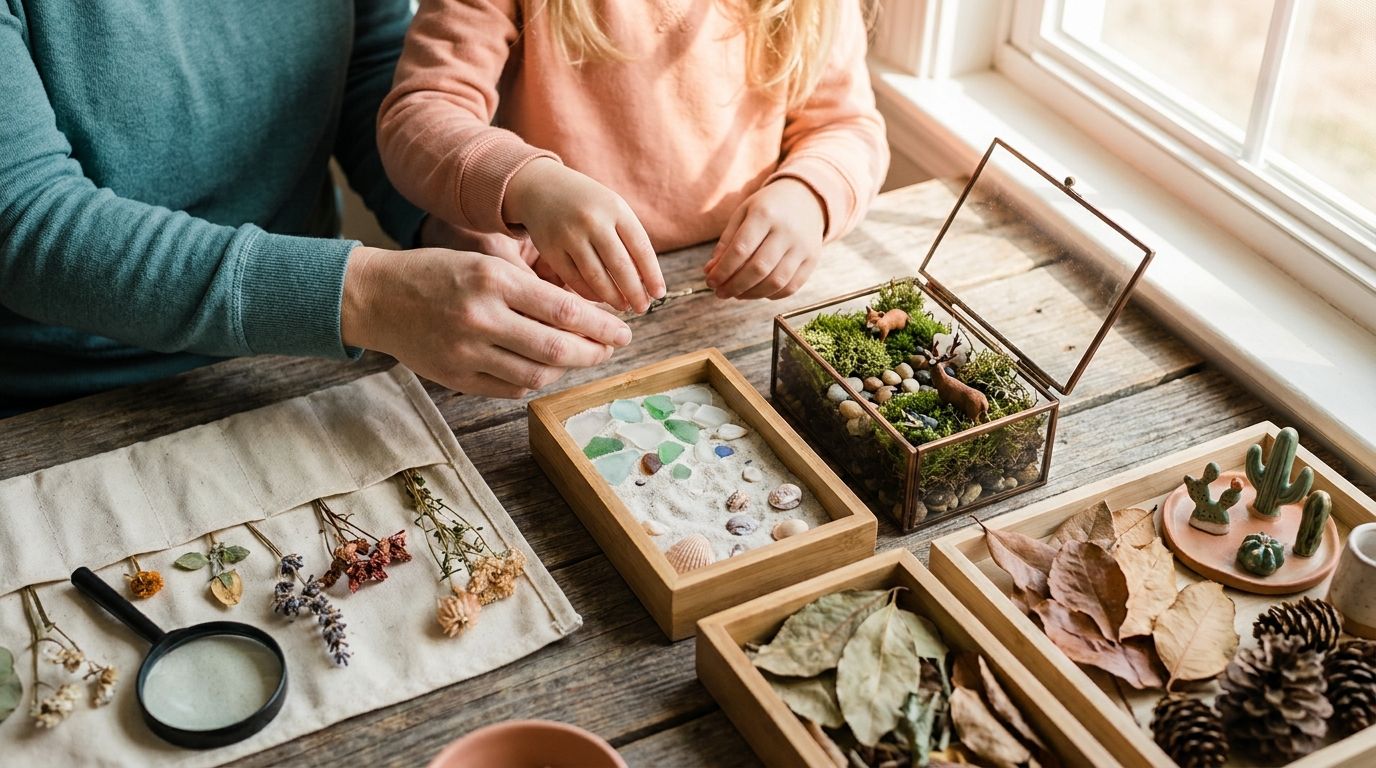
Your kitchen counter is buried under sticky notes because you swore this week would be different. Then your child wanders in, blows right past the homework pile, and asks for "something else" like it's a lifeline.
That moment is exactly what this cheat sheet is for. Learning works better when the environment matches your child's energy, focus, and sensory needs, and Ziggyloo biomes make that match feel actually doable. No negotiating every single day. No guilt spiral when the first thing you try doesn't stick.
Pick a biome. Use one engagement strategy. Keep the session short enough that your child still feels safe to try.
The quick rule: choose the biome that fits the moment
Before you try to "fix" attention, check the moment. Kids don't lose focus because they're being difficult. They lose focus because the environment is asking for the wrong kind of effort.
A fast way to choose a biome is to notice three things in under a minute:
- What does your child's body look like? Restless, heavy, wiggly, or calm?
- What does their face look like? Curious, shut down, tense, or bored?
- What does their voice ask for? Movement, stories, quiet, or repetition?
If you're not sure, try a simple parent test that takes less time than making a snack. Offer a tiny starting step that matches the energy you see. If your child leans in, keep going. If they pull back, swap biomes and keep the task the same.
Research backs this in plain terms. When children get consistent routines and the right kind of support, they learn more and melt down less. The National Academies of Sciences has long pointed out that learning is shaped by context and supports, not just raw ability. And honestly, you've probably already seen this at home: a "hard" task in a boring room can become "possible" in a playful one.
With Ziggyloo's adaptive learning system, the biome is the context. It shifts the pace, the sensory feel, and the kind of attention your child can actually use.
Here's the cheat sheet. Eleven biomes. Eleven ways to learn. Use them like a menu, not a test.
1) Cozy village vibes: stories for attention that drifts
Some days your child needs meaning more than instructions. Steps won't land, but a character and a storyline? Those they can hold.
Use this biome when you notice drifting attention, a flood of questions, or that classic "wait, why?" energy. Aim for engagement strategies that feel like play with a thread running through it.
Try this parent move in the moment:
- Pick one story goal: "We are finding the answer with the character."
- Keep the session short: 5 to 10 minutes.
- End while your child still wants more.
Scenario from real life: You're folding laundry in the living room and your child keeps asking to "do the game again." You sit down for one round and narrate it like a story: "We are helping the character figure out the next step." The laundry pile doesn't disappear, but your child stays with you long enough to finish. Small win. Real win.
Why it works for neurodiverse learning: many kids do better when the brain has a reason to care. Stories hand it that reason without you having to explain anything perfectly.
If your child gets overwhelmed by too much back-and-forth, set a boundary that sounds like a game rule: "We do one story round, then we do socks." That boundary lowers pressure, and pressure is the thing that makes attention harder.
2) Meadow barn energy: movement for focus that won't sit still
When your child's body is ready to move, "sit and listen" becomes a trap. You can still teach, but you need to teach with motion.
Use this learning environment when you notice fidgeting, tapping, pacing, or sudden bursts of energy. Your goal is not to calm them first. Your goal is to guide the energy into the task.
Engagement strategies that work here:
- Add a physical signal: "When the music starts, we do the next step."
- Let them choose a "movement job": stomp, clap, or point.
- Use call-and-response: you say one cue, they answer with the next move.
Scenario: After school, the kitchen smells like toast and your child is bouncing on the balls of their feet. You don't launch into "homework time." You start a quick learning round where the steps match their movement, and when they finish, you say, "Nice job using your body to help your brain." Then you move on to the next routine.
Research reference you can actually remember without a clipboard: self-regulation improves when kids get support to use their body in helpful ways. A 2013 review in Frontiers in Psychology discussed how physical activity can support attention and cognitive performance in children. You don't need a gym membership. You need the right kind of movement at the right time.
If your child is unusually restless, shorten the session even more. Movement is a tool, not a permission slip to go on forever.
3) Enchanted forest calm: sensory input for kids who shut down
Some kids don't act out. They disappear. Their brain goes quiet and you can feel the distance opening up.
Use this biome when your child seems overwhelmed, avoids eye contact, or says "I don't know" like it's a wall they've put up. The forest style learning environment is slower and gentler, so your child can re-enter the task without feeling chased.
Engagement strategies:
- Use fewer words. Offer one instruction at a time.
- Let them choose between two options.
- Build in a pause after each response.
Try this parent script: "We are not doing it fast. We are doing it together."
Scenario: Your child is sitting at the dining table with tears building. You stop pushing. You say, "Let's go to the forest biome." You keep the goal simple: one question, one answer, then a small win. The tears slow down because the task feels safer.
This is also where co-regulation does its quiet work. When you stay steady, your child's nervous system gets the message that learning is still safe.
If your child gets stuck, don't ask for more effort. Ask for more support. Swap the biome first.
4) Ocean depths exploration: curiosity for kids who love questions
If your child loves "what happens if..." you've got a gift. Use it.
Choose this biome when your child gets curious and asks for details, but struggles with traditional worksheets. The ocean depths learning environment invites exploration and lets answers come from discovery, not instruction.
Engagement strategies:
- Ask curiosity questions: "What do you think will happen?"
- Offer a prediction step: "Before we click, guess yes or no."
- Let them test one idea, then reflect.
Scenario: Your child is fascinated by sea creatures and keeps asking how they move. You pick an ocean-style learning round about patterns or sorting, let them drive the first guess, then guide them to confirm it. They feel like they're doing science, not school.
Why this helps neurodiverse learning: curiosity is a motivation engine. When kids feel ownership, they can tolerate the small uncertainty that comes with learning.
If your child gets lost chasing "more information, more information," set a time cap: "We explore for 7 minutes and then we pick one thing we learned." That cap is not punishment. It is structure.
5) Desert dunes adventure: sequencing for kids who need step-by-step thinking
Some kids can't hold steps in their head. They do better when you make the sequence visible.
Use this biome when your child says "I forgot" or skips steps without meaning to. The desert dunes style learning environment supports planning through clear, visible progression.
Engagement strategies:
- Use "next step" language only.
- Point to the order on screen.
- Let them repeat the sequence with you once.
Scenario: Your child is trying to pack a bag and keeps leaving out the same item every single time. You don't lecture. You start a quick desert dunes learning round that teaches sequence, then apply it to packing with the same phrase: "Next step, next step."
Research reference: working memory and attention are linked, and kids with ADHD or learning differences often need external support to hold steps. You don't have to diagnose anything to use the support.
A simple rule: if your child is losing steps, stop asking them to "try harder." Add a visual or a repeat. The environment is your ally.
6) Snowy summit focus: quiet challenge for kids who need structure
When your child is ready for focus but easily distracted, the snowy summit style works well. It feels contained. It invites concentration.
Use this biome when you notice they can stay with a task for a bit, but lose it when things get noisy or too open-ended.
Engagement strategies:
- Use a clear start time: "We start now."
- Use one goal: "We finish this round."
- Keep your voice low and calm.
Scenario: You're in the hallway with a backpack on the floor and your child is overstimulated from the noise of the school day. You move to a quieter corner and offer a snowy summit round. They choose it like it's a calm-down tool. You keep expectations simple: one round, then a snack.
If your child resists, don't push the "quiet" too hard. Swap to a different biome that matches their current state. The goal is learning, not forcing stillness.
7) Rainbow plains courage: emotional learning when feelings spill over
Sometimes the learning problem is actually an emotional problem. Full stop.
A child can't think when feelings are too big, so use this biome when your child is frustrated, tense, or stuck in a loop like "this is unfair." The emotional learning environment helps you name and work through feelings without turning it into a lecture.
Engagement strategies:
- Validate the feeling: "That feels hard."
- Use short choices: "Do you want calm first or try first?"
- Keep the task small and finishable.
Where the Ziggyloo characters fit: when your child's emotions are loud, you can pair learning with a character that matches the emotion. With Ziggyloo's adaptive learning system, that pairing helps your child feel understood while they practice skills.
You can even use a "feelings to action" rule. If feelings are high, choose a biome that supports emotional regulation, then return to the task.
8) Village friendship moments: social learning without awkwardness
For some neurodiverse kids, social learning feels like walking on a moving floor. It's not that they don't care. It's that the cues are genuinely hard to read.
Use this biome when your child asks about friends, gets lonely, or misunderstands social situations. The village friendship style is built for practice without real-world pressure.
Engagement strategies:
- Role-play one script: "What do you say when...?"
- Keep it short: one scene, one practice.
- Celebrate effort, not perfect words.
Scenario: At the playground, your child looks upset after a friend walks away. At home, you don't interrogate. You do one quick friendship moment learning round, practice one response phrase, and then at the next playdate you catch them trying it, even if it comes out a little messy. That is how you build confidence. You make social learning safe enough to try.
9) Creature kitchen life skills: routines for kids who need "how-to" clarity
Some kids learn best through doing. Life skills are learning too.
Use this biome when your child struggles with transitions, routines, or "what comes next." Creature kitchen style learning environments make everyday steps feel like a game.
Engagement strategies:
- Use a checklist that matches the steps.
- Let your child choose which item comes next.
- Keep the task real, but scaled down.
Scenario: Bedtime is a battle again (you know the one). You pick a creature kitchen round about routines, then do the same steps with pajamas and teeth. Your child starts to see the pattern as a repeatable process, not a nightly ambush.
You are not teaching compliance. You are teaching predictability.
10) Art studio creativity: language and problem solving through making
If your child has trouble with verbal instructions, making something can help them think. Art is a bridge.
Use this biome when your child communicates best through drawing, building, or experimenting. The art studio style learning environment supports creative problem solving.
Engagement strategies:
- Give an open prompt with one boundary: "Make a picture of... and use three colors."
- Ask them to explain their choices.
- Keep it low-stakes: no "right answer."
Scenario: Your child says "I can't" when math feels hard. You switch to art studio and ask for a pattern picture. They create it quickly, and then you connect it back: "You used patterns. That is the same skill." Use strengths to enter a skill. One of the best engagement strategies for neurodiverse learning, full stop.
11) Bridge builder problem solving: math and logic with a clear goal
When your child needs logic that feels concrete, bridge builder style learning environments deliver. They turn math into a goal-based puzzle.
Use this biome when your child can try, but gets overwhelmed by abstract explanations. They need to see how the parts connect.
Engagement strategies:
- Use "build it" language.
- Ask for a guess before the reveal.
- Let them test and adjust.
Scenario: Your child gets frustrated with number lines. You offer a bridge builder round. They try, fail, and try again, and you watch resilience happen in real time because the environment makes attempts feel normal.
If your child is sensitive to mistakes, keep your feedback specific: "I saw you change your plan." That message teaches learning, not perfection.
How to use this cheat sheet on a messy day
Now for the part you actually need. What do you do when it's 4:45 pm and everyone is running on fumes?
Pick one biome based on the moment, not the curriculum.
Here's a simple decision guide you can keep in your head:
- If your child looks restless, choose movement-friendly biomes.
- If your child looks shut down, choose calm, gentle biomes.
- If your child looks bored, choose curiosity or exploration biomes.
- If your child looks frustrated, choose emotional regulation biomes.
Then use one engagement strategy. Not five. One.
Try these three "swap" scenarios:
- Scenario A: Your child says "I don't know" at the table. Swap to a calm biome and use a single yes-or-no choice.
- Scenario B: Your child is bouncing and can't sit. Swap to a movement-friendly biome and use a body cue for the next step.
- Scenario C: Your child starts arguing about fairness. Swap to an emotional learning biome and validate the feeling before the task.
And yes, you might feel a little ridiculous doing it. I've done the "just one more try" thing so many times. The second it works, you feel smug for about 10 seconds, then the next day you do it again because it helps.
If you want to make this even easier, write down two go-to biomes for your child. One for high energy and one for shutdown. You can build the rest later.
FAQ
What are Ziggyloo biomes, and why do they matter?
Ziggyloo biomes are learning environments designed to match different kinds of attention, sensory needs, and emotional states. They matter because many neurodiverse learning moments improve when the context fits the child's brain, not the other way around.
How do I choose the right learning environment when I'm tired?
Start with what you can observe in under a minute: body energy, facial expression, and what your child's voice asks for. If you're unsure, pick the biome that matches the energy you see and keep the session short.
What engagement strategies should I use first?
Use one engagement strategy at a time. Try a choice prompt, a short story framing, or a "next step" cue, then watch what happens. If your child shuts down, swap biomes before you change the task.
Can I use these biomes for neurodiverse learning at home?
Yes. You can use biomes during homework, routines, or after-school wind-down. Keep sessions small and end while your child still wants to continue.
What if my child refuses the biome I pick?
That's information, not failure. Pause, validate the feeling, and try a different biome that matches the moment. The goal is a safe try, not a perfect plan.
Your next step: pick two biomes and test one swap
Pick two biomes for your child today. One for high energy and one for shutdown.
Then do one tiny test: offer a 5 to 10 minute session in the first biome. If it doesn't land, swap to the second biome and keep the goal simple.
That's your parent cheat sheet in action. You're not forcing learning. You're adjusting the environment until learning feels possible again.
Join the conversation
Subscribe to comment
Join the Ziggyloo family newsletter to leave a comment — and get gentle learning tips and community stories in your inbox. No spam, unsubscribe anytime.