
Snowy Summit lessons: a parent’s virtual tour with Ziggyloo biomes
Take a virtual walk up the Snowy Summit. You’ll see what your child learns there and how to copy the sensory-friendly activities at home.
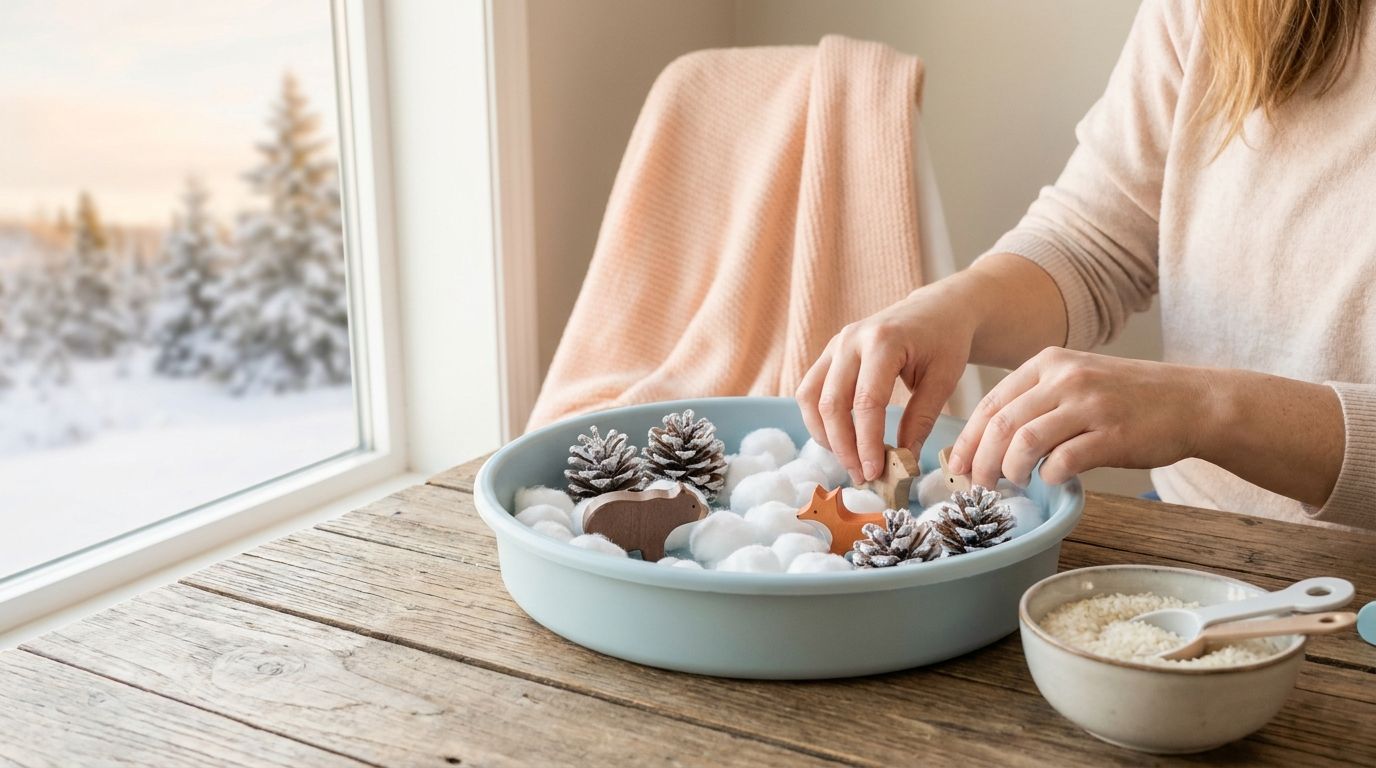
You know that moment in the kitchen when the kettle is singing, the floor is cold under your feet, and your child is already melting down because the day got too loud before 9 AM? That was me last Tuesday. I had Milo the Mapper's "just one more step" idea rattling around in my head, but my kid was stuck in the kind of stress where nothing lands. Not words, not snacks, not the calm voice I'd practiced.
So I did the least glamorous thing possible. I turned on Ziggyloo biomes and took a breath. We "visited" the Snowy Summit. Not by pushing through the meltdown, but by letting the learning match the nervous system we actually had that day.
Here is the answer you came for: the Snowy Summit helps your child practice learning at home with sensory-friendly activities, steady routines, and small choices that build confidence. It also teaches the hidden stuff parents notice later, like planning, body awareness, and how to come back to calm when things feel too big.
What happens on the Snowy Summit (and why it feels different)
The first time we tried the Snowy Summit, my child acted like it was a real place. Not in a "pretend game" way, but in a "my body is reacting to this" way.
They moved slower as the environment got colder. They paused more often. They made choices that looked small to me but felt enormous to them, like picking which path to try when two options appeared. Then they finished a task that usually derails them completely at home.
That is the vibe of the Snowy Summit: immersive learning that stays gentle on purpose.
In a lot of learning attempts, kids get hit with a double demand: the content is hard and the environment is also hard. The Snowy Summit separates those. It gives your child a clear "start," a clear "what to do next," and a sensory setting that stays predictable throughout.
If your child is neurodiverse, you already know this pattern. Predictability is not boring. It is safety.
What your child is learning there
You might not see it as "skills" while you are in it. You see it as a change in how your child behaves. Later, you notice the skills showing up in the school pickup lane, at the dinner table, in the middle of homework that used to end in tears.
Here is what the Snowy Summit commonly supports:
- Body awareness: your child practices noticing how their body feels (warm, cold, tense, ready).
- Step-by-step thinking: tasks are broken down so the brain can follow without guessing.
- Choice without chaos: your child makes small decisions that do not require perfect timing.
- Regulation after stress: when things feel too much, there is a path back to calm.
That last one matters more than parents want to admit. When a kid learns how to return to a steady state, homework and school transitions stop feeling like a daily hostage negotiation.
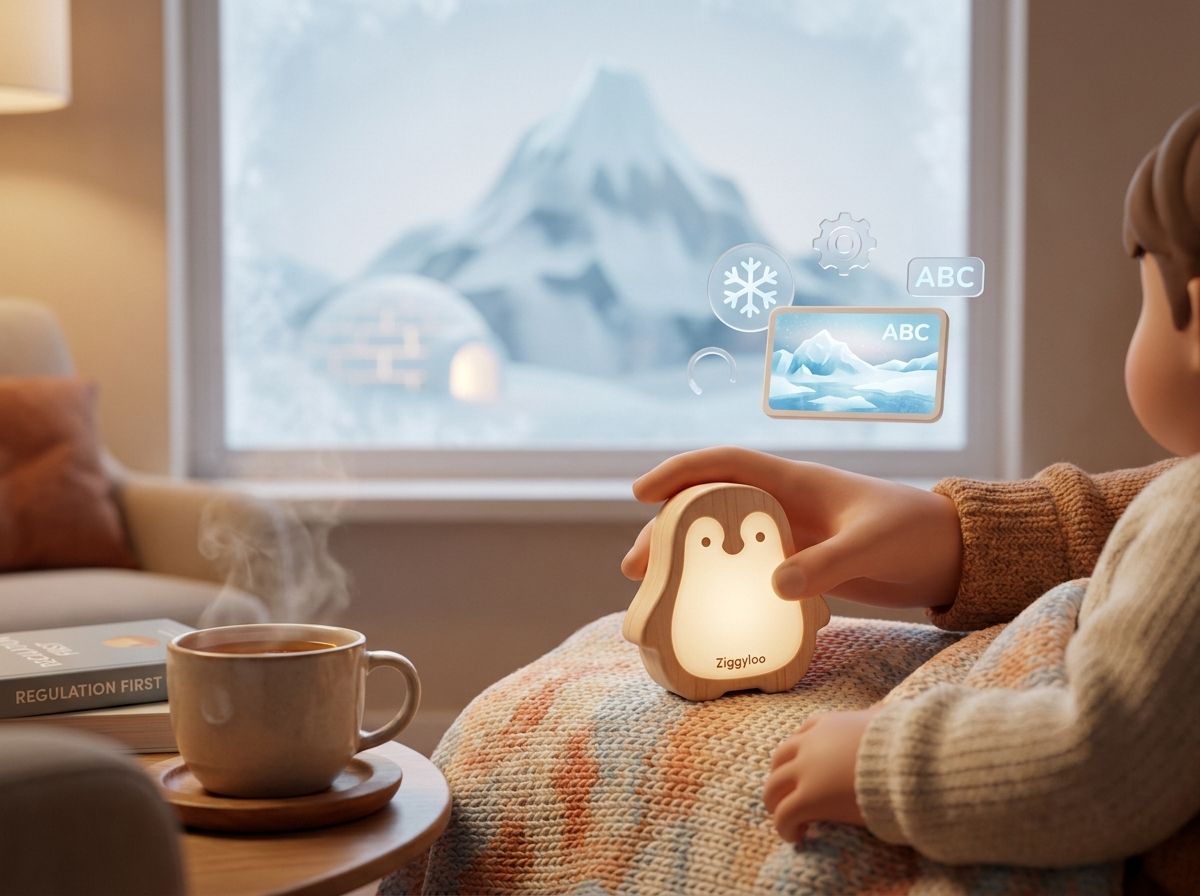
Sensory-friendly activities you can copy at home (no fancy gear)
The Snowy Summit is not just "snowy." It is built around sensory-friendly activities that help your child stay with the task.
If you've ever tried to teach while your child is overstimulated, you know how fast it turns into a fight. The goal is not to make the environment perfect. The goal is to make it workable.
So take the Snowy Summit mindset and try it in your kitchen, living room, hallway, or car.
Build a mini "summit routine"
In our house, the routine is simple. We do it like we are packing for a trip.
You can use this exact script:
1. Name the place: "We are going to the Snowy Summit."
2. Name the job: "Your job is to help the summit by trying these steps."
3. Name the time: "We're doing this for one short round."
4. Name the reset: "After the round, we get warm and calm."
The words are not magic. What matters is that your child hears the same structure every time. The brain loves patterns, especially when it is already carrying extra load.
Use temperature cues like a teaching tool
On the Snowy Summit, cold is not just scenery. It is a cue.
At home, you can use temperature cues without turning your house into an icebox:
- Put a warm blanket within reach.
- Offer a warm drink or warm towel (even just holding it for a minute).
- If your child likes it, keep a "cold and calm" item nearby, like a small ice pack wrapped in cloth.
When your child feels dysregulated, you are not saying "calm down." You are offering a sensory signal: "We can change the body feeling now." That is a completely different ask.
Offer choices that do not require fast thinking
Some kids freeze when asked to choose quickly. Others choose wildly and then feel overwhelmed by what they picked.
The Snowy Summit tends to give choices that are manageable: two options, not ten. A short selection, not a long drawn-out decision.
Try this at home:
- "Do you want to try the top path or the bottom path?"
- "Do you want to start with the warm-up step or the main step?"
- "Do you want to sit on the couch or on the floor?"
If your child says "I don't know," that is still a choice. You can pick for them and keep the momentum going.
Make the "next step" visible
When my child is stressed, verbal instructions can vanish. It is like the air deletes them mid-sentence.
So I make the next step visible in a low-effort way:
- Use a sticky note with one sentence.
- Or draw a tiny arrow on paper.
- Or use a "step card" with a picture.
The Snowy Summit style is similar. It gives your child what their brain needs to keep going without demanding they hold everything in their head at once.
The learning inside the calm: what immersive learning builds
Immersive learning sounds like a big, fancy thing. In practice, it is usually a small emotional shift.
On the Snowy Summit, your child experiences learning like it is part of the world, not a thing happening to them. That matters for kids who feel like school and home are "always" asking for performance.
When kids feel safe, they can use their attention. When they can use their attention, learning sticks.
And if your child is neurodiverse, you might have noticed something else: learning often improves dramatically when the environment supports sensory needs first.
Why sensory-friendly activities help more than you think
A sensory-friendly activity is not just "less stimulation." It is also about giving the brain fewer reasons to panic.
When the brain is not busy scanning for danger, it can spend energy on the actual task. That is how learning at home becomes possible even on a rough Tuesday.
Here is a real example from our most recent summit visit. My child usually struggles with transitions. Bedtime is a battlefield, every single night.
That night, we did a short Snowy Summit round. Then we got ready for bed. There was still resistance, but it was smaller. The transition took less time. My child was not suddenly "easy." They were simply more regulated.
That is the hidden win of immersive learning. It trains the "switch" between states, not by lecturing but by practicing over and over in a place that feels safe.
What to do when your child stalls
Sometimes the Snowy Summit visit is smooth. Sometimes it is not.
If your child stalls, you do not have to push. You can use a "summit pause."
Try this:
- Pause and narrate what you see: "Your body is saying pause."
- Offer the warm reset item.
- Reduce the task: "Let's do just one tiny step."
- When they re-engage, celebrate the return, not the completion.
This is where parents often feel awkward (I definitely did the first few times). You might worry that reducing the task "teaches avoidance." But what you are really teaching is recovery.
A kid who can recover learns faster over time. Full stop.
Where Ziggyloo fits in
With Ziggyloo's adaptive learning system, the Snowy Summit experience can match the pace your child can handle in the moment. That is the difference between "more practice" and "practice that works."
You still do the parent part. You bring the structure, the warm reset, and the permission to try again without shame.
Community notes from other parents (the part you don't have to guess)
I love community spaces because you get to borrow someone else's hard-earned clarity.
Here are a few patterns parents shared after trying the Snowy Summit with their kids:
- Some parents use the summit as a "bridge" before schoolwork, like a short warm-up that eases the brain in.
- Others use it after school to reduce the after-school explosion instead of trying to talk through it.
- A few parents said their child asked to revisit the summit when they felt worried, not when they felt bored.
That last one made me laugh quietly, because it sounded exactly like something my own kid would do. My kid does not ask for help when they are feeling fine. They ask for help when their body is already screaming.
So if your child chooses the Snowy Summit on a day you did not expect, trust that. It is still learning.
A practical "parent script" for the hardest moments
When your child is melting down, the script that helps us is short. Deliberately short.
You can say:
- "We can do a summit pause."
- "We only do one step."
- "Then we get warm."
It feels almost too simple. That is exactly why it works.
The goal is not to win the argument. The goal is to rebuild cooperation by meeting the nervous system where it is right now.
Why this biome matters: learning at home without the daily fight
You might be thinking, "Okay, but will this actually help with real life?"
In our house, the Snowy Summit influenced three things that show up later:
- Less bargaining: fewer negotiations about starting.
- More stamina: a longer stretch of trying before a meltdown.
- Better recovery: when things go wrong, the reset happens faster.
None of that requires your child to become someone else. It requires you to give their learning brain the conditions it needs.
And yes, you still have hard days. I do too. I still get annoyed when my kitchen is freezing and my kid is loud and nothing is going smoothly, and I've already had this exact conversation four times this week.
But now I have a tool that does not ask for performance. It asks for practice.
Your next step, right now
Pick one moment this week when you usually feel stuck. It might be after school, before dinner, or right before a task your child hates.
Then do a "Snowy Summit try":
- Choose one short round.
- Use one warm reset cue.
- End after a small win, not after a full lesson.
Even if it feels small, it is not. Small wins are how kids rebuild trust with learning.
FAQ
What does the Snowy Summit teach kids in Ziggyloo biomes?
The Snowy Summit supports step-by-step thinking, body awareness, and regulation through sensory-friendly activities. Kids also practice making small choices and recovering when they feel overwhelmed. The learning is built into the experience, so it does not feel like a performance.
How do I use immersive learning when my child is already overstimulated?
You can treat the summit like a reset, not a demand. Start with a short round, offer a warm reset item, and reduce the task to one tiny step if your child stalls. The goal is to help their body feel safer so their brain can join in.
What if my child refuses to start the Snowy Summit?
Refusal is information. Try offering two choices, like "top path or bottom path," or let them pick the warm reset item first. You can also start with a summit pause routine and only do one step. When they re-engage, you celebrate the return.
Is learning at home with biomes a replacement for school?
No. It is support for the skills your child uses every day: attention, regulation, and confidence with steps. Many parents use biomes as a bridge to make schoolwork and routines easier to handle.
Your kid's summit is real
If today feels loud and you feel tired of trying to "get through" learning, I see you. You are not failing. You are adapting, and your child is responding to the conditions you create.
The Snowy Summit is one way to bring sensory-friendly activities and immersive learning into your home without turning every day into a battle.
Try one short round. Keep the warm reset ready. Then watch for the quiet changes that show up when your child feels safe enough to try.
Join the conversation
Subscribe to comment
Join the Ziggyloo family newsletter to leave a comment — and get gentle learning tips and community stories in your inbox. No spam, unsubscribe anytime.