
Biome Adventures: how to choose the right biome for focus
Your child is not “too distracted”. They are asking for the right environment. Here’s how to choose a biome that matches their sensory and attention needs.
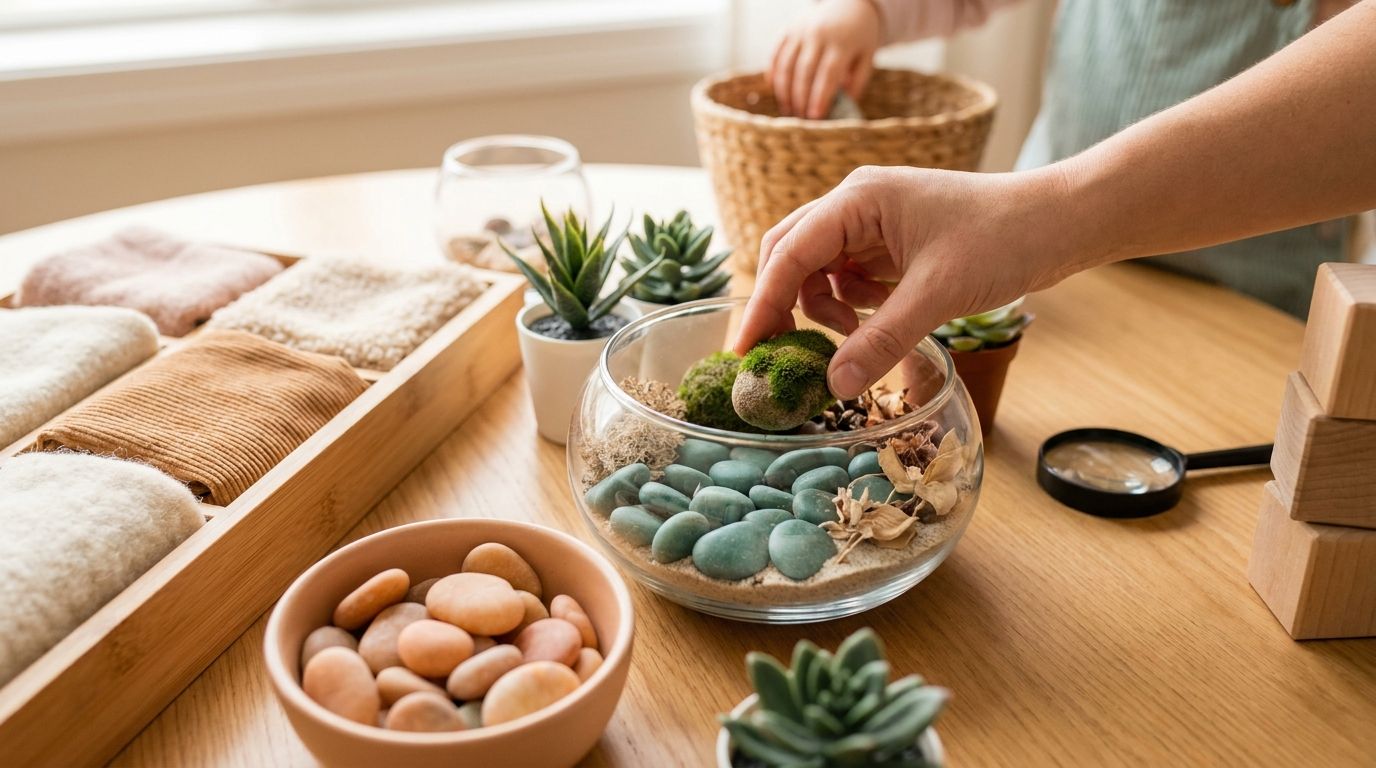
You're standing in the kitchen with a half-made lunch, and your child is trying to help. They start strong. Then their eyes flick to the window, the fridge magnets, the sound of the kettle. By the time you reach for the bread, attention has walked out the door.
Here's the good news: you can choose a biome for your child that makes focus feel more possible. The right space reduces sensory noise, gives the brain a "reason to look", and turns learning into immersive education instead of a fight.
With Ziggyloo's adaptive learning system, you choose a biome based on your child's needs, then test what helps without turning it into another homework battle.
The quick answer: choose a biome that matches the job your child needs
Before you pick a biome, you need one sentence about the job.
Is the job "calm the body so the brain can listen"? Or is it "give the brain something to do with movement and curiosity"? Is the job "steady anxiety so instructions land"? Or is it "quiet the overwhelm so they can start"?
That's how you choose a biome for your child. Not by guessing what you wish they could do. By matching the biome to the pattern you actually see.
A helpful way to think about attention support: attention is not one skill. It's a bunch of small systems working together, and when one system is overloaded, the rest struggle to cooperate. That's why the same child can focus for 20 minutes on one activity and then melt down over a two-minute task.
Research backs this up in a practical way. Studies of ADHD and attention show that kids often need more than "try harder" - they do better with clear cues, predictable routines, and environments that reduce distraction (for a broad overview, see the CDC and National Institute of Mental Health ADHD resources). Sensory processing research also shows that sensory input can either support or interfere with attention, depending on the person and the context.
So you're not failing. You're tuning.
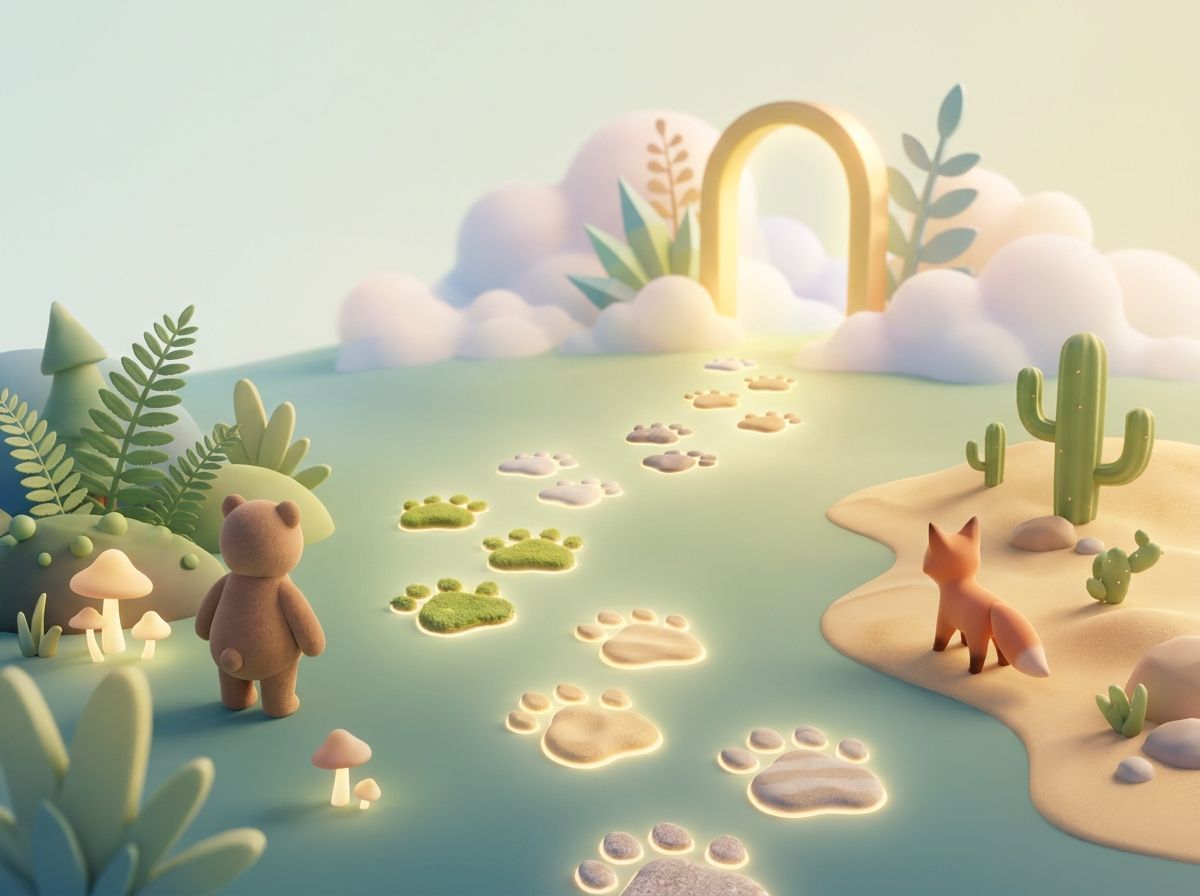
Start with the pattern you see (not the label you've been given)
You don't need a diagnosis to choose a biome. You need a pattern. Watch for what happens right before attention drops.
Try this quick "focus story" after one real moment. Write down three things:
- What was happening right before they lost focus?
- What did they do next? (stare, fidget, leave the room, ask questions, get upset)
- What helped even a little? (a break, a question, movement, quieter space, a timer)
That's your map.
Here are three common patterns you might recognize.
Scenario 1: "The magnets stole the show" (Ziggyloo Village, snack time)
It's 4:10 pm. Your child sits down for a snack, the table is set, and you start explaining the plan for after-school. Their eyes go to the fridge magnets. They touch one. Then another. Then they're off, asking for "just one more thing" while you're still talking.
This is often a sensory needs moment, not a motivation moment. Their brain is hunting for stimulation that feels "easy to grab."
A biome choice that helps here is one that reduces visual and sound chaos and gives the learning path a clear next step. In immersive education, the story holds the attention so the magnets have less pull.
Scenario 2: "They can talk, but they can't start" (Desert dunes, morning routines)
Your child answers your questions in the car. They can tell you everything that happened at school. Then you ask them to start getting dressed. Suddenly, it's like the remote control battery died.
This can be attention support plus executive function. The brain can do language in one moment and still struggle to switch into action in the next.
A biome that helps here is one that makes starting feel like a game with a short, clear mission. Not "do everything now." Just "do the next tiny step."
Scenario 3: "Instructions feel like a trap" (Forest path, cleaning up)
You say, "Put the blocks in the bin, then shoes by the door." Your child hears it and their body reacts like you handed them a paper shredder. Tears start. Or anger. Or a freeze.
When anxiety or overwhelm spikes, attention strategies change. The child is not ignoring you, their nervous system is already busy. A biome choice that helps here is one that calms and steadies first, then gently invites learning.
Match the biome to sensory needs (quiet, movement, or deep focus)
Sensory needs is the part most parents underestimate. Not because you're doing anything wrong. Because it's genuinely hard to tell the difference between "distracted" and "sensory overloaded" when you're living inside it.
A good biome choice reduces the extra work your child's brain has to do just to stay in the room.
Think of sensory needs in three buckets you can actually observe:
- Sensory seeking: the child moves toward stimulation. They get restless.
- Sensory avoiding: the child pulls back. They get tense or overwhelmed.
- Sensory regulation: the child needs a steady input. They do best with predictable, gentle stimulation.
Now you can choose a biome for your child using what you already know.
If your child seeks movement
Choose a biome that lets the body feel included. Immersive education works best when movement is part of the learning, not a reward after compliance.
Try this at home: when you set up a "biome adventure" session, include a movement option that doesn't interrupt the goal. A quick stretch, a step-and-gesture cue, a "walk the path" around the room before starting. You're giving the brain a job.
If your child avoids sensory input
Choose a biome that feels contained. Less background noise. Fewer competing visuals. A calmer pace.
You can also lower the "auditory load" around the session. One adult voice. One instruction at a time. If you're tempted to add extra explanations, pause, because too many words can turn into sensory noise.
If your child needs regulation
Choose a biome with a steady rhythm. Predictable steps. Clear cues for what happens next.
A timer can help, but not as pressure. Use it like a boundary that tells the brain it's safe. "We're going to do this part until the sand timer ends." Then stop when it ends, even if it's not perfect.
If you've ever watched your child focus better when the environment is predictable, you already know this. The biome is the predictability.
Choose based on attention support: calm first, then clarity, then challenge
When parents ask about ADHD focus strategies, they often want a trick. A hack. A magic phrase.
But the biome choice is the trick.
Attention support works best when you sequence the experience: calm first, clarity next, challenge last. Here's what that looks like in real life.
Calm first: when the body is loud
If your child is dysregulated, learning feels like extra work on top of already-hard work. Their attention becomes a survival tool.
In Ziggyloo, some evolved Gloom pairings are designed to help shift the emotional temperature. When anxiety and panic are loud, a calmer internal state helps attention land.
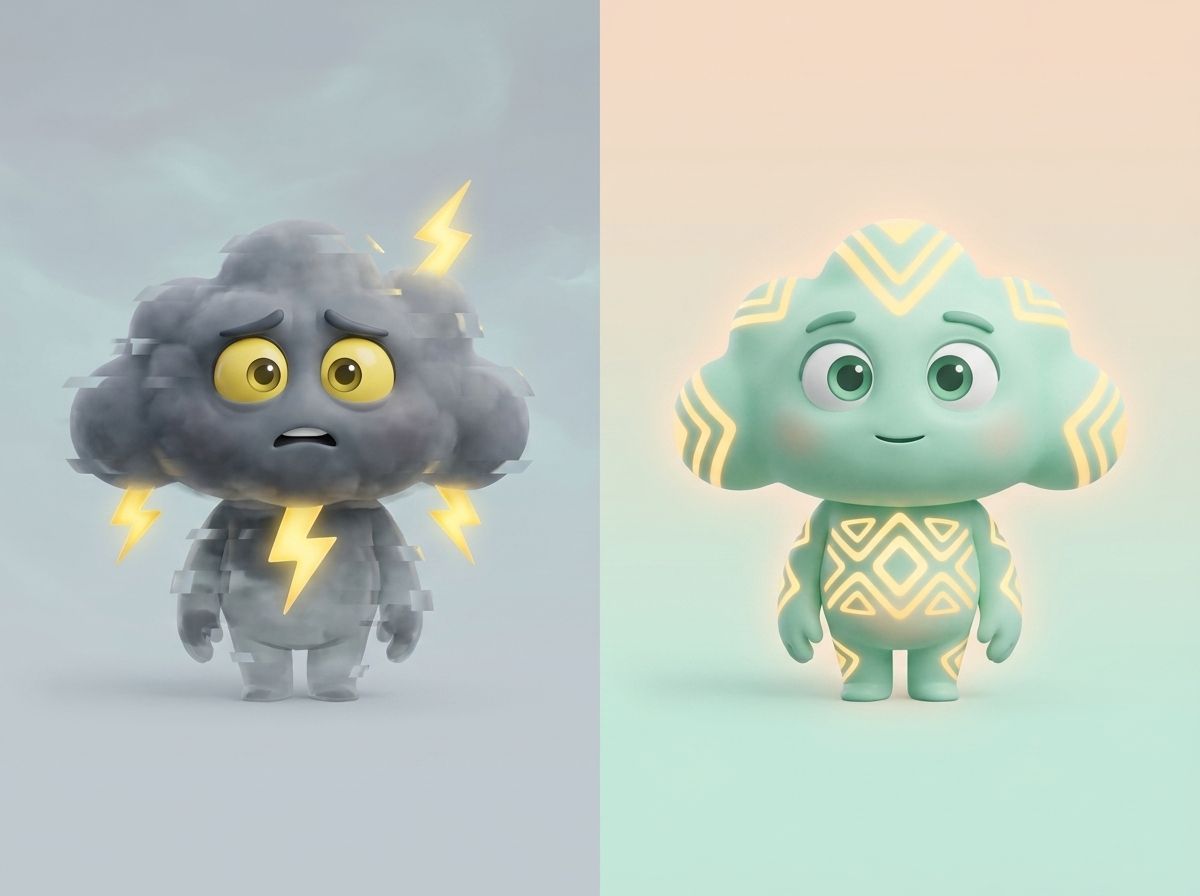
So if your child is melting down or shutting down, start the session with a biome that supports regulation. Keep the mission short. Let the "story" do the heavy lifting.
Clarity next: when the brain is ready but confused
Clarity is not more talking. Clarity is fewer steps.
Use one instruction. Wait. Then offer the next. If you need to cue, cue the action, not the attitude. "Touch the start button" beats "focus."
In immersive education, the biome gives context so the brain doesn't have to hold everything at once.
Challenge last: when the child can handle effort
Challenge is where growth happens, but it needs enough calm and enough clarity to feel safe. Push challenge too early and you get a learning avoidance loop, where your child learns that effort predicts stress.
So you choose a biome that supports the current stage. When focus improves, increase difficulty slowly.
A practical rule: if your child is failing repeatedly, the biome choice or the session length is off. Not your parenting. The setup.
Use immersive education to "wrap" focus around a mission
Immersive education is not just "fun". It's a focus tool.
When the learning world is engaging, your child's attention has a place to go that feels meaningful. Instead of fighting distractions, the mission absorbs curiosity.
Here's how to choose a biome for your child using mission design.
Make the mission visible
At the start of a session, tell yourself what success looks like. One clear outcome. For example:
- "Finish the first adventure scene."
- "Complete the sorting task with fewer than three resets."
- "Reach the next checkpoint without leaving the room."
Keep the mission short for sensory days
On busy sensory days, the goal is not "long focus." The goal is "stay in the learning world."
If you're thinking, "But they should be able to do more," you're probably comparing to a different kid. Your child needs attention support that fits their nervous system.
Let the biome do the scaffolding
Biomes can provide built-in structure, which means you can step back from constant coaching.
Try this during a session: choose your cue and then stop talking. Give one prompt, then let the child explore. If they need help, add a second prompt later.
This reduces the "parent talking loop" that can happen when you feel urgency. (I do it too. My brain thinks more words equals more control. It doesn't.)
Example: "The library shelf meltdown" (Rainy day, indoor focus)
Your child is supposed to read for 10 minutes. The couch is comfy. The book is chosen. Then the meltdown starts, not because reading is hard, but because the environment is too quiet and too open.
Switch to an immersive education session with a biome story, and attention often improves because the brain has a mission. It's not "read pages." It's "follow the story and solve the next part."
Pick the best biome for your child's needs: a simple decision path
Now for the part you can actually use tomorrow.
Use this decision path when you choose a biome for your child. It works for attention support, sensory needs, and ADHD focus strategies because it starts from what your child shows you.
Step 1: Identify the main problem in the last 15 minutes
Was it:
- sensory overload (too much input)
- sensory seeking (can't sit still)
- anxiety or fear (freeze, tears, avoidance)
- frustration (anger, quick quitting)
- starting difficulty (needs extra time to begin)
Choose the category that matches the most.
Step 2: Choose the biome that matches the job
Here are matching "jobs" you can use as guides:
- If it's sensory overload: choose a calmer, more contained setting.
- If it's sensory seeking: choose a biome that invites movement and exploration.
- If it's anxiety or fear: choose a biome that supports calm awareness.
- If it's frustration: choose a biome that supports resilient strength and a fresh start.
- If it's starting difficulty: choose a biome with short, clear missions.
Step 3: Run a 7-minute test, then adjust
You are not committing to an entire month. You are running a test.
Set a timer for 7 minutes. Start the session. Watch what happens.
Use these signals:
- If focus improves within 3-4 minutes: keep the biome.
- If your child escalates: shorten the mission or choose a calmer biome.
- If your child drifts: choose a more interactive biome with a clearer next step.
Step 4: Keep a tiny log (so you stop guessing)
Write one line after the session:
- "Today: calm biome helped with starting."
- "Today: movement biome helped with staying in the story."
- "Today: contained biome helped with sensory overload."
That log becomes your personal data. And yes, it's okay if your notes are messy. You are building a map, not writing a report.
When to change biomes (and when to keep going)
Sometimes switching biomes feels like the only lever you have. Sometimes it makes things worse.
So here's a parent-friendly rule: switch when the mismatch is clear. Stay when the mismatch is improving.
Switch biomes when you see a hard pattern
Switch when you notice one of these repeated signs:
- The child leaves the learning space within the first 2-3 minutes.
- They become upset quickly, then can't recover in the session.
- They keep asking for the same sensory escape (noise, movement, screen hopping).
That's your clue the biome is not meeting their sensory needs or attention support needs today.
Keep the biome when you see "small wins"
Keep the biome when you see any of these:
- Focus grows after a short warm-up.
- They complete one mission even if the session is imperfect.
- Their body calms over time.
Small wins matter. They rebuild trust with learning.
Example: "The second attempt was better" (after-school, 5:30 pm)
Your child starts an immersive education session. They look restless. You want to switch immediately, so you pause instead. You shorten the mission to one checkpoint.
On attempt two, your child completes it. They still wiggle, but they stay in the story. That's a sign the biome was close, and the session structure needed tweaking.
Example: "Same biome, different day" (Saturday morning)
On a calm Saturday, the biome that worked on Tuesday might feel too quiet. Or too stimulating. Your child's nervous system changes with sleep, hunger, and stress.
So you choose a biome for your child based on today, not a permanent personality trait.
With Ziggyloo's adaptive learning system, you can treat biomes like tools, not tests. Tools get adjusted.
FAQ
How do I choose a biome for my child if I'm not sure what triggers distraction?
Pick the most recent pattern. Think about what happened right before attention dropped, then choose the biome that matches the job: calm, clarity, movement, or steadiness. If you're unsure, run a 7-minute test and adjust based on whether focus improves or escalates.
What attention support works best for ADHD focus strategies?
Attention support works best when you sequence calm first, clarity next, challenge last. A biome that reduces sensory overload and provides a short mission helps your child start without pressure. Keep instructions to one action at a time.
How do sensory needs change which biome helps most?
Sensory seeking often needs movement and exploration built into the learning. Sensory avoiding often needs a calmer, more contained environment. Sensory regulation often needs predictable steps and a steady pace. Watch your child's body for clues.
Can I use biomes when my child is anxious or upset?
Yes. Start with a biome that supports emotional regulation and a shorter mission. If your child is in a full meltdown window, focus on calming and safety first, then switch to learning when they can engage even briefly.
What if one biome works one day but not the next?
That's normal. Sleep, hunger, and stress change your child's nervous system. Treat biomes like tools for today, then use a simple log of what helped so you stop guessing.
Next step: run your first biome test this week
Pick one real moment this week when focus usually slips. Choose a biome based on the job you need today, then run a 7-minute test with one clear mission.
Write one line afterward: what helped, what didn't, and what you'll try next. That tiny log turns "random trying" into a plan you can trust.
Join the conversation
Subscribe to comment
Join the Ziggyloo family newsletter to leave a comment — and get gentle learning tips and community stories in your inbox. No spam, unsubscribe anytime.