
Biome Adventures: the calm-to-playful reset inside Meadow Barn when energy spikes
When energy spikes, you need a plan that feels safe, not like a battle. Here is a Meadow Barn reset you can do in minutes.

You can hear it before you see it. The kitchen clock is still ticking, but your child is already bouncing on their toes, talking faster than usual, grabbing at everything within reach. I remember standing there with a dish towel in my hands, thinking, Please do not turn the cereal into a science experiment.
Then I tried something different. We did a Meadow Barn calm-to-playful reset. Not a "sit still" demand. Not a lecture. Just a quick shift in the learning space and the rhythm of the moment, and it helped us ride the energy spike without it tipping into a full meltdown.
If your child has ADHD, or if their energy spikes hit fast and loud, this biome reset is for you. With Ziggyloo's adaptive learning system, you can match sensory-friendly learning to the moment instead of waiting for the storm to burn itself out.

Why Meadow Barn works when energy spikes
Meadow Barn is the biome Ziggyloo leans on when you need a gentle shift from "revved up" to "ready to learn." It is not about stopping movement. It is about giving that movement a job.
Energy spikes can look like excitement from the outside, but they often feel like urgency from the inside. Kids with ADHD sometimes move, talk, and react quickly because their brains are searching for the right level of stimulation. When input is too high, everything feels louder. When it is too low, everything feels unbearable. Either way, their system is hunting for its balance.
So your goal is not to shrink their energy. Your goal is to redirect how it gets used.
Here is what a calm-to-playful reset usually does in real life:
- It gives your child a predictable "next step" so their brain can loosen its grip.
- It turns sensory input into something structured, like a game with a clear beginning and end.
- It helps you move from managing behavior to guiding regulation.
That last part matters. When you feel like you are chasing your child around the kitchen, it is easy to start sounding sharp. You are not a bad parent. You are just trying to keep the day from tipping over.
Meadow Barn gives you a script you can trust.
The Meadow Barn reset: calm down routine that still feels like play
You want something you can do fast. Not a perfect plan. A workable one.
The reset has three phases. You do not need the exact words every time, you need the same rhythm.
1) Entry calm: make the room feel "safe to slow"
Start with a short entry. Think of it like opening a door to a quieter version of the same afternoon.
Pick a consistent spot. A corner of the living room, a small rug, a chair near a shelf. Keep it simple. Your child needs to learn the cue.
Then do two things that help energy settle without demanding stillness:
- Lower the demands. You are not "doing school." You are resetting.
- Offer one sensory anchor. A soft blanket, a weighted lap pad, a fidget, or a small "touch and feel" item all work.
If your child is already ramped up, try something like: "We are doing the Meadow Barn reset. You pick the anchor."
This is not permission to go wild. It is permission to be in their body while you guide the next step.
2) Switch stimulation: use movement with a boundary
Now the playful part starts. But it still has rails.
When energy spikes, your child often needs movement and input. What they usually do not need is an open-ended "go play" that dissolves into chaos.
So you give them a structured activity that matches the spike.
Try one of these, depending on what your child seems to crave that day:
- If your child wants speed: do "race and return." They run or hop to a marked spot, then come back to the anchor.
- If your child wants hands-on: do "build and break." They stack blocks, then knock them down on a timer.
- If your child wants talking: do "sound match." You make a short sound, they copy it, then you both pause for one breath.
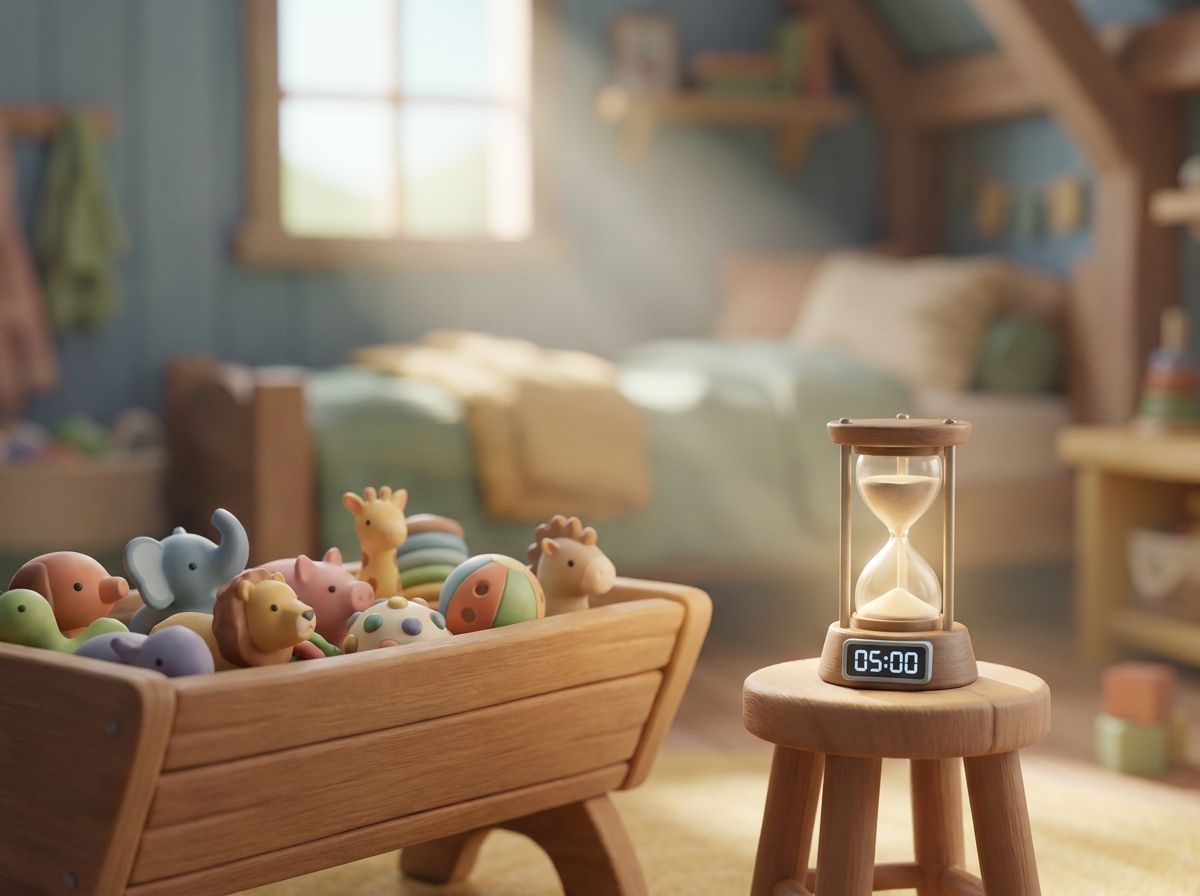
The key is that every activity has an end. Timers help. Even a kitchen timer helps, it tells the brain, "You are not stuck in this forever."
And yes, timers can be annoying. (My kid once threw one across the room, so.) If your child hates them, use a visual cue like a card you flip, or a short song you start and stop.
3) Playful learning: pick one tiny win
After the energy is redirected, learning gets easier. Not because your child suddenly becomes calm, but because their nervous system gets a chance to downshift.
Choose one tiny learning moment. One.
Examples that fit the Meadow Barn reset well:
- A single matching game, colors, shapes, or simple categories.
- A short story with a predictable pattern, like "first, then, next."
- A movement-based question, like "Show me the bigger one" using two objects.
You want to end while things still feel good. Stopping early is not quitting, it is protecting the next attempt.
When parents ask how long to keep going, I usually say: long enough to feel like a win, short enough that you are not bargaining.
A note about ADHD and "calm down routine"
The phrase "calm down routine" can feel like someone asking you to turn the volume knob down on a TV that is already screaming. If you have lived it, you know.
For many kids with ADHD, calm is not the absence of energy. Calm is the presence of regulation.
Regulation looks like:
- Your child can pause for a second when you shift your tone.
- Your child can switch tasks without a fight.
- Your child can come back to the anchor after movement.
If you are seeing those signs, you are doing it. Even if your child still looks a little bouncy.
What to do when the spike keeps coming back
Sometimes the reset works, and sometimes it turns into Groundhog Day. Your child regulates, and then five minutes later the energy spikes again.
That does not mean you failed. It means you are working with a body that is still learning its own switches.
In Meadow Barn, the trick is to adjust your biome selection based on the day, not based on your frustration level.
Use "check the cue," not "check the child"
Before you start the reset, ask yourself one question: What cue is this energy spike following?
Common cues look like:
- Hunger. Your child is not cranky because they are "bad." They are cranky because their body needs fuel.
- Noise overload. A busy room can push the sensory system past its comfortable edge.
- Transition stress. The moment you say "time to stop" can spike energy for some kids.
- Too much waiting. Waiting can feel like a threat to a brain that needs input.
When you notice the cue, you can head off the spike next time.
Repeat the entry calm, then reduce the play
If the spike returns fast, do not try to "add more play." That often makes it worse.
Repeat the entry calm portion instead. Keep the anchor and the room cues the same. Then shrink the playful task to something shorter.
For example:
- If you did two rounds of build and break, do one round.
- If you did a longer matching game, do one match.
This teaches your child that the reset is reliable. Reliability builds trust. Trust makes it easier for the brain to accept regulation.
Keep your voice low and your choices small
When energy spikes, your child's brain is hunting for certainty. Too many choices creates a new problem to solve.
Try this pattern:
- One choice: "Do you want the fidget or the blanket anchor?"
- One instruction: "We do one round, then we switch."
- One expectation: "You come back to the spot."
You do not need a perfectly calm voice. You need a steady one.
Community moment: what other parents say they do in Meadow Barn
A lot of parents tell us they feel stuck between "do nothing" and "do everything." They do not want to nag. They do not want to miss the window when learning could actually click.
Here are a few patterns that show up again and again when energy spikes:
- They start the reset before the meltdown starts.
- They keep the reset short enough that it feels doable.
- They treat the reset like a routine, not a reward.
One parent told us that Meadow Barn became their "between tasks" bridge, used right after the after-school snack and before homework. Even when their child was still wiggly, the move to a sensory-friendly learning moment helped.
Another parent said they stopped trying to "win" the argument about sitting. Movement with a boundary, then one tiny learning win. Done.
And a third parent admitted something I relate to: they used to wait until their child was already at max volume. Now they notice the first signs, faster talking, frantic hands, and they start the reset earlier.
That shift is everything. You do not have to catch every spike. You just have to catch the next one.
Pairing Meadow Barn with Ziggyloo: how to pick the right biome selection
You might be wondering how this connects to biome selection in Ziggyloo.
Here is the simple version. When the day feels too loud inside your child's body, you pick the biome that matches that energy level. You do not force the child into a biome that assumes calm.
Meadow Barn is your go-to for a calm-to-playful reset. It is the biome that says, "We can move and learn, but we do it in a safe container."
With Ziggyloo's adaptive learning system, you can keep learning aligned to your child's mood shifts. That matters because energy spikes are not a character flaw. They are a signal.
If you are choosing between biomes, use this quick self-check:
- If your child needs soothing and structure, choose a calm-first environment.
- If your child needs movement that still has boundaries, choose Meadow Barn.
- If your child needs focused quiet, choose a focus-first environment.
You can change your plan without changing your child.
A calm-to-playful reset script you can copy
When you are tired, you need words that work.
Here is a script you can use during the energy spike window:
"Meadow Barn reset. We do entry calm first.
You pick your anchor.
Then we do one round of movement with a return.
After that, we do one tiny learning win.
When the timer ends, we stop and reset again."
Say it in your normal voice. Short sentences help. Your child does not need poetry, they need predictability.
If your child resists, you can adjust without abandoning the routine:
- If they refuse the anchor, offer two anchor choices.
- If they refuse the movement, do a hands-on build instead.
- If they refuse the learning win, lower the bar to a matching game with fewer steps.
This is not lowering expectations because you gave up. It is lowering the load so their brain can succeed.
Why you feel extra tired after energy spikes (and why it is not your fault)
Energy spikes cost you something real. You spend your own nervous system managing the moment, and you come out the other side feeling like your whole day is one bad turn away from unraveling.
That is exhausting. Full stop.
You might even feel guilty. Like you should handle it better. Like you should have seen it coming.
But you are noticing. You are learning your child's patterns. You are building a calm down routine that actually fits their body.
That is parenting, not perfection.
And if you are the mom doing dishes while your child bounces off the cabinets and you are quietly trying to keep your voice steady, I see you. You are doing more than you think.
FAQ
What do I do when my child's energy spikes right before learning?
Start the Meadow Barn reset before you start learning. Keep it short: entry calm, one structured movement round, then one tiny learning win. The goal is to shift the stimulation pattern so learning feels possible.
Is Meadow Barn only for kids with ADHD?
No. Meadow Barn works for any child whose body runs high on stimulation. If your child gets fast, loud, or restless, the calm-to-playful reset can still help them regulate and transition.
How long should a calm down routine take?
Most families find 5 to 10 minutes is enough. Stop while the experience still feels like a win. Go longer, and the day can tip back into bargaining.
What if my child won't use the anchor item?
Offer two choices and keep the routine the same. If they hate the blanket, try a fidget or a textured object. The anchor is a tool for regulation, not a test of cooperation.
Your next step
Tonight, pick one moment you usually struggle with. After school snack? Before homework? Right before bath?
Then try the Meadow Barn reset for that one moment, even if your child is already at full speed. Keep it short. Keep it predictable. And when you see even a small return to the anchor spot, celebrate that quietly in your head.
You are not behind. You are building a bridge from chaos to calm, one repeatable routine at a time.
Join the conversation
Subscribe to comment
Join the Ziggyloo family newsletter to leave a comment — and get gentle learning tips and community stories in your inbox. No spam, unsubscribe anytime.