
Character connections: how Ziggyloo's friends foster empathy
Explore how Ziggyloo's characters help children develop empathy through play and connection, making learning a joyful journey.
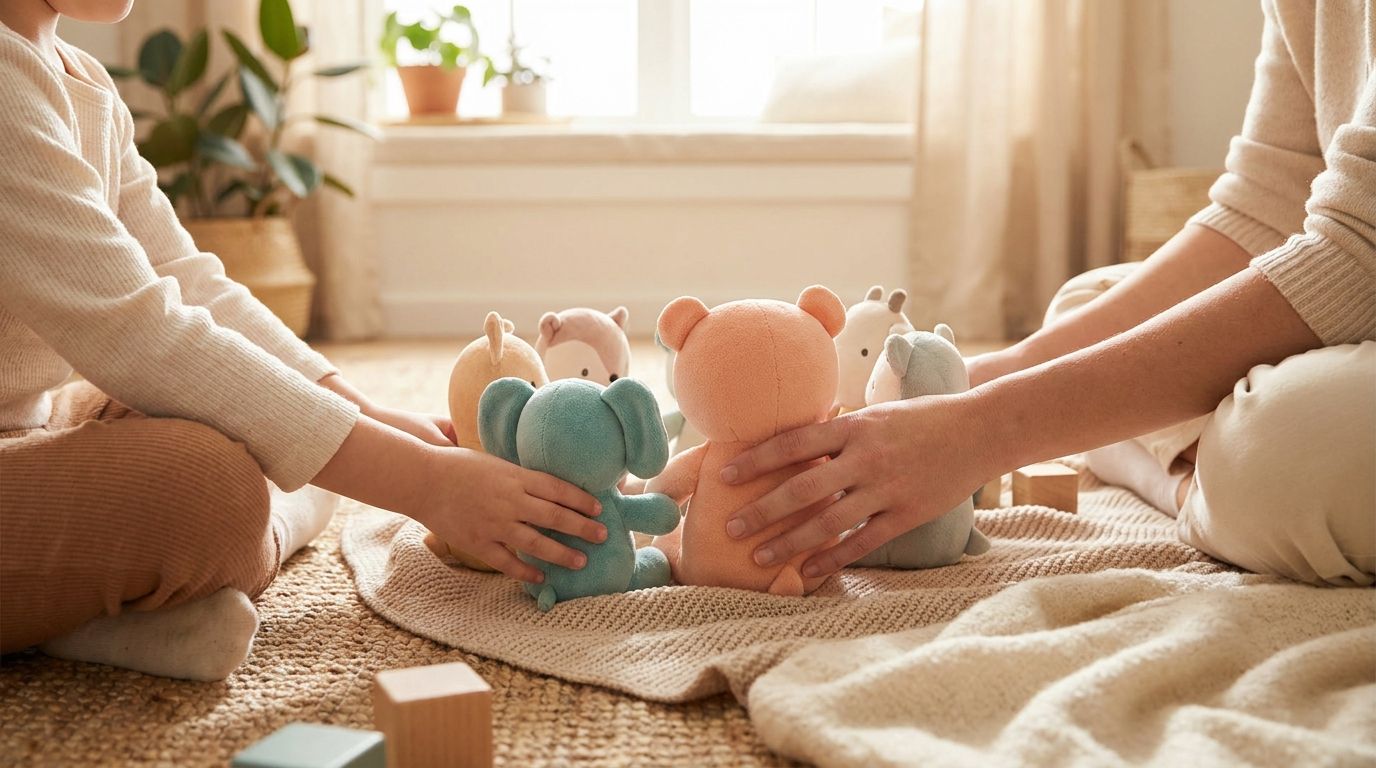
You're in the living room, watching your child play with their Ziggyloo app. They're giggling at Bluster's antics as he learns to manage his anger. You see them pause, go quiet for a second, then turn to ask you how Bluster might feel when everything gets to be too much. These moments can look small from the outside, but they're exactly where empathy takes root.
Ziggyloo's characters, from Bluster the Gloom to Flicko the Spark, build a vibrant world where feelings are named, explored, and actually understood. Let's dig into how these characters help children grow their empathy muscles, and what you can do at home to keep that growth going.
Understanding empathy through character connections
Empathy is more than just a buzzword. It's the ability to understand and share what someone else is feeling, to genuinely climb into their shoes for a moment. For children, building that skill early leads to stronger friendships, smoother social interactions, and a kind of emotional intelligence that follows them for life. A study from the University of Michigan found that children who show higher levels of empathy are more likely to have positive interactions with both peers and adults.
Ziggyloo's characters give kids a low-stakes place to practice. When your child connects with Droofa, who carries sadness around like a heavy backpack, or Drizzla, who shows up with quiet compassion, they start recognizing those same feelings in themselves and the people around them. Research backs this up: children with strong empathetic skills tend to have healthier relationships and do better academically, too.
So how do you keep that momentum going at home? A few ideas that actually work:
- Ask open-ended questions. While your child is playing, ask how they think a character feels in a given situation. "How do you think Bluster feels when he can't find his favorite toy?" invites real thinking, not just a yes or no.
- Model empathy. Share your own feelings honestly. If you had a rough afternoon, tell them. "I felt really sad today when I lost my keys. It made me frustrated, just like Bluster!" Let them see that grown-ups have big feelings too.
- Role-play scenarios. Use Ziggyloo characters to act out situations together. Set up a little scene where Bluster and Flicko have a disagreement and need to work through it, and let your child steer the characters toward understanding each other.

The power of storytelling in fostering empathy
Stories do something lectures can't. When a child hears about Bluster learning to name what he's feeling instead of exploding, they don't just absorb the lesson, they start holding it up against their own experiences. A 2022 study published in the Journal of Child Development found that children exposed to narratives involving emotional experiences show measurably improved empathetic responses.
Here are some ways to weave storytelling into your everyday routine:
- Read together. Pick books with characters who feel things deeply and messily. "The Invisible Boy" by Trudy Ludwig or "A Sick Day for Amos McGee" by Philip C. Stead are both wonderful. After reading, ask your child how the character felt and whether they'd have done anything differently.
- Create your own stories. Invite your child to invent a Ziggyloo adventure from scratch. Maybe Kiki the Bunny helps her friends figure out how to share the last piece of something good. The creative freedom lets them work through emotional puzzles on their own terms.
- Connect stories to real life. Bring the narrative back around to something your child has actually lived. "Remember when you felt sad like Droofa? What helped you feel better?" It normalizes the feeling and opens a door.
Learning through play: Ziggyloo's approach
Play isn't just fun. It's how children make sense of the world, especially the confusing emotional parts of it. Ziggyloo's adaptive learning system is built around this, letting kids explore feelings interactively through characters like Chirp, who teaches teamwork, and Tula, who nudges them toward kindness. According to a 2021 report by the National Association for the Education of Young Children, children who engage in play-based learning develop stronger social skills and emotional understanding than those who don't.
To support that kind of learning at home:
- Encourage imaginative play. Set up a puppet theater (even a cardboard box works, honestly) and let your child act out a scene where Bluster and Flicko have to talk through a disagreement. You'd be surprised how much emotional problem-solving happens in those fifteen minutes.
- Incorporate games. Cooperative board games and card games that ask players to consider how others feel are great tools. Games like "The Empathy Game" make the whole thing feel like play, because it is.
- Reflect after play. When a Ziggyloo session wraps up, ask your child about their favorite character and why. If they loved Flicko because he's patient, talk about what patience actually looks like in real life, and how it helps friends feel seen.
Creating a supportive environment for emotional growth
We all want our kids to feel safe enough to fall apart a little, and safe enough to put themselves back together. The characters in Ziggyloo help with that by offering relatable experiences your child can return to again and again as a reference point for their own feelings.
Some practical ways to build that safety at home:
- Celebrate emotional expression. When your child names a feeling, any feeling, meet it with openness. "It's okay to feel angry sometimes. Bluster feels that way too. Let's talk about what's going on." That simple response tells them their inner life is worth talking about.
- Model self-care. Show them what it looks like to take care of your own emotional health. If you need a walk or ten quiet minutes with a journal, say so. Children learn what they see, and what they see you doing becomes their template.
- Use character lessons in daily life. When a tough moment comes up, bring in a familiar face. Remind them of Flicko's patience or Drizzla's compassion. Linking those lessons to real situations helps the learning stick in a way that feels natural, not like a lesson at all.
By staying curious and engaged alongside your child, you're not just helping them understand empathy, you're helping them build the emotional foundation they'll stand on for the rest of their lives.
FAQ
How can I help my child understand empathy better?
Start with the characters they already love. Ask open-ended questions about how Drizzla might feel when Droofa is sad, and let your child sit with the answer for a moment. The goal isn't the right answer. It's the thinking.
What role does play have in developing empathy?
Play is where children feel free to experiment with feelings without real-world stakes. Characters like Chirp and Tula give them a framework for exploring teamwork and kindness, and play also helps children process real-life events in a way that feels manageable and even fun.
Can empathy be taught?
Yes. Empathy grows through consistent conversations, storytelling, and shared play. Modeling empathetic behavior matters enormously, but so do the small daily moments when you name a feeling out loud and invite your child to do the same.
How do Ziggyloo characters help with emotional learning?
They present relatable scenarios with real emotional weight, without ever being scary or overwhelming. When a child watches Kiki help a friend or sees Bluster find a way to calm down, they naturally start connecting those scenes to situations in their own lives.
What are some activities to promote empathy at home?
Reading books with emotionally rich characters, role-playing with Ziggyloo figures, and getting involved in small kindness projects are all great starting points. Even mealtime conversations, just a quick "what was the hardest part of your day?" can build the habit of talking about feelings regularly.
How can I encourage my child to express their feelings?
Create a space where no feeling is the wrong feeling. Use Ziggyloo characters as conversation starters, especially after a tricky scene or story moment. Journaling, drawing, or even just doodling about a feeling can also help kids who find words hard to find at first.
When you catch your child laughing with Ziggyloo's characters, or going quiet to think about how someone else might feel, know that something real is happening in that moment. You're not just watching them play. You're watching them learn to love people well. And that's worth celebrating every single time.
Join the conversation
Subscribe to comment
Join the Ziggyloo family newsletter to leave a comment — and get gentle learning tips and community stories in your inbox. No spam, unsubscribe anytime.