
Character spotlight: Boji and building brave learning routines after a setback
Boji shows how small, steady returns can rebuild learning confidence for neurodivergent children after a hard mistake or missed goal.
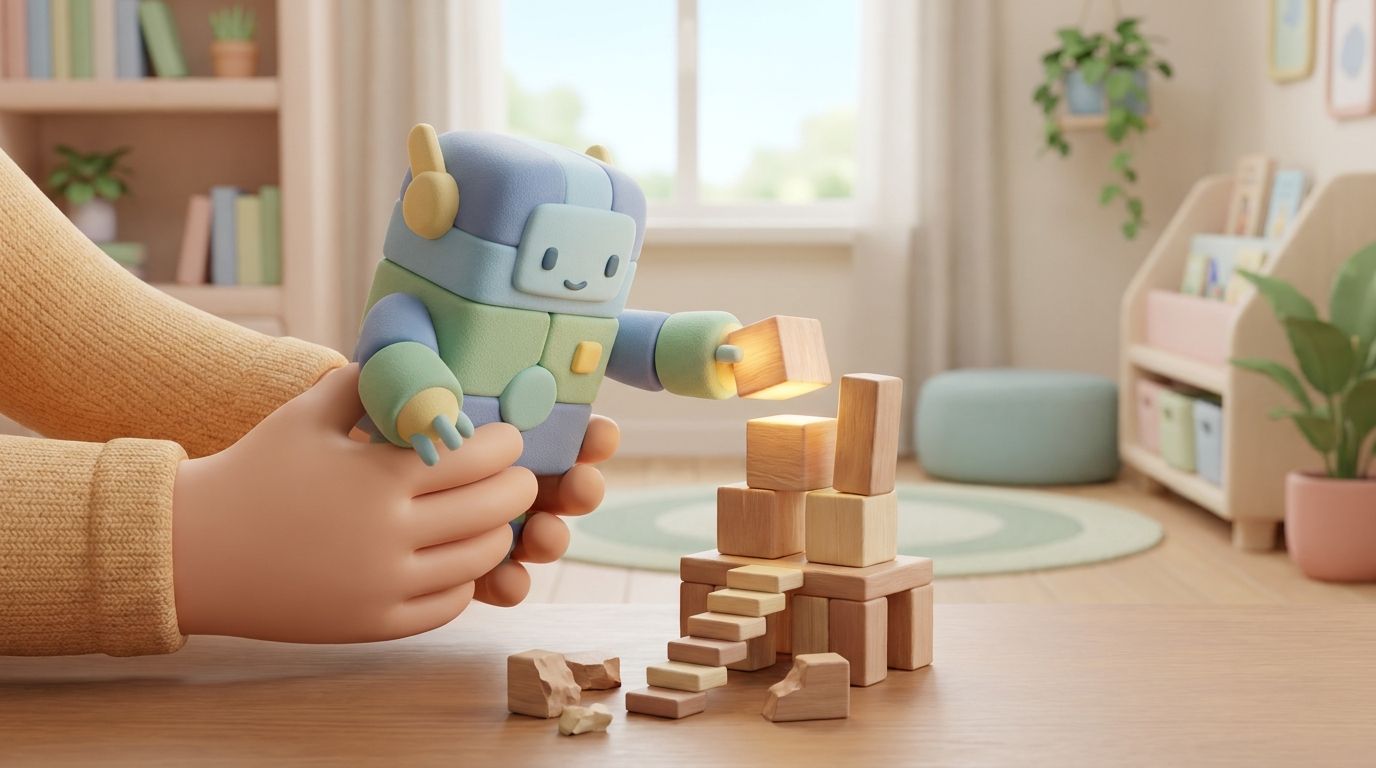
At 7:42 on a Tuesday morning, a workbook slid off the kitchen table and landed beside the toast. Your child had missed one answer, crossed out three more, and announced they were "bad at everything." Boji, the brave tiger from Ziggyloo, would not rush in with a shiny speech. He would help make the next try feel small enough to reach.
Learning confidence for neurodivergent children grows through safe returns, not perfect streaks. To help a child recover from failure, you can name what hurt, lower the demand, and offer one clear way back into the routine.

That kitchen moment can feel enormous. You may have spent twenty minutes getting everyone settled, found the right pencil, cleared the cereal bowl, and made peace with the clock. Then one difficult question turns the whole table into a tiny courtroom. Nobody asked for the courtroom. Yet there it is, complete with a prosecuting voice and crumbs.
Boji belongs in that moment because bravery is not the same as fearlessness. A child can feel disappointed, embarrassed, tired, or angry and still take one small step. That is the kind of courage worth building.
Boji's lesson: courage is a return, not a performance
A setback can make learning feel unsafe. A child may avoid the worksheet, hide the reading book, push away the tablet, or say they never want to try again. This does not always mean they are being stubborn. Their brain may be protecting them from another sharp feeling.
Boji's brave routine begins with a different message: "That was hard, and you are still allowed to come back." You do not need to turn the mistake into a lesson right away. Sit beside the disappointment before asking for another attempt.
The phrase "try again" can land badly when a child is already flooded. Try a softer version instead:
- "You do not have to fix this minute."
- "We can look at one small part when your body is ready."
- "The mistake gave us information. It did not give you a label."
- "You can choose whether we read it, draw it, or talk it through."
These words do not remove the setback. They remove the threat that the setback will decide everything.
Some children need movement before they can return. Some need quiet. Some need to hear the same reassuring sentence several times because one hearing cannot compete with the size of the feeling. You know your child's patterns better than any chart does, and adjusting the plan is completely reasonable.
The American Academy of Pediatrics often describes resilience as something built through supportive relationships and repeated chances to cope. In plain language, your child does not need a grand confidence speech. They need a trusted adult who stays steady while the hard feeling passes.
What does learning confidence look like after a setback?
Learning confidence is not a child smiling after every mistake. It may look like staying near the table, accepting help, choosing a new pencil, or coming back to a task tomorrow. A child can still be upset and be making progress.
Watch for the quieter signs:
- Your child says, "I need help," instead of leaving immediately.
- Your child tolerates one correction without ripping the page.
- Your child returns to a familiar activity after a break.
- Your child explains what part felt confusing.
These moments are easy to miss because they do not look like school-photo success. They are still real changes. Sometimes courage wears pajamas and has a cracker in one hand.
How to help a child recover from failure without adding pressure
When a child has fallen out of a learning routine, your first job is not to restore the entire routine. Start by helping the child feel safe enough to reconnect. The work can wait a few minutes. The relationship should not have to.
You can use a simple recovery sequence. It is not a strict recipe, and you can skip a step when your child needs less talking.
Name the impact
Keep your words concrete. "You worked hard, and the answer still felt wrong" is more useful than "You are overreacting." The first sentence makes room for the child's experience. The second usually makes the experience louder.
You might say, "That surprise was rough," or "You expected this to be easier." If your child rejects the words, do not turn empathy into another demand. Just say, "I may have guessed wrong. I am here."
Separate the child from the result
A failed attempt is an event, not a personality report. You can say, "This page did not work today," rather than "You are not ready for this."
This distinction matters for children who already notice every difference between themselves and classmates or siblings. A missed answer may quickly become "I am stupid," "I always mess up," or "Everyone else can do it." You do not need to debate the statement like a lawyer. Offer a short bridge back to reality: "Your brain had trouble with this part. Brains can need a different route."
Shrink the next step
A full task can feel impossible after a disappointment. Make the return specific and brief:
- Read one sentence together.
- Circle one item to revisit later.
- Build the first part of a pattern.
- Choose between two ways to show the answer.
Then stop while the experience is still manageable. Ending early is not giving up when the goal is to rebuild trust. You are teaching your child that returning does not mean being trapped.
Mark the return, not just the result
Try saying, "You came back to it," or "You told me what you needed." Avoid turning every effort into a party, especially if your child dislikes attention. A quiet nod, a drink of water, or moving the finished item into a "done for today" spot may be enough.
A 2023 report from the Centers for Disease Control and Prevention notes that children develop along different paths and that developmental support works best when it responds to individual needs. That idea applies at the kitchen table too. The same recovery plan will not fit every child, or even the same child every afternoon.
Resilience activities for kids that feel safe and useful
Resilience activities for kids do not need to look like lessons about resilience. They can be tiny practices that let your child experience a setback, make a choice, and find a way back. Use them during calm moments, not only after a hard event.
The "not yet" basket
Keep a small basket, folder, or tray for work that needs another look. The child does not need to finish the item before it goes there. The purpose is to move it out of the immediate pressure zone without declaring it a failure.
Place a note beside it that says, "Not today is not never." You can write the note yourself if reading is not the goal. Once or twice a week, offer two choices from the basket. Your child can select one, ask for help, or put it back.
The choice matters. A child who has felt controlled by difficult work may need proof that returning does not mean losing all control.
The two-route challenge
Choose a familiar task and show two possible routes. Your child might solve a math problem with blocks or a drawing. They might answer a reading question by speaking, pointing, or choosing from pictures.
The point is not to create more work. The point is to help your child learn that one blocked route is not the end of the road. If one way feels awful, you can say, "Let's see whether another way feels less bumpy."
The brave replay
After a calm return, revisit the setback for less than two minutes. Ask what happened, what helped, and what could be different next time. Use a drawing, three boxes, or a few spoken words if writing adds pressure.
You can record the answers in a simple format:
- "The hard part was..."
- "My body needed..."
- "Next time I can..."
- "An adult can..."
Do not require a polished answer. "I don't know" is information too. Offer possibilities without insisting that one is correct.
The retry token
Give your child a physical object that represents one optional return. It could be a button, card, wooden shape, or sticker. The token is not a reward for getting the answer right. It is a reminder that one attempt does not have to be the final attempt.
Your child can place it near the task, carry it, or decline to use it. If they decline, that is still communication. You can offer it another day without making it a test of bravery.
Ziggyloo can support this kind of return when you use its AI learning companion, story library, or Game Zone as a lower-pressure entry point. You can review parent-visible chat transcripts to notice whether your child asks for a hint, changes the subject, or returns later. The goal is not to make the app do the emotional work for you. It is to help you spot patterns and choose a gentler next step.
Build a brave routine that can bend
A routine helps most when it gives your child a familiar doorway, not a locked schedule. After a setback, keep the beginning and ending predictable while allowing the middle to change.
Your routine might always begin with water and a two-minute movement break. Then your child chooses between a story, a game, or one review question. It ends with putting the materials away and naming one thing that felt okay. Simple, repeatable, bendable.
A bendable routine might include:
- A clear start signal, such as the same song or lamp.
- A short task with a visible stopping point.
- A choice between two ways to participate.
- A planned exit that does not feel like punishment.
If your child refuses, you can protect the routine without forcing the task. Sit nearby while they draw. Read aloud while they build. Let the planned ending happen even if the learning part did not. This keeps the routine connected to safety rather than turning it into a daily negotiation marathon.
The next day, begin with something your child has done before. Do not make the first task a dramatic retest of yesterday's failure. Confidence grows when the child gets to remember, "I know how to start."
You can also keep a return log, but make it warm and brief. Write the date, the hard moment, what helped, and what your child chose next. Avoid scores unless your child enjoys them. Over time you may see useful patterns: mornings go better after breakfast, spoken answers work better than handwriting, or a short break prevents the task from becoming too large. Honestly, spotting those patterns was the thing that helped me stop blaming myself for the hard days.
When should you pause the routine completely?
Pause when your child is panicking, becoming unsafe, shutting down for a long period, or showing signs of sensory overload. A pause is not a surrender. It is a way to stop adding strain while you help the body settle.
You can return later, or you can decide that the day's learning is finished. A child who learns that adults can stop before things become unbearable may trust the next invitation more readily.
And you deserve a pause too. It is hard to stay calm when you have watched your child work so hard and still feel defeated. You may need to put the pencil down, breathe beside the sink, and remind yourself that one rough Tuesday is not a forecast.
FAQ
How can I help my child recover from failure?
Start by naming what felt hard without judging the reaction. Separate the result from your child's identity, offer a small choice, and invite one manageable return when your child is ready. You can stop after that small step.
What builds learning confidence for neurodivergent children?
Learning confidence grows when children experience safe support, flexible ways to participate, and repeated chances to return after difficulty. Notice asking for help, staying nearby, or trying a different route, not only correct answers.
What are good resilience activities for kids?
Try a "not yet" basket, a two-route challenge, a short brave replay, or an optional retry token. These activities let your child practice recovery without making them perform confidence on demand.
Should I make my child try again after a mistake?
Not immediately and not every time. First check whether your child needs a sensory break, comfort, movement, or a clear ending. A later return is more useful than a forced attempt made while your child feels trapped.
Boji's version of bravery is wonderfully ordinary. It is the pause before the second attempt, the hand that moves the workbook away, the choice to come back tomorrow. You do not have to turn every setback into a lesson or every hard day into a success story.
For today, you can make one safe doorway back in. Offer one small choice. Let your child stop without shame. Then notice what happened when the pressure lifted. That quiet moment is often where learning confidence starts growing again.
Join the conversation
Subscribe to comment
Join the Ziggyloo family newsletter to leave a comment — and get gentle learning tips and community stories in your inbox. No spam, unsubscribe anytime.