
Character Spotlight: Nora and communication support when words are hard
When your child can’t find the words, Nora helps you translate feelings and needs into something they can share. Here’s how to start.
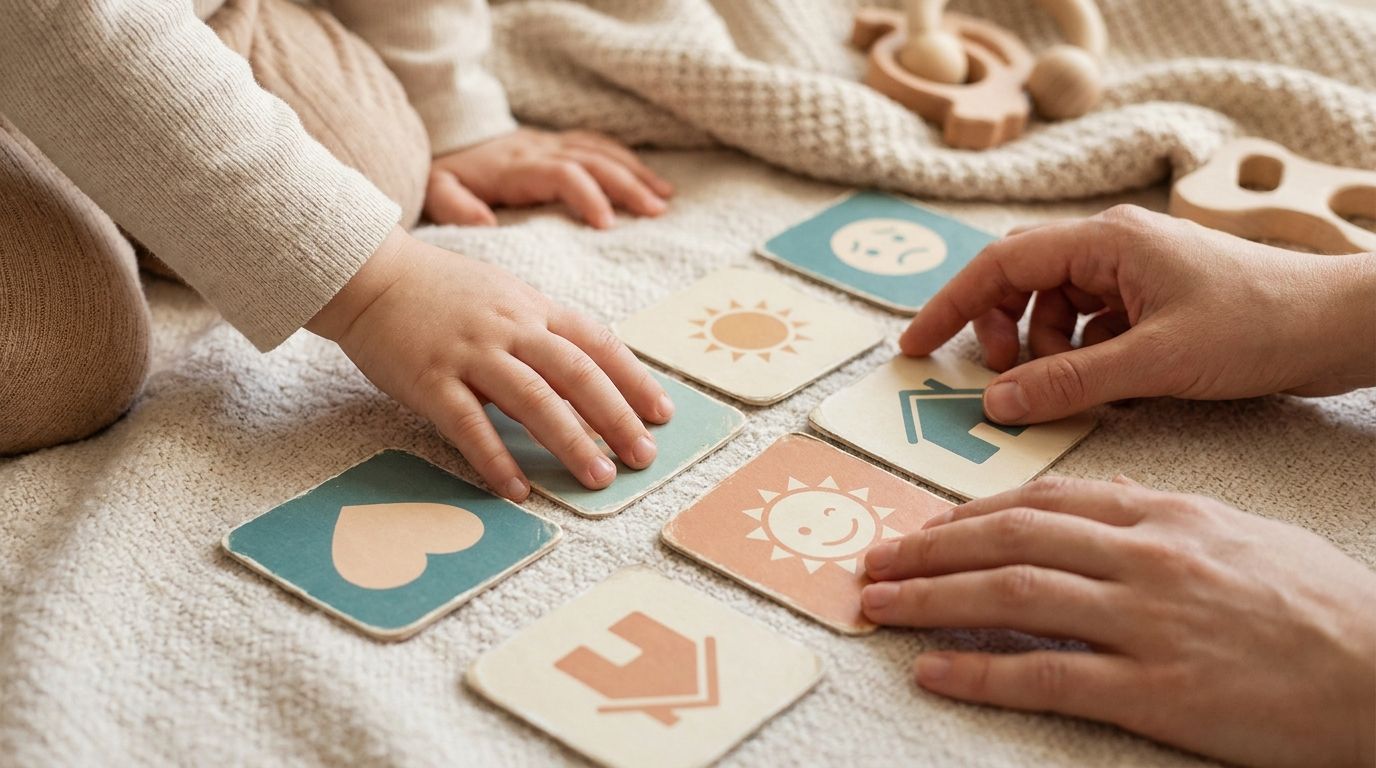
You're standing at the snack counter, and the banana is still in the bag. Your child is melting down, hands flapping, face tight, but all you get is "No!" or nothing at all. Nora's job is to help you catch what's underneath that moment and give it a name your child can actually use.
With Nora Ziggyloo, communication support is built around feelings and needs. It supports nonverbal communication too, so kids aren't stuck waiting for perfect words. This matters so much for autism parenting, because "can't explain" usually means "can't access words yet," not "doesn't know."

Why Nora helps when words are hard
Nora Ziggyloo is the character you bring in when your child is communicating in every way except the one you're asking for. Maybe they point and push, hide under the table, grab your sleeve, or go completely silent. Those signals are real communication. Nora helps you treat them like information.
A lot of parents get stuck in the same loop: you ask "What's wrong?" Your child looks back at you like you've requested rocket science. You keep asking. Eventually you're both frustrated, and the original need stays unsolved.
Nora's approach is simple. You slow down, you notice the pattern, then you offer a small set of words that match what you see. Not a long speech. Not a quiz. Just a gentle guess you can revise.
This lines up with what many speech and communication specialists emphasize in everyday practice: kids learn better when you model language that fits the moment, not language that arrives too late. Research on early communication consistently shows that children benefit from repeated, meaningful exposure to words in real contexts, rather than one-time "teaching" sessions during calm moments.
Here's the big parenting shift: you aren't trying to force language out of your child. You are making language available when their brain is busy.
What you do in the moment
Use a "label and offer" script. Label what you see. Offer two choices.
- "You look upset. Do you need a break or the snack?"
- "Your body is tense. Is it too loud or do you need help?"
- "You're pulling away. Is it finished or do you want a hug?"
If your child doesn't respond with words, you still win. If they nod, point, move toward the break spot, or push the snack away, you just got the data you need.
Scenario 1: The car line meltdown and the "need menu"
The car line is where my patience goes to get absolutely flattened. One afternoon, we pulled into the line and my child started whining immediately. Then the whining turned into stomping. They wouldn't answer "What do you need?" and they weren't even looking at me.
I wanted to fix it fast. But fast meant more talking, more questions, and more stress for both of us. Nora's communication support would not let me do that.
So I changed the question.
Instead of "What's wrong?" I used a need menu. I picked two likely needs based on the moment:
- "Do you need quiet, or do you need to move?"
- "Do you need a break, or do you need me next to you?"
My child pointed at their ears. That one gesture told me the loudness was the problem, not the timing. I lowered the radio and rolled the window up a bit. The stomping slowed down.
Then we did the Nora step that parents often skip: we labeled the win.
- "You showed me you needed quiet."
- "Next time you feel that, we can do quiet right away."
That's emotion labeling in real time. It turns a meltdown into a communication moment.
Why this works for nonverbal communication
Nonverbal communication is not "less communication." It is communication that arrives through the body first. When you respond to the body, you build trust. When you build trust, words become easier later.
And if you're thinking "But what if I guess wrong?" Good. You are allowed to guess wrong. Nora gives you permission to correct, and the correction is part of the learning.
Try a quick repair:
- "I thought quiet. Are you actually needing movement?"
- "Okay, you pointed there again. Let's try that."
Kids learn that their signals matter. That alone can soften the intensity of the next moment.
Scenario 2: Grocery store frustration and feelings and needs
Grocery stores are sensory obstacle courses. One Saturday, we stopped for apples and my child started getting frantic. Their hands kept reaching for things and then pulling back. They looked overwhelmed, but they also wanted to help.
I could feel myself gearing up for the classic parent move: "Use your words."
But my child's brain was not in "words" mode. It was in "too much input" mode.
So I used Nora's feelings and needs approach in a way that didn't require a perfect sentence.
I said:
- "This is a lot. Do you need space or a job?"
Then I gave a job that matched their energy.
- "Can you be the apple finder?"
They calmed down enough to point at the apples. That point was not random. It was their way of saying, "I need something structured, not more noise."
Once we were in the checkout line, I did emotion labeling again, but gently:
- "Your body was feeling overwhelmed."
- "You showed me you needed a job."
Later, at home, I kept it simple. We practiced the two choices with real objects:
- "Space or job?" while we set up a mini "apple task" in the kitchen.
This is how you build communication support without turning everyday life into speech therapy.
A tiny script for parents
When you notice frustration building, try this order:
1) Notice the body (fast hands, tight face, pulling away)
2) Name the emotion (overwhelmed, upset, scared, frustrated)
3) Offer two needs (space, help, break, movement)
You don't need to do all three every time. But having a default order keeps you from spiraling into questions.
Also, keep your language short. Kids who struggle with expressive language often understand far more than they can produce, so short sentences give their brain a real chance to keep up.
Scenario 3: Bedtime silence and emotion labeling without pressure
Bedtime is where "I don't know" lives in our house. One night, my child refused to say what they wanted. They just lay there staring at the ceiling like it was hiding the answers. (Honestly, same.)
I could hear my own voice getting louder: "Tell me what you need."
So I stopped asking for an answer and started offering labels. That's the shift.
Nora's nonverbal communication support looks like this:
- "Are you tired or are you worried?"
- "Do you want lights off or a story?"
- "Is your body feeling too much or is it just hard to stop?"
My child didn't say anything at first. Then they reached for the blanket and pulled it up to their chin. That action said "tired" and "need comfort" all at once.
I matched it.
- "You want comfort. Blanket close."
- "Do you want a quiet story or no story?"
They tapped the book twice. That was a yes.
This is emotion labeling that respects the pace of a nervous system that is still switching gears.
How to reduce "word pressure" at bedtime
If your child freezes when you ask questions, try this instead:
- Offer choices with props (blanket, book, water)
- Use the same two options nightly for a week
- Keep your voice calm and boring (genuinely my favorite parenting skill to practice)
When kids can predict the communication format, they spend less energy searching for words and more energy just responding.
And if you're worried this is "too much structure," remember: structure is often exactly what helps neurodiverse kids feel safe enough to communicate.
How to build communication support you can use tomorrow
Nora's biggest gift is that you can use it on any day, with any child, even when you don't have the perfect vocabulary or the perfect plan. You just need a few repeatable moves.
Step 1: Notice patterns, not one-off moments
Kids often communicate the same need in completely different ways. One day it is stomping. Another day it is hiding. Another day it is refusing the door.
Pick one pattern and track it for a week. For example:
- Doorway refusals happen after noisy places
- Table refusals happen when they are hungry but tired
- Silence happens when they are overstimulated
This is not about diagnosing. It is about building your "need radar."
Step 2: Use two-choice language
Two choices is the sweet spot for many kids who struggle with expressive language. It gives them a way to respond without needing a full sentence.
Try these pairs:
- break or help
- quiet or movement
- snack or water
- finished or more time
You can swap the words later. The format matters first.
Step 3: Label and then wait
After you label, pause. Let your child respond with whatever they can do. Pointing counts. Pulling away counts. Handing you a cup counts.
Then reflect it back:
- "You pointed to the cup. You needed water."
- "You pushed the book away. You wanted finished."
This reflection builds a bridge between nonverbal communication and words.
Step 4: Practice in calm moments, but keep it tiny
When everyone is regulated, do short practice. Try a "feelings and needs check-in" during snack or while brushing teeth.
- "Are you feeling wiggly or calm?"
- "Do you need help or do you want to try?"
No worksheets. No long explanations. Just the same words in the same format.
With Ziggyloo's adaptive learning system, you can keep communication support consistent across the day, so your child hears the same kind of language in more than one place.
When your child still can't use words: what to do next
Sometimes kids can't access words even after you label and offer choices. That can feel genuinely unfair, especially when you can see the need right in front of you. But the goal is not to demand words. The goal is to help your child communicate in the way their body can actually manage.
Here are a few options that work well alongside Nora's approach.
Use "response options" instead of "answers"
Instead of asking for a sentence, ask for a response.
- "Show me with a point: quiet or movement."
- "Pick with your body: blanket or lights."
If your child can't point, model it yourself. Point to the quiet spot, then the movement spot, and see which direction they drift.
Pair words with actions
Your child might understand words but struggle to say them. Pair the word with a repeatable action.
- "Break" while you sit in a designated break spot
- "Help" while you hand them a simple task
- "All done" while you close a container
Over time, the word becomes a label for the action, not a demand for speech.
Keep emotion labeling consistent
Pick a small set of emotion words you will use often. Words that come up constantly in real daily life:
- upset
- overwhelmed
- scared
- tired
- frustrated
Use them during real moments, like you did in the car line, grocery store, and bedtime examples above.
Then repeat them later when things are calm:
- "Last night you were overwhelmed. Tonight we tried quiet story."
This is how kids build the link between internal states and external language.
A note on research and expectations
Expressive language varies widely in children with autism. Many children understand far more than they can say. Communication research and clinical practice consistently emphasize that supporting expressive language through modeling, choice-making, and responding to nonverbal cues can improve functional communication over time.
You don't have to wait for "speech" to start communication support. You already have it, in the signals your child is sending right now.
FAQ
How do I know if my child is communicating a need or just "being difficult"?
Look for patterns. If the same behavior shows up in similar situations, it is usually a need you can support. When you respond with a labeled guess and a choice, you learn fast.
What if my child never answers with words, even when I offer choices?
That is still communication. Use nonverbal response options like pointing, moving toward items, pushing away, or handing you a picture card if you use them. Reflect what you think you saw and keep the format consistent.
How can I help with emotion labeling when my child is melting down?
Say one short label and offer two choices. Then wait. If you keep talking while they are dysregulated, you usually get less response, not more. Your job is to make language available, not to collect a perfect explanation.
Are autism parenting tips like this only for kids with autism?
The ideas work for any child who struggles to express needs with words. Many kids with ADHD, anxiety, speech delays, or sensory differences benefit from the same "label and offer" approach. The main focus is communication support that meets the child where they are.
What should I do if my guess is wrong?
Repair quickly and kindly. "I thought quiet. You showed me movement. Let's try movement." Wrong guesses teach flexibility, not failure, and they still validate your child's signals.
Your next step tonight
Pick one daily moment that already happens like clockwork. Bedtime counts. Snack counts. Car line counts.
Then try a Nora-style label and two choices once tomorrow. Keep it short. Wait for any response, even a gesture. Afterward, reflect the need back in one sentence.
You are building a communication bridge. Not a test.
Join the conversation
Subscribe to comment
Join the Ziggyloo family newsletter to leave a comment — and get gentle learning tips and community stories in your inbox. No spam, unsubscribe anytime.