
Character spotlight: Poki and letting children explore their own creative process
Poki helps you make room for process over product art, so your child can create, change direction, and enjoy creative activities without pressure.
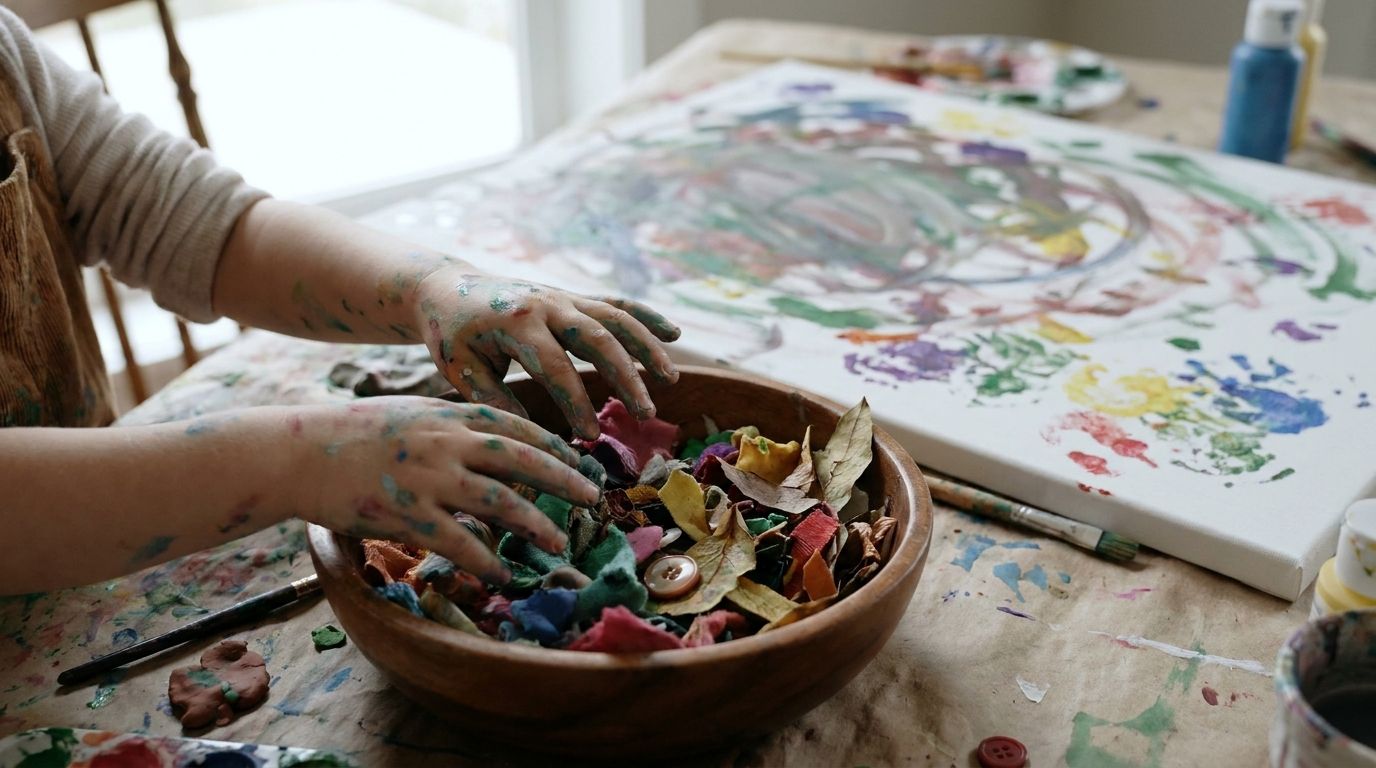
At 6:18 on a Tuesday evening, three purple crayon lines run across your kitchen table, one paper plate has become a moon, and the glue is somehow on your elbow. Your child is making something that looks nothing like the example you found online. That is not a problem to fix. Creative activities for neurodivergent children work best when you protect the process, not the finished product, and Poki gives you a playful way to practice that shift.
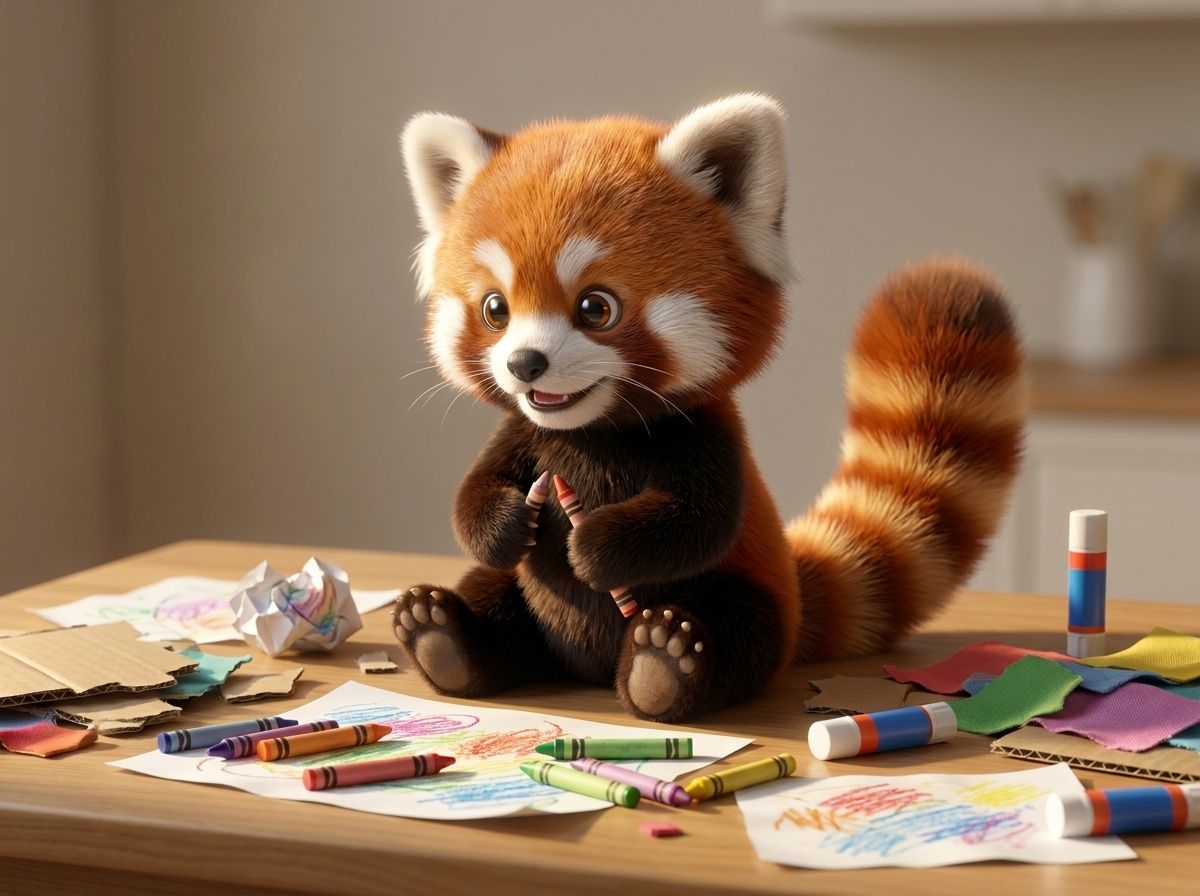
Poki is a reminder that art can be a place for experimenting, repeating, stopping, and starting again. You do not need to turn every drawing into a lesson or every craft into a keepsake. Offer materials, reduce pressure, and let your child decide what the making means.
What Poki teaches about process over product art for kids
Process over product art for kids means you pay more attention to what happens while your child creates than to whether the result looks recognizable or polished. The important moments might be choosing a color, testing a texture, tearing paper, changing the plan, or deciding the whole project is finished after four minutes.
Poki fits this idea because creative work does not need one correct ending. Your child might begin with a picture of a house and end with a map of an imaginary place. A planned paper collage might become a collection of tiny scraps sorted by color. A painted sun might disappear under three thick layers of blue. The result is allowed to change, and that is the whole point.
The pressure to make something recognizable can be especially draining for autistic children and children with ADHD. Fine motor demands, sensory discomfort, uncertainty about the instructions, fear of making a mistake - these things compete for attention before a single mark hits the page. When you ask "What are you making?" too early, your child may feel the work needs a defensible answer before it has had time to become anything at all.
Try replacing product-focused questions with process-focused ones:
- "What part feels interesting right now?"
- "Do you want to keep this part or change it?"
- "Would more space, color, movement, or quiet help?"
- "Do you want me nearby, or would you rather work alone?"
You can still admire the finished piece. You can still put it on the fridge. The shift is small but real: you celebrate the choices and discoveries, not just the picture you hoped to see.
Why creative freedom can feel hard for your child
Open-ended art sounds easy until you place a blank sheet of paper in front of a child who wants clear rules. Some children freeze because there are too many choices. Others begin quickly, then become upset when the materials do not behave as expected. A child who loves drawing may avoid paint because the wet texture feels unpleasant, while a child who dislikes pencils may become deeply absorbed in arranging stickers.
Supporting creativity in autistic children does not mean removing all structure. It means offering enough structure for the activity to feel safe, then leaving room for personal decisions. You can provide a small selection rather than an entire cupboard. You can show one possible action without presenting it as the correct result.
Say it's Saturday morning and 7-year-old Isaac wants to build a creature from cardboard but doesn't know how to begin. You might place two boxes, masking tape, washable markers, and soft fabric beside him, then say, "You can join these, cover them, cut them, or leave them apart." That gives him a starting point without taking over the whole project.
A 2020 clinical report from the American Academy of Pediatrics described play as important for children's development, communication, and emotional health. Creative play also gives your child a way to communicate choices that are hard to explain with words. A child does not have to narrate the meaning for the activity to matter.
Watch for signs that freedom has become too much:
- Your child keeps asking whether the work is right.
- Your child abandons materials before trying them.
- Your child becomes distressed when you add a suggestion.
- Your child repeats one action because it feels predictable.
You can respond by narrowing the invitation. Offer two materials, two colors, or two places to work. Predictability and choice can live in the same activity.
Build creative activities for neurodivergent children around choices
You do not need a complicated craft plan. A strong creative invitation can fit on one tray and take less time than finding the missing pair of scissors. Choose a goal that describes an action rather than a product: "make marks," "arrange shapes," or "change one material."
A useful setup has three parts:
- A clear beginning, such as choosing one surface or material.
- A flexible middle, where your child can repeat, alter, or pause.
- A clear ending, such as placing tools in a basket or taking a photo.
Imagine a rainy afternoon with 5-year-old Amara. She wants to draw but becomes upset when the paper feels too thin. You can offer a cardboard square, a soft pencil, chunky crayons, and a strip of textured fabric to place underneath. Her activity becomes a test of pressure, sound, and movement rather than a demand to draw a person.
You can also use choice cards or simple spoken options:
- "Dots or lines?"
- "Big paper or small paper?"
- "Work at the table or on the floor?"
- "Keep going or pause?"
These options support autonomy without requiring your child to invent a plan from nothing. If speaking is difficult during focused work, pointing, looking, moving an item, or handing you a tool can all count as a choice.
Try not to sneak a hidden school task into every invitation. If you want to practice color names, name colors naturally while your child works. If your child never repeats the word, the activity has not failed. You are building an experience where communication, movement, and curiosity can happen without performance pressure.
Ziggyloo can support this approach through StorySpark Studio, where your child can create their own stories and make choices about what happens next. You can focus on the choices your child makes, rather than correcting spelling, plot, or drawing style. The same habit works away from a screen.
Let sensory needs guide the art invitation
Creativity often depends on whether the body feels ready. A noisy kitchen, a scratchy apron, a strong glue smell, or wet hands can make an art activity feel impossible before it begins. That does not mean your child lacks interest. The setup may simply be asking for too much at once.
Start by noticing what your child avoids and what they seek. Some children press hard, tear materials, or make repeated marks because they want strong movement feedback. Others need a light touch, dry tools, dimmer light, or distance from anything messy. There is no single sensory-friendly art setup, and honestly, figuring out your child's version is half the work.
You can adapt the invitation without announcing that you are doing something special:
- Use painter's tape instead of liquid glue.
- Offer a brush, sponge, roller, or cotton swab instead of finger paint.
- Place paper on a wall, floor, tray, or lap desk.
- Keep a dry cloth nearby before the activity starts.
- Let your child wear headphones or work in a quieter room.
Take 8-year-old Noah, who loves the sound of tearing paper but hates the feeling of glue. You can make collage pieces available with a glue stick, tape loops, or reusable putty. He still gets to explore tearing, arranging, and layering. The adhesive does not get to decide whether he can participate.
The National Autistic Society has long described sensory differences as part of many autistic people's daily experience. That matters for art because the materials are part of the task. A child cannot easily explore creative ideas while using all their energy to tolerate an unpleasant sensation.
You can also plan an exit. Say, "You can stop when the tray is full, when the timer rings, or when you tell me you are done." A predictable ending can make it easier to begin.
Respond without taking over the creative process
Your response can either open the door wider or quietly turn art into a test. Even warm praise can become uncomfortable when it lands as a judgment. "That is the best dog you have ever drawn" sounds kind, but it tells your child that some drawings rank above others.
Try describing what you notice, then asking whether your child wants to share more. You might say, "You covered the paper with blue," or "You pressed very lightly here." Then pause. Your child may explain, gesture, continue working, or offer no response at all.
For 4-year-old Leila, a row of black circles may be a road, a storm, a pattern, or simply a satisfying movement. You do not have to guess. You can say, "I see many circles. Do you want to tell me about them?" If she says no, you can answer, "That is okay. I like seeing how you chose to place them."
Useful responses include:
- "You changed your plan, and the new idea is yours."
- "You kept trying different tools."
- "You found a way to make the paper do something new."
- "You are finished. We can leave it as it is."
Try not to fix a crooked eye, add a missing window, or demonstrate how you would do it unless your child asks. Your version may be technically neater, but it can make the project feel like yours. (A small self-deprecating note from every adult who has ever helped with a craft: your glue technique is probably not the universal standard of excellence.)
If your child asks "Is it good?" you can answer honestly without turning the moment into a lecture. "It is yours, and I can see the choices you made. Do you like any part of it?" If they dislike it, offer a new surface or a fresh material rather than insisting they feel proud.
Turn mistakes and unfinished work into useful information
A creative process includes failed ideas, abandoned pieces, accidental spills, and projects that stop before the adult thinks they are done. Your child may learn more from a paper that did not work than from a finished craft copied step by step.
When something goes wrong, describe the change without making it dramatic. "The water spread farther than you expected." "The tape pulled the paper." "The tower fell." Then offer space for a next decision. Your child might cover the mark, cut around it, start again, or decide the piece is complete.
Consider 9-year-old Rowan, who spends twenty minutes building a paper bridge, then tears it apart after one side bends. You can resist the urge to rescue the structure. Place the pieces beside a fresh strip of card and say, "You can rebuild, use the pieces another way, or stop here." Each option respects the work already done.
A 2021 report from Harvard Project Zero's research on visible thinking described the value of making learning processes noticeable through questions, documentation, and reflection. You can use that idea without turning art into an assessment. Take a photo of the work at different stages, save a scrap, or let your child choose a title. The record can show change without grading it.
You can keep a simple process note for yourself:
- What material did my child approach?
- What action did they repeat?
- What caused stress or interest?
- What choice did they make without help?
These notes can guide your next invitation. If your child spent ten minutes sorting scraps but ignored the drawing tools, offer sorting, layering, and matching next time. If the activity ended after a loud spill, reduce the amount of liquid. You are gathering information, not collecting evidence for a report card.
Make a gentle creative routine that can change
A creative routine does not need to happen every day or end with a display wall. It may be ten minutes after breakfast on Sunday, a basket that stays on a low shelf, or a drawing session during the quiet part of the afternoon. The routine should make beginning easier, not create another obligation.
Choose a few materials your child can access safely. Keep the setup visible if seeing it feels inviting, or store it out of sight if visual clutter feels tiring. Let your child help decide where finished or unfinished work goes. A folder, drying rack, photo album, or recycling bin can all be valid endings.
You can use this simple rhythm:
- Invite: offer one activity and two choices.
- Notice: watch for interest, discomfort, and repeated actions.
- Protect: step in for safety, but leave the creative decisions with your child.
- Close: give a clear ending and save only what your child wants saved.
Poki's place in this routine is not to tell your child what to make. Poki represents the permission to follow an idea without knowing where it will go. That permission can help you loosen your own grip on the finished result, too. You may still accidentally buy the wrong-size paper. We have all stood in a craft aisle holding six nearly identical glue sticks, wondering who we became.
If you use Ziggyloo, you can pair a creative story or StorySpark Studio session with an offline activity. Your child might create a new ending in the story, then draw one detail from it using any materials available. You can ask what changed between the screen and the paper, but you do not need to demand a matching picture.
This week, place three low-pressure materials on a tray. Offer your child one invitation: "You can use these in any way, and you can stop whenever you want." Then watch for the process. Notice one choice. Say less than you think you need to. Let Poki have the last word without saying a word at all: the making belongs to your child.
FAQ
What are creative activities for neurodivergent children?
Creative activities for neurodivergent children include drawing, painting, collage, building, music, movement, storytelling, photography, and arranging objects. The activity works best when you can adjust the sensory demands, offer clear choices, and allow your child to decide what counts as finished.
What does process over product art for kids mean?
Process over product art for kids means you value the child's choices, experiments, movements, and discoveries more than a polished or recognizable result. You can comment on what your child did without correcting the final picture or comparing it with an example.
How can I support creativity in autistic children without adding pressure?
Support creativity in autistic children by offering a small number of choices, adapting materials to sensory needs, and asking open questions only when your child seems available. Avoid requiring eye contact, spoken explanations, or a specific type of finished artwork.
What should I do if my child refuses an art activity?
Treat refusal as information rather than misbehavior. You can reduce the number of choices, change the material, offer a different time, or leave the invitation available without pushing, since creative work is more useful when your child has room to return to it.
How do I praise my child's artwork?
Describe a specific choice or action, such as "You layered the red over the yellow," instead of rating the artwork. You can also ask whether your child wants to talk about it, then accept a yes, no, gesture, or silence as a complete answer.
When you clear the purple crayon lines from the kitchen table, leave one piece of the experiment within reach. Tomorrow, offer a different paper, a new texture, or the same crayon again. Your next step is simple: protect ten minutes for making, ask one process-focused question, and let your child decide where the idea goes.
Join the conversation
Subscribe to comment
Join the Ziggyloo family newsletter to leave a comment — and get gentle learning tips and community stories in your inbox. No spam, unsubscribe anytime.