
Character spotlight: Zennu and finding calm when learning feels too big
Meet Zennu, the calm companion for moments when learning feels enormous. Try gentle, practical ways to support regulation without adding more pressure.
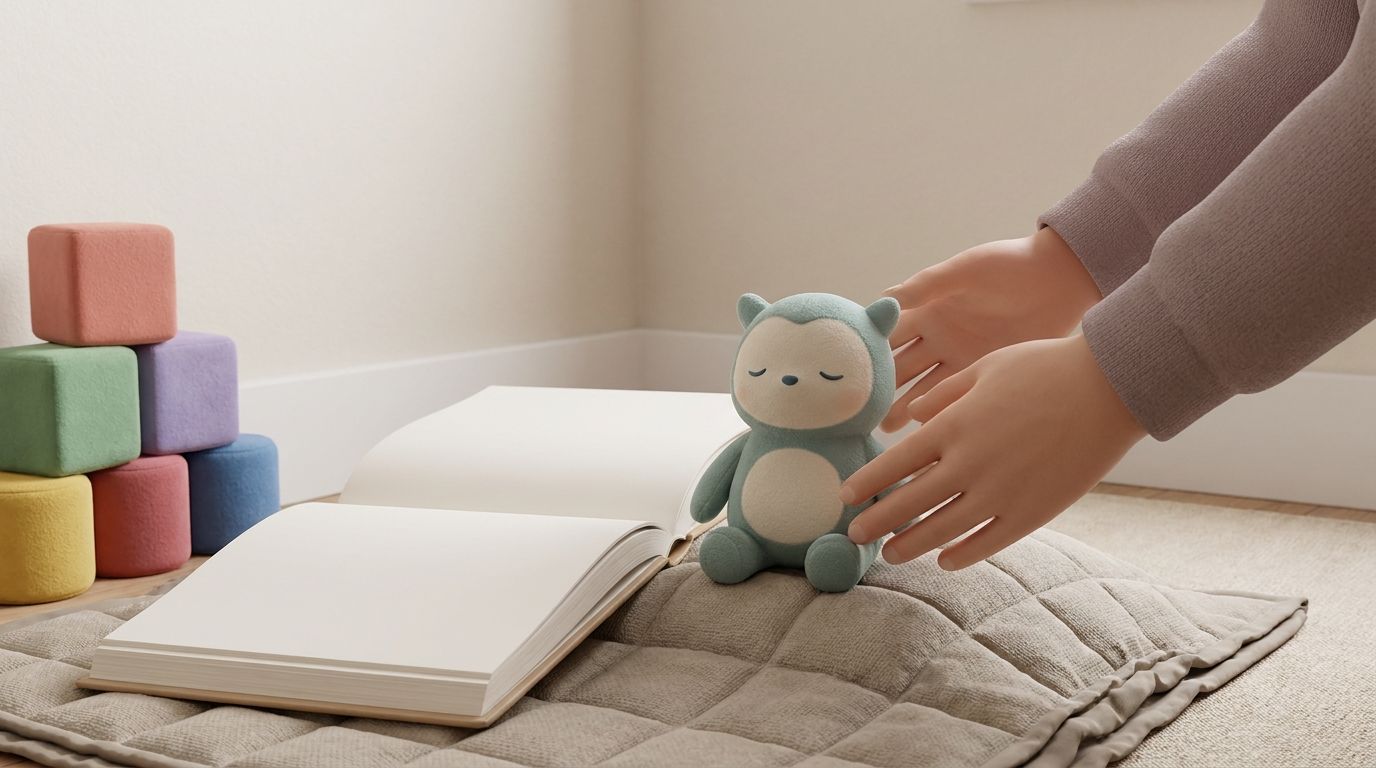
At 7:12 on a Tuesday morning, a worksheet sat untouched beside Lena's toast. Her pencil was on the floor, her shoulders had climbed almost to her ears, and when her mum said, "Let's just try the first one," Lena whispered, "I can't make my brain do it."

Calming strategies for neurodiverse children work best when they lower the pressure before asking for more effort. Zennu, the Spark of Calm Awareness, reminds us that learning anxiety in children is not a character flaw or a refusal to try. Sometimes the brain needs safety, space, and a smaller doorway into the task.
If this scene feels familiar, you are not failing. You are seeing useful information. Your child may be telling you that the task, the timing, the noise, the instructions, or the fear of getting it wrong has simply become too much.
What Zennu teaches us about learning anxiety in children
Zennu is paired with Zapz, the Anxiety and Panic Gloom. Together, they give parents a gentler way to talk about a hard moment without blaming the child. Zapz represents the alarm that says, "Danger. Too much. Get out." Zennu does not argue with that alarm. He helps you notice what is happening before you decide what comes next.
That difference matters. Telling a worried child to calm down often just adds another demand on top of everything else. Helping a child find calm gives them something they can actually do, with support.
The American Academy of Pediatrics has described children's stress responses as body reactions, not simply choices. When the body senses threat, attention shifts away from spelling, counting, or listening and toward escape or protection. A child may look defiant when their system is completely overloaded. They may also go quiet, hide, laugh, cry, or suddenly need the toilet.
A 2023 CDC report, based on 2020 monitoring data, found that about 1 in 36 eight-year-old children in the United States had been identified with autism. That number tells us how many families are seeking support, but it does not tell us how any one child learns. Neurodiversity affirming education starts there: support the child in front of you, not an imaginary average child.
When learning feels too big, look for the message underneath the behavior:
- "I need the instructions in a different form."
- "I need more time before I answer."
- "I need my body to feel safe first."
- "I need to know what happens if I make a mistake."
You do not need to solve every part at once. Zennu's calm awareness begins with noticing one thing.
Calming strategies for neurodivergent children that start with the body
A child who is overwhelmed may not be ready for a long conversation about feelings. That is not a missed lesson. It is a sign to use fewer words and offer a body-based reset.
Try one option at a time. Too many choices can feel like another worksheet, and honestly, parents already have enough surprise paperwork in their lives.
Lower the amount of input
Turn off a television. Move the worksheet away from a busy table. Close a door if household noise is pulling your child's attention in five directions. If bright light is bothering them, switch to a lamp or let them wear a hat indoors.
You can say, "I'm making the room quieter. You do not have to answer yet." That sentence offers support without demanding eye contact, speech, or a quick change in mood.
Add steady movement
Some children think more clearly when their bodies are moving. Let your child push against a wall, carry a stack of books, squeeze a cushion, rock, pace, or take ten slow steps with you. Movement is not a reward for finishing. It can be part of getting ready to begin.
Keep the activity predictable. A short walk to the kitchen and back may work better than an exciting game when your child is already near their limit.
Use a simple breathing cue, if breathing feels welcome
Not every child likes breathing exercises. A forced "take a deep breath" can feel irritating when panic is already high. You can model a slower exhale yourself and say, "I'm going to breathe out slowly. You can join me or just sit nearby."
The aim is not perfect breathing. It is a small shift in pace.
Useful emotional regulation activities for kids can include:
- Pushing hands into a wall for five seconds, then releasing.
- Wrapping in a blanket while keeping the child's head and hands free.
- Humming, tapping a steady rhythm, or listening to a familiar song.
- Looking at three fixed objects in the room without being quizzed about them.
- Holding a cool drink or warm mug with an adult nearby.
Choose activities your child already tolerates. A new sensory idea is not automatically calming just because it worked for someone else online.
Make the learning doorway smaller
Once your child's body has settled even a little, the task may still look enormous. This is where you can change the shape of the work without lowering your child's worth or your expectations for their growth.
Instead of "Finish the page," point to one visible action: "Circle the animals." "Read the first line." "Put your name at the top." The first action should be so clear that your child does not have to guess what success looks like.
Then pause. Let the small action count.
Children with ADHD often need extra support holding several instructions in mind at once. Autistic children may also find vague language, sudden changes, or unclear endings especially tiring. That does not mean every child in either group learns the same way, it means you can test whether fewer steps make the task more reachable.
Try this small-task routine:
- Show the finished size: "We are doing two questions, not the whole page."
- Give one direction: "Write the number eight."
- Wait longer than feels natural before repeating it.
- Mark the stopping point: "That part is done. We can pause."
A timer can help some children and alarm others. A visual card, a finger count, or two sticky notes may feel gentler. You know your child's signals best, so you are allowed to adjust the plan halfway through.
If Ziggyloo is part of your family's routine, you can use its AI learning companion as a lower-pressure starting point. The conversational tutor adapts to the child, and parent-visible transcripts can help you notice whether the barrier was the skill, the wording, the pace, or the emotional load. You are not collecting evidence against your child. You are gathering clues for the next attempt.
The Learning Trail can also give a child a guided path across focus areas, while stories, read-along activities, and games may offer a gentler way into practice. The point is not to keep going at all costs. The point is to help learning remain possible.
What to say when your child says, "I can't"
"I can't" can mean many things. It might mean, "I do not understand." It might mean, "I understand but cannot start." It might mean, "I am scared you will be disappointed." Or it might mean, "My body has reached its limit."
You do not have to interrogate the sentence. Start by believing that something is hard.
You might say:
- "I believe you. This feels too big right now."
- "You do not have to solve the whole thing."
- "Would you like quiet, movement, or my help with the first step?"
- "We can stop and come back later."
- "A wrong answer will not get you in trouble with me."
Notice the difference between offering help and taking over. You can write the first example, read the instruction aloud, or place a finger under the line. Then hand the next small action back when your child is ready.
A parent once told me that her child could solve a maths problem at the kitchen table but froze when the same problem appeared on a school worksheet. That was not proof the child was pretending. The paper carried extra meaning: time pressure, comparison, the fear of being watched. Changing the format was not "letting them off." It removed some of the noise around the skill.
That is the heart of neurodiversity affirming education. You are not trying to make your child look calm so adults feel comfortable. You are helping your child access learning without treating distress as misbehavior.
Why does my child panic before learning starts?
Your child may be reacting to uncertainty, sensory input, past frustration, or the number of steps hidden inside the task. Learning anxiety in children can begin before the first question because the brain remembers how difficult earlier attempts felt.
You can reduce the build-up by showing the task's size, naming the stopping point, and offering a familiar regulation activity before work begins. If panic is frequent or affects sleep, eating, school attendance, or daily life, share specific examples with your child's teacher and healthcare professional.
Should I make my child finish after they calm down?
Not always. Calm is not a promise that your child now has enough energy for the original task. Check whether they can manage one tiny step, or whether the healthiest choice is to stop and return at another time.
A short successful attempt can teach more than a long struggle. You can still return to the skill later with a smaller task, a different format, or more support.
What are good calming strategies for neurodivergent children at school?
Helpful options can include a quiet space, movement breaks, fewer spoken directions, visual steps, extra processing time, and a clear way to ask for help. The best plan is individual, because one child may settle with movement while another needs stillness and reduced sensory input.
Ask the school to record what happens before, during, and after the difficult moment. Patterns are more useful than a general note that says "would not participate."
How can I support my child without making learning anxiety worse?
Use a calm voice, reduce the task, and separate the child from the problem. Avoid repeated prompts, threats, public correction, or cheerful pressure that says the task is easy when it does not feel easy to your child.
You can be warm and firm at the same time: "The work matters, and your wellbeing matters too. We will find a way in."
A small plan for the next hard moment
Write three sentences on a note in your phone:
- "Something is too much right now."
- "We will make the next step smaller."
- "Stopping is allowed; returning is possible."
When the worksheet lands on the table, the reading app freezes, or the shoes refuse to cooperate with the school-day deadline, read the note before reaching for more instructions. Your own nervous system matters here. A parent who is trying to sound calm while silently running a tiny courtroom drama in their head is still doing their best.
Zennu does not ask you to make every learning moment peaceful. He offers a kinder aim: notice the alarm, protect the relationship, and leave a path back to the work.
Tonight, you might put one small task beside the breakfast plate. Not the whole page. Just the first reachable step. Then sit nearby, lower the pressure, and let your child discover that learning can wait for a body that feels safe enough to try.
A note for you
If today ended with tears, a slammed book, or no learning at all, that day still gave you something. You learned where the load became too heavy. You learned what your child could not carry alone yet.
That is not nothing. It is a place to begin tomorrow, with less pressure and more room for both of you.
Join the conversation
Subscribe to comment
Join the Ziggyloo family newsletter to leave a comment — and get gentle learning tips and community stories in your inbox. No spam, unsubscribe anytime.