
Exploring the enchanted forest: a journey in nature's classroom
Discover how exploring the enchanted forest can turn nature into a vibrant classroom for your neurodiverse child, fostering learning and connection.
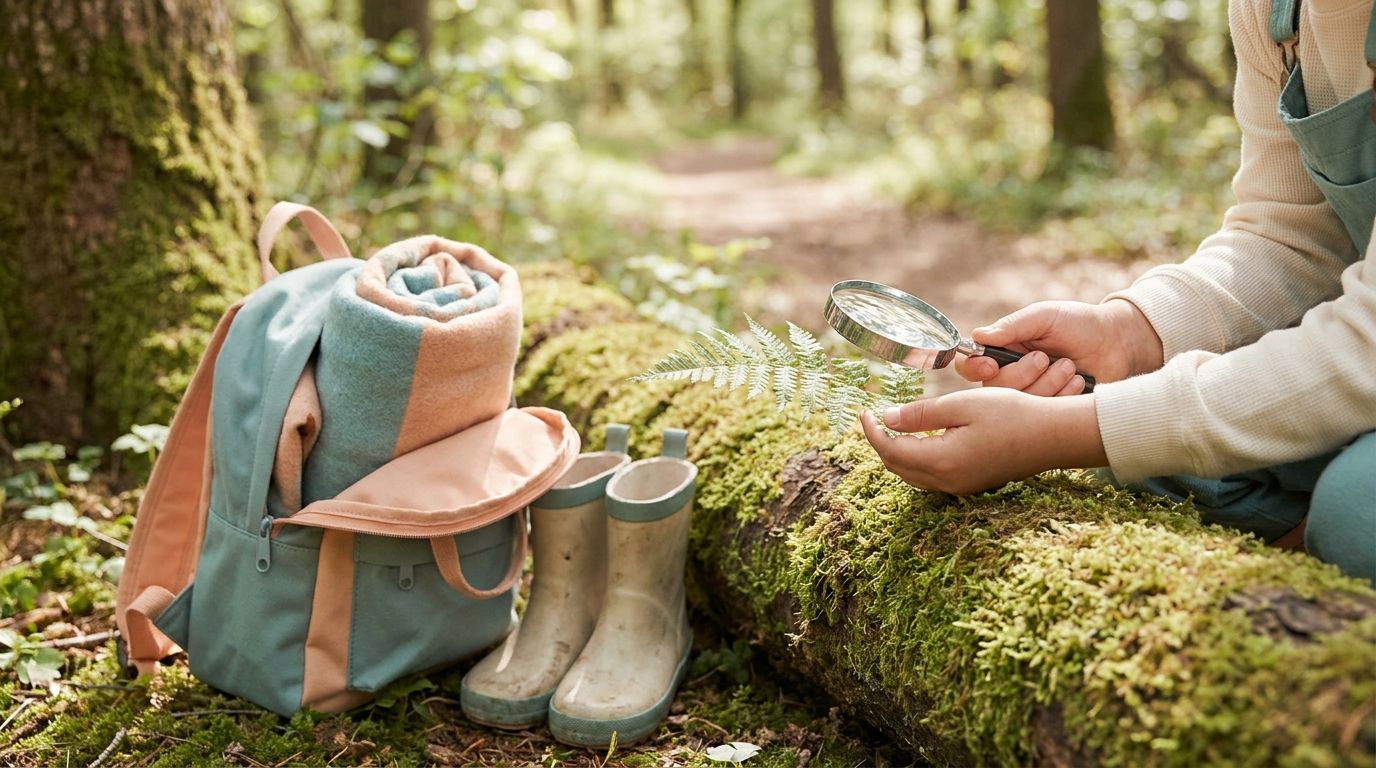
You're still in your pajamas when it happens. The pancakes are barely off the griddle and your child comes skidding into the kitchen in socked feet, eyes enormous. "Can we go to the enchanted forest today?" And honestly? Yes. A thousand times yes.
Adventures in nature hit differently for neurodiverse kids - the open air, the textures, the tiny mysteries hiding under every log. With Ziggyloo's biomes as your guide, even a simple morning walk can turn into something genuinely magical.
The magic of nature's classroom
Here's the thing about forests: they don't care how a kid learns. They just teach.
Research from the University of Illinois found that children who spend regular time in nature show improved attention spans and stronger cognitive skills. The sights, sounds, and textures of a forest activate different areas of the brain all at once - no worksheet required - which means creativity and problem-solving get a serious workout just from wandering around.
So your child spots a squirrel mid-scramble up an oak and asks, "Why does it have such a fluffy tail?" That's a biology lesson right there, no lesson plan needed. You can explain how squirrels use their tails for balance on narrow branches and as a built-in blanket in January, and suddenly "adaptation" isn't a vocab word - it's that squirrel, right there.
When you stumble onto a patch of wildflowers growing in a ridiculous rainbow of colors, lean into it. Encourage your child to sketch them in a notebook or gather a few to make a collage at home (with permission, obviously). Art and biodiversity in one muddy afternoon.
Engaging the senses
An enchanted forest is basically a sensory buffet. Rough bark. Cold stones. The smell of soil after rain - that specific, almost ancient smell that you can't find anywhere else.
Let your child lead with their hands and nose and ears. Ask them to describe what the wildflowers smell like, or to close their eyes and just listen for ten seconds. "What do you think attracted those butterflies?" That single question can open up a whole conversation about pollinators, interdependence, and why bees are basically running the planet (no pressure, bees).
A sensory scavenger hunt
One of the easiest ways to deepen all of this is a scavenger hunt built around senses, not just objects.
Try: "Find something rough, something that smells sweet, and something that makes a sound." When they find each one, make a big deal of it - celebrate the smooth stone like it's a trophy, because to them it kind of is. Ask them to draw each discovery afterward. You're sneaking in observation skills, focus, and artistic expression all at once, and they'll just think you're being fun.
Nature-inspired activities
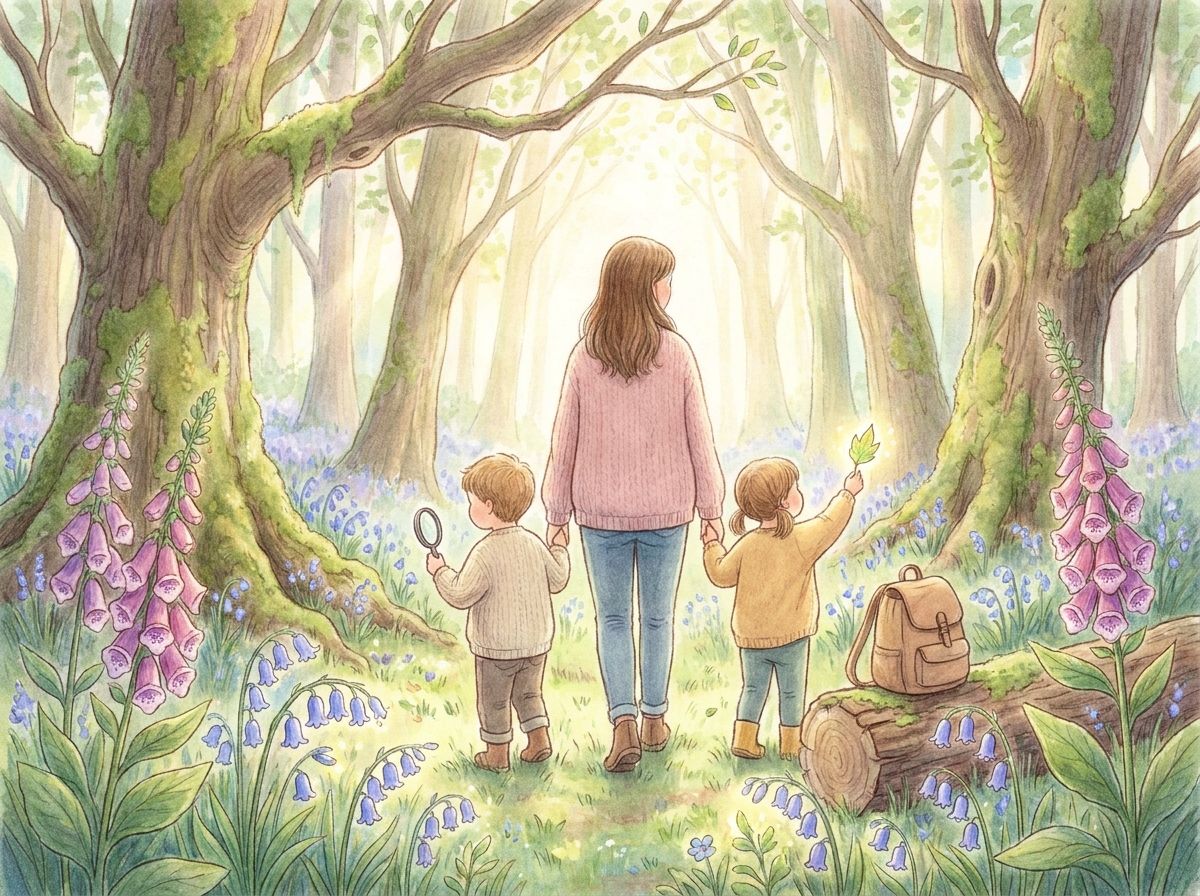
Once you're out there and everyone's thoroughly mud-adjacent, here are some ways to keep the magic going:
- Scavenger Hunt: A classic for good reason. A pine cone, a specific leaf shape, a feather - hunting for these things sharpens focus and trains kids to actually look at their surroundings. Add a timer if your child loves a challenge.
- Nature Journal: Pack a cheap notebook and some colored pencils. Encourage sketching, writing a sentence or two, capturing whatever felt important. "What was your favorite moment today?" is a great prompt to end with.
- Storytelling: Maybe they meet a friendly bear. Maybe there's a wise old tree with opinions. Ask questions that pull the story forward - "What does the bear say?" or "What lesson does the tree know?" - and watch their narrative brain light up.
- Photography: A phone camera works perfectly. Let them frame the shots their way. Later, you can build a little photo book together with their images and words alongside, which is genuinely one of those keepsake things you'll dig out years from now.
- Nature Art: Leaves, sticks, interestingly shaped rocks. Bring them home and make a sculpture or collage. Hands-on, creative, and a great excuse to look closely at every little thing they collected.
Learning about ecosystems
The forest is basically a working model of an ecosystem, which makes it an extraordinary classroom for the real thing.
Point to a fallen tree draped in mushrooms and ask, "What do you think happens to a tree after it dies?" That's your opening to talk about decomposition, fungi, and how the whole system feeds itself. A 2020 study in the Journal of Environmental Education Research confirmed what most parents already sense intuitively: children who learn about ecosystems in nature retain the information far better than kids who only encounter it in a classroom.
Food chains are another great thread to pull. Plants make their own food through photosynthesis, deer eat the plants, foxes eat the deer - and suddenly predator-prey relationships aren't abstract at all, they're the woods you're standing in.
If you can, look into local nature reserves or guided programs. The Forest Preserve District of Cook County, for example, runs guided nature walks focused specifically on local plant and animal life. Hearing it from a ranger while standing in the actual habitat? That sticks.
Connecting with emotions
Nature has this quiet superpower for neurodiverse kids. The rustling, the birdsong, the general unhurriedness of trees - it has a way of loosening the tight spots.
You might notice your child getting softer out there, more talkative. When they say, "I feel happy when I see the butterflies!" - follow that thread. Ask what happiness feels like in their body. Ask what color it would be. Abstract emotional thinking is genuinely hard to practice at a kitchen table, but somehow easier when you're watching a monarch drift past.
When a butterfly floats by, you might say, "Look how gracefully it moves - just like you when you're dancing." That's not just sweet, it's meaningful. You're helping them see their own qualities reflected back through the natural world.
Building confidence through exploration
There is something about finding the thing on the list, or correctly identifying a bird, or making it to the top of a small hill, that lands differently outdoors. Confidence built in a forest feels earned.
Celebrate every discovery like it matters - because it does. "You found every single item! You're a real explorer." That's not empty praise, it's accurate. And model your own curiosity, too. If you find a strange mushroom or an oddly perfect rock formation, let yourself be genuinely delighted. Say "I have no idea what this is - let's figure it out together." Your excitement is contagious, and it gives them permission to be curious without needing to already know the answer.
The role of Ziggyloo in nature learning
After a day like this, Ziggyloo is where the adventure continues.
The platform's adaptive learning system can build on exactly what your child encountered in the forest - interactive lessons on the plants, birds, and critters they actually saw. So if they spent twenty minutes fixated on a woodpecker, that curiosity has somewhere to go when you get home. Ziggyloo meets them where they are, which is kind of the whole point.
And yes, there are resources for keeping the forest magic alive even on rainy Tuesdays when the closest you're getting to nature is a houseplant. Themed activities, follow-up explorations, ideas you wouldn't have thought of on your own - it's all there.
FAQ
Why is nature learning important for neurodiverse children?
Nature provides a sensory-rich environment that can improve focus and engagement in ways a traditional classroom often can't. Children connect real-world experiences to educational concepts more readily when they're outside, and studies consistently show that time in nature reduces anxiety and lifts mood - both of which matter enormously for neurodiverse kids.
How can I make outdoor learning fun for my child?
Lean into games, scavenger hunts, and storytelling. Let your child have a say in the day's plan - choosing the trail, picking the activity - because that sense of ownership makes the whole experience feel like their adventure, not a lesson in disguise.
What should I bring on a nature outing?
Water, snacks, a basic first aid kit, a notebook, and a few art supplies cover most situations. Sunscreen, insect repellent, comfortable shoes, and weather-appropriate layers round it out. Pack light enough that the walk actually feels like a walk.
How can I help my child express their feelings about nature?
Open-ended questions are your best tool here. Ask what they noticed, what surprised them, what made them feel something. Suggest they keep a nature journal for thoughts and drawings - some kids find it much easier to process feelings on paper than out loud.
How does Ziggyloo support outdoor learning?
Ziggyloo connects the dots between what your child experiences outside and the concepts behind it. The platform adapts to your child's specific learning style, so follow-up activities feel like a natural extension of the adventure rather than homework.
Can I incorporate cultural stories about nature into our outings?
Absolutely. Stories from different cultures about forests, animals, and the natural world can add incredible richness to what your child observes. Sharing a tale connected to the flora or fauna you encounter helps them see that humans have always been in conversation with nature - and that conversation is still going.
The enchanted forest isn't just a place to visit. It's a way of paying attention. Every scavenger hunt, every muddy hand, every "Mom, what IS that?" is a moment of real learning happening in real time. So grab those pancakes, pack the bag, and go. The forest is already waiting - and so is the version of your child who gets to discover it.
Join the conversation
Subscribe to comment
Join the Ziggyloo family newsletter to leave a comment — and get gentle learning tips and community stories in your inbox. No spam, unsubscribe anytime.