Exploring the ocean depths: lessons from Ziggyloo's marine biome
Dive into the wonders of the ocean with Ziggyloo! Discover engaging marine education activities that inspire curiosity and learning.
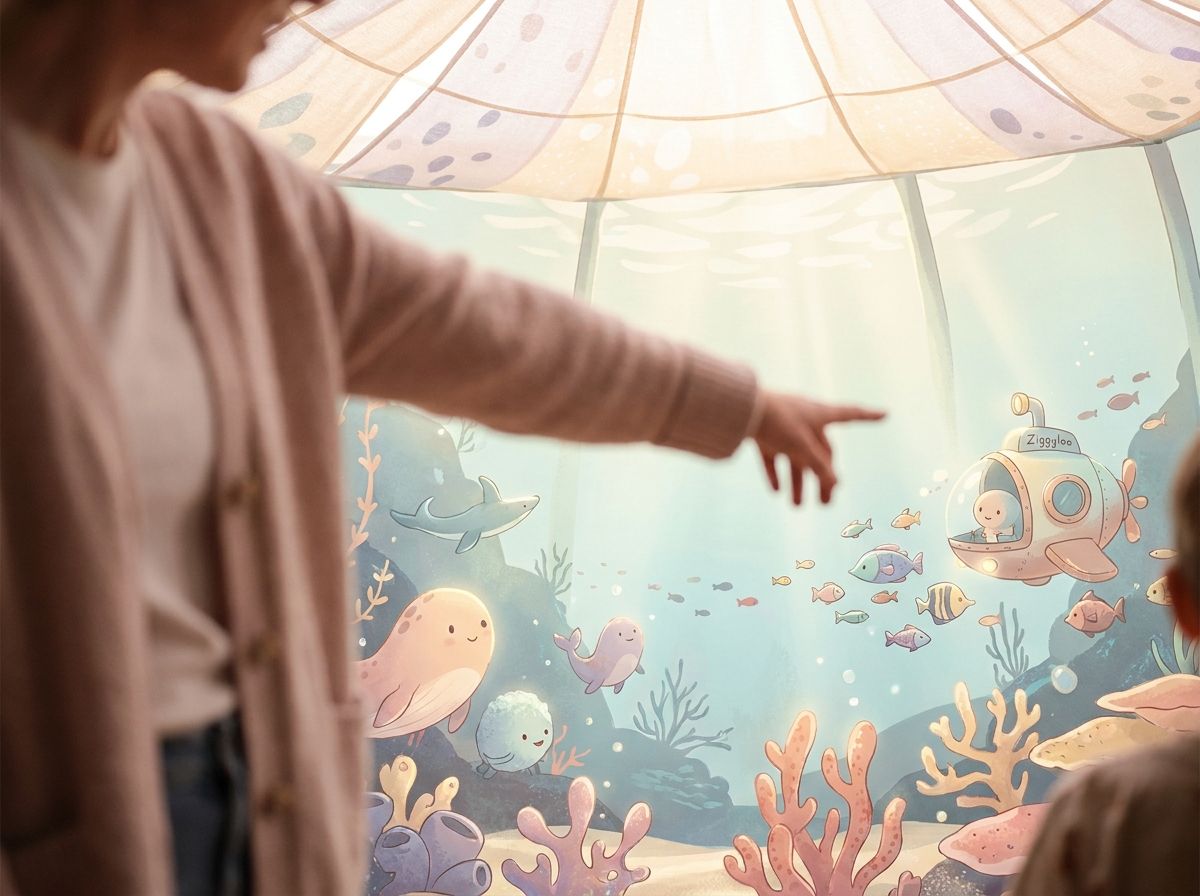
You're standing in the living room watching your child's eyes go wide. On the screen, a sea turtle glides past a coral shelf, and Ziggyloo is right there narrating every detail. The ocean has officially entered your house, and honestly? It's a lot more welcome than the muddy boots by the door.
The marine biome is one of those topics that grabs kids and just doesn't let go. There's so much texture here: creatures that glow in total darkness, reefs that look like underwater cities, whales singing to each other across hundreds of miles. And with Ziggyloo as their guide, your child gets to explore all of it at exactly their own pace.
Here's how to make that exploration really stick.
Understanding marine ecosystems
Marine ecosystems are layered, literally. Coral reefs, deep-sea trenches, coastal mangroves - each zone runs by its own rules and shelters its own cast of characters.
The Great Barrier Reef alone is home to thousands of species of fish, corals, and invertebrates, and Ziggyloo's adaptive learning system lets your child dig into how each ocean layer supports different life. Try making a simple chart together: sunlight zone, twilight zone, midnight zone, and which animals live where. Kids who love lists go absolutely feral for this kind of thing (in the best possible way).
Coral reefs are also a perfect entry point for talking about climate change in a way that feels real rather than abstract. A 2021 study published in Nature found that coral reefs worldwide are facing severe threats, including bleaching events caused by rising sea temperatures. That's a big idea, but a photo of bleached coral versus healthy coral makes it land. From there, the questions usually start pouring out on their own.
And if you want to widen the window a little further, the Monterey Bay Aquarium offers live feeds and educational resources your child can explore from the couch on a rainy Tuesday.
Embracing ocean wildlife
Ocean wildlife is just staggeringly diverse. From the blue whale (the largest animal ever known to exist on Earth) to a clownfish tucked inside a sea anemone, every species is holding up some corner of the ecosystem.
Sea turtles are a great place to start. They can live for more than 80 years, traveling thousands of miles across open ocean before returning to the exact beach where they hatched to lay their own eggs. Ziggyloo's interactive features can help your child map that journey visually, turning it into a timeline they build themselves.
My Octopus Teacher is worth watching together if you haven't already. It follows a marine biologist's friendship with a wild octopus over the course of a year, and it's the kind of documentary that makes kids go quiet in a room. That kind of quiet is rare. Treasure it.Dolphins are another crowd-pleaser. They communicate through a complex system of clicks and whistles, they're known to play purely for fun, and they face real threats from pollution and habitat loss. Asking your child how a dolphin might feel navigating a sea full of plastic isn't just a science conversation. It's an empathy conversation, and those matter just as much.
Hands-on marine activities
Learning that lives only in a screen doesn't always stick. Getting hands involved changes that.
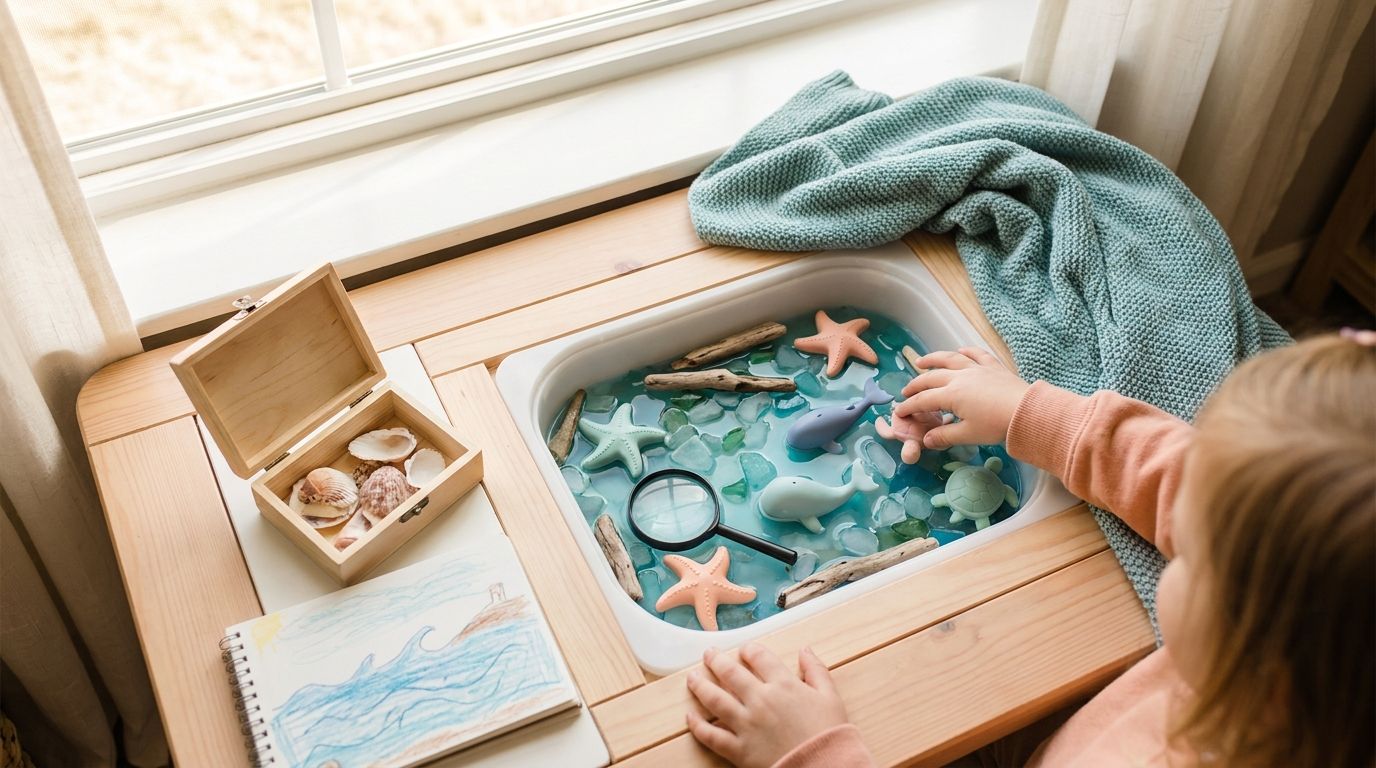
A DIY ocean in a bottle is a good starting point: clear plastic bottle, water, blue food coloring, a few small ocean-themed toys, and a tight lid. Tip it back and forth and you've got a visual for ocean currents your child can hold in their hands.
A marine-themed scavenger hunt works beautifully too. Use Ziggyloo's app to identify target animals, then set up clues around the house using pictures, toys, or drawings. Movement plus learning plus a little mild chaos. Chef's kiss.
For something quieter, try building a marine food chain together by cutting out images of ocean creatures, from microscopic plankton up to a great white shark, and arranging them in order of who eats whom. The concept of energy moving through an ecosystem clicks a lot faster when your child is literally holding a paper plankton in one hand and a paper shark in the other.
If a beach trip is possible, tide pools are magic. La Jolla Cove in California is a fantastic spot for this. Just make sure to talk beforehand about leaving everything exactly as you find it, because that's part of the lesson too.
The importance of conservation
The ocean covers over 70% of Earth's surface and supports countless species, many of which are already endangered. That's not a small thing, and kids can handle knowing it.
Stories help. The image of a baby sea turtle trying to navigate through a tangle of plastic bags is upsetting, but it's also motivating, and kids who feel something are kids who act on it. Ask your child what they think could help. Their answers might surprise you.
Set some small goals together. Reusable bags. A water bottle instead of a plastic one. Track it on a chart on the fridge and celebrate when the tally grows. Small victories are still victories, and they add up.
Organizations like Oceana and the Ocean Conservancy have family-friendly resources about their initiatives. Some conservation groups also let kids symbolically "adopt" a sea animal, which creates a personal bond that tends to stick around long after the novelty of a new app has faded.
Interactive learning with Ziggyloo
Ziggyloo's marine biome adapts to how your child actually learns, not how you wish they learned on a good day. Visual, auditory, kinesthetic - the lessons shift to meet them.
If dolphins are their current obsession, Ziggyloo serves up stories, videos, and facts specifically about dolphins. You can layer on top of that with a trip to a local aquarium or marine center where they see the real thing. That combination of screen-based context and real-world encounter is genuinely powerful.
One idea worth trying: encourage your child to put together a short presentation about their favorite marine animal using what they've learned through Ziggyloo, and share it with grandparents or a sibling. It reinforces the material, and watching a six-year-old confidently explain echolocation to a grandparent is one of those parenting moments you'll talk about for years.
Making connections with marine themes
The best learning is the kind that bleeds into everything else.
If your child loves to draw, ask them to illustrate their favorite sea creature and write three sentences about where it lives and what it eats. If they're into building, make a coral reef out of blocks or clay. If storytime is sacred in your house, swap in an ocean-themed book for a few nights and see what questions come up in the dark after the light goes off.
Talking about how ocean animals experience their world also opens up something bigger. What would it feel like to navigate by sound in the dark? What would a sea turtle "think" when it arrives back at the beach where it was born? These aren't just science questions. They're invitations to imagine other lives, and that's a habit worth building early.
Knowledge isn't really about memorizing facts. It's about learning to pay attention to the world. The ocean is a very good teacher for that.
FAQ
What are some fun marine education activities for kids?
You can create a DIY ocean in a bottle, conduct a marine-themed scavenger hunt, or use Ziggyloo's interactive features to learn about different species. Each activity brings marine education to life. Another idea is to organize a beach clean-up day to combine fun with environmental responsibility.
How does Ziggyloo help with marine education?
Ziggyloo's adaptive learning system tailors lessons to your child's interests, providing engaging content on marine life and ecosystems. This makes learning fun and personalized. The app offers interactive quizzes and activities that reinforce concepts in an engaging way.
Why is ocean conservation important?
Ocean conservation is vital for protecting marine biodiversity and ensuring the health of our planet. Educating your child about these issues can inspire them to take action and make a difference. Healthy oceans are crucial for regulating climate and supporting life on Earth.
What can I do to teach my child about marine animals?
You can read books or watch documentaries about marine life, visit local aquariums, or engage in hands-on activities to make learning interactive and fun. Encourage your child to ask questions and seek out answers together.
How can I encourage my child to care about the ocean?
Start conversations about marine life, share stories of ocean animals, and participate in local conservation efforts together. Making it a family effort can strengthen their connection to the ocean. You could also encourage them to adopt a sea animal through a conservation organization, fostering a personal bond with marine life.
What are some recommended resources for learning about the ocean?
Consider visiting websites like National Geographic Kids or PBS Learning Media, which offer games and articles about marine life. Additionally, books like Ocean: A Visual Encyclopedia can provide captivating visuals and facts.
The ocean is a treasure trove, and your child already has the most important thing they need to explore it: curiosity. Ziggyloo just helps point it in the right direction. So grab the craft supplies, queue up a documentary, argue about whether a mantis shrimp could beat a shark in a fight (it's a legitimate debate in our house), and keep diving.
Every moment you spend exploring alongside them is one they'll carry forward.
Join the conversation
Subscribe to comment
Join the Ziggyloo family newsletter to leave a comment — and get gentle learning tips and community stories in your inbox. No spam, unsubscribe anytime.