
How to spot learning fatigue (and what to do instead of more pressure)
If your neurodiverse child suddenly “can’t” do schoolwork they could do yesterday, learning fatigue might be the reason. Try gentler next steps.

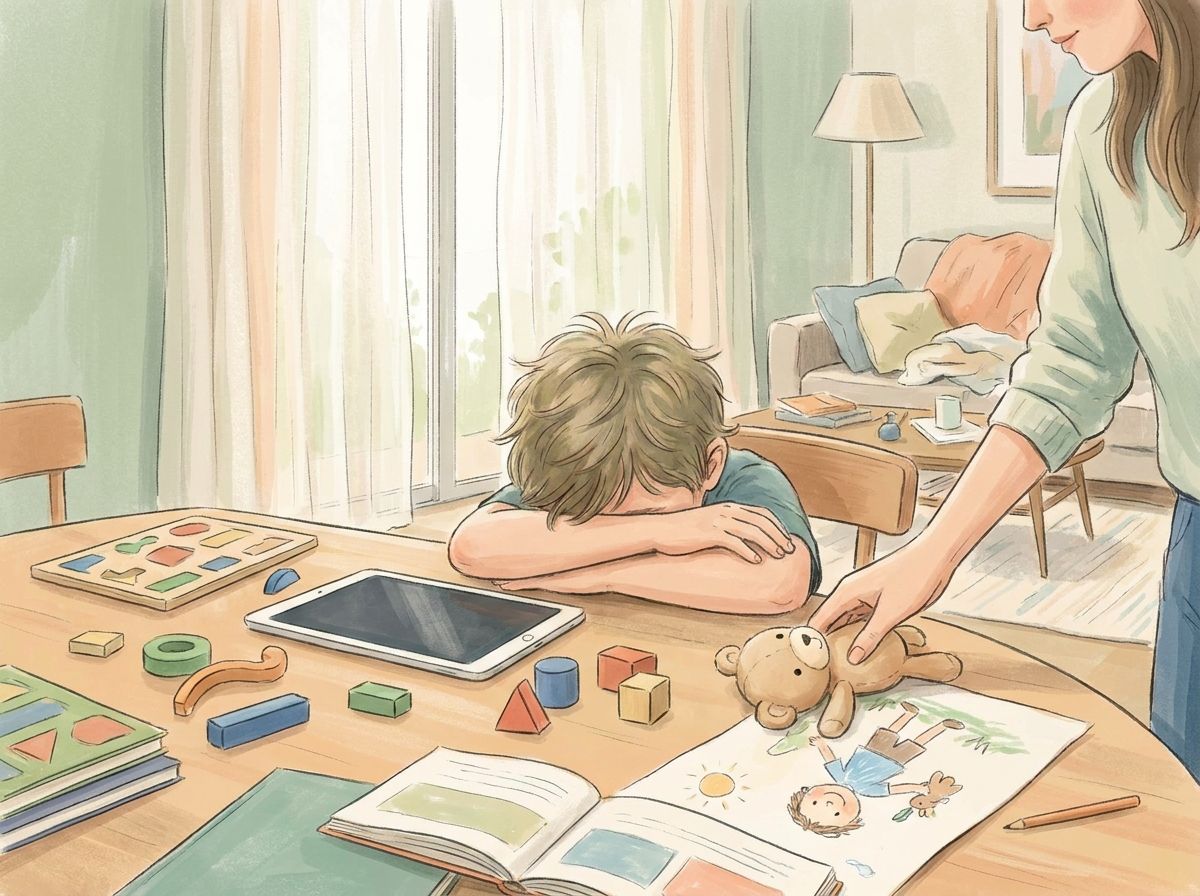
You're in the kitchen with a mug of tea going cold. Your neurodiverse child is at the table with their worksheet, and you can see the moment their shoulders change. Not "being difficult." Not "not trying." Just… done.
It happens fast. One minute there's progress, the next the pencil feels like it weighs a thousand pounds. And the worst part is how quickly you start wondering if you should push a little harder.
This post is for that exact moment. Learning fatigue is real. It looks like refusal, distraction, or meltdowns, but it's often your child's brain and body hitting their limit. Spot it early, and you can swap pressure for adaptive learning strategies that actually help.
With Ziggyloo's adaptive learning system, you can shift from "more practice" to "the right kind of practice" for your child's current bandwidth.
Answer first: what learning fatigue looks like
Learning fatigue is when your child's learning effort runs out before the task is finished. It shows up as a sudden drop in accuracy, stamina, or flexibility. The signs can look like stubbornness, but the pattern is usually consistent: they can start, then they hit a wall.
You might notice:
- They try to escape the task, even if they were interested earlier.
- They need more prompts than usual, even for familiar steps.
- Their behavior spikes as the work continues.
- They get stuck on parts that were easy yesterday.
And yes, it can happen with ADHD learning and autism sensory fatigue. It can also happen with kids who don't have a diagnosis yet. The body doesn't care what label you use. It still hits a limit.
A real kitchen moment: the "I can't" that isn't personal
Last month, I watched Elena (my friend's kid) sit down for a quick reading activity. She was calm at first. She even pointed at the cover and named the characters like she was excited.
Then the first sentence took longer than it should have. The second made her eyes go glassy. By the third, she was whispering, "Stop. Stop. Stop."
Her mom did what most of us do. She tried to make it easier by being more encouraging. "You're doing great. Just finish this one."
Elena's mom didn't do anything wrong. She was kind. But the pressure kept building because the task kept going, and Elena's body did what bodies do when they're overloaded. She shut down. Not a choice. A limit.
That is learning fatigue.
Section 1: how to spot learning fatigue in the moment
Learning fatigue has a tell. It's not just a bad-mood day. It's a shift that happens during learning itself.
Here are the most common signs to watch for, especially with a neurodiverse child.
1) The "start strong, crash later" pattern
Your child can begin the task. They might even enjoy it for a few minutes. Then the crash arrives, and it's out of proportion to the work left.
You might see it like this:
- They can do the first page.
- They can do the warm-up.
- They can answer verbally.
Then suddenly, they cannot do the next step that's basically the same.
2) Accuracy drops, not just attention
When fatigue hits, you might notice more guessing, more careless mistakes, more "wrong" answers that look like they're not thinking clearly. This is different from "they don't know." It looks more like "their brain is not available."
A kid who knows their letters can suddenly mix them up. A kid who can count can suddenly lose track after a few problems.
3) Behavior escalates as the task continues
Pressure often makes behavior worse. Learning fatigue creates the same effect.
You might see:
- More arguing or bargaining.
- More leaving the room.
- More covering ears or complaining about sounds.
- More tears that seem to arrive "too quickly."
With autism sensory fatigue, the sensory side often shows up too. Lights feel too bright. Shoes feel too tight. The sound of a pen clicking becomes unbearable.
4) They need more help than usual, even with the same instructions
This one is sneaky. You might think, "They're not listening." But if you try the same step with a different prompt and they still struggle, fatigue might be the culprit.
Adaptive learning strategies change the task, not just the words.
5) Their body signals "stop"
Watch for early body cues. They're often there before the meltdown.
Common early signals:
- Fidgeting increases.
- Their voice gets higher or quieter.
- They refuse to write, even with a preferred tool.
- They ask for the same break repeatedly.
Catch those signals early, and you can treat the break as part of learning, not a reward for quitting.
Section 2: what to do instead of more pressure
Let's say the truth out loud. When a child is struggling, it's tempting to push. It feels like you're helping them catch up.
But with learning fatigue, pressure usually adds load. It makes the "brain not available" feeling worse.
Instead, try swaps that lower effort while still keeping learning alive.
A simple rule: reduce the input, not the expectation
You're not lowering the goal forever. You're lowering the effort right now.
Think of it like this:
- Same skill, smaller dose.
- Same concept, fewer steps.
- Same day, different format.
Here are practical parent tips you can use tomorrow.
Strategy 1: pause the task and do a "body reset"
A reset is not a reward. It's a return to capacity.
Try a reset that takes 2 to 5 minutes:
- Water sip and a slow breath.
- A quick stretch while music plays.
- A short walk to the window.
- A sensory option like a weighted lap pad or a textured item.
Then ask one question: "Do you want to try again for one minute, or do you want a different kind of practice?"
This gives your child choices without giving up on learning.
Strategy 2: switch from writing to talking for a few minutes
With ADHD learning, kids often do better when they can move or speak their thinking. Fatigue makes written work harder. So try this instead: you ask the question, your child answers out loud, and you write the answer down. Then switch back only if they re-enter the zone.
The learning keeps going. The load comes down.
Strategy 3: shorten the session on purpose
A lot of families wait until the meltdown to stop. That means the child learns, "We keep going until I collapse."
Instead, try a planned stop. Use a timer and agree on a tiny finish line:
- "We do three questions."
- "We do one story page."
- "We do ten minutes of math games."
Then stop even if there's more to do. This is how you protect future learning, not just today's mood.
Strategy 4: change the environment for sensory fatigue
If you suspect autism sensory fatigue, keep the learning task the same but change the setup.
Examples that often help:
- Move to a quieter room.
- Turn down overhead lights.
- Add noise-canceling headphones.
- Use a desk lamp instead of bright ceiling light.
- Offer a fidget or movement break nearby.
You're not making life perfect. You're removing the spikes that push fatigue over the edge.
Strategy 5: use "next step" instructions, not "finish it" instructions
When fatigue hits, long instructions are like trying to carry groceries in a rainstorm.
Instead of "Do the whole page and check your work," try:
- "Do the first problem with me."
- "Point to the answer you think is right."
- "We do one, then we decide."
Adaptive learning strategies are about matching the step to the moment.
Strategy 6: keep pressure out of your voice
You want them to succeed. You want to prove you're doing it right. (Honestly, same.) But when you hear yourself say, "Come on, just try harder," pause.
Try a calmer script:
- "Your brain is tired. Let's make it easier."
- "We can stop now and try later."
- "You did enough for today. We're still learning."
This matters because shame is heavy. Fatigue plus shame is a fast route to shutdown.
Strategy 7: separate "learning" from "compliance"
Some parents feel like they have to win battles to get work done. Learning fatigue is not a compliance problem. It's an energy problem.
So ask yourself:
- Did we keep the task within their capacity?
- Did we reduce the effort?
- Did we give a choice?
If the answer is yes, you're doing adaptive learning strategies correctly.
Section 3: build a fatigue-friendly learning plan for the week
Spotting learning fatigue is one thing. Preventing the crash is another.
A fatigue-friendly plan doesn't need to be complicated. It just needs to be consistent.
Step 1: watch for the "danger window"
Most families have a predictable time when fatigue shows up. It might be right after school when the snacks run out, or after dinner when noise and lights are too much, or late morning when sleep debt catches up.
Make a quick note in your phone: "Learning went badly at 4:30." That's it. No essay.
Step 2: front-load the hardest skill
If your child is freshest earlier, do the hardest skill earlier. Then later, switch to easier practice, games, listening activities, or just talking through problems.
This is not about being perfect. It's about timing.
Step 3: plan "re-entry" breaks, not random breaks
Random breaks can feel confusing. Planned breaks feel safe.
Try:
- 2 minutes working, 1 minute reset, repeat.
Or:
- Work for ten minutes, reset for five, stop after one cycle.
You are teaching your child what learning looks like when the body is respected.
Step 4: treat breaks as part of the lesson
When breaks are treated like a detour, your child feels like they're failing. When breaks are treated like a tool, your child learns they can recover.
Say it simply:
- "Breaks help your brain learn."
- "We reset so you can keep going."
Step 5: track patterns, not perfection
If you try something and it works, keep it. If it doesn't, adjust. Learning fatigue often improves when you stop guessing and start noticing.
With Ziggyloo's adaptive learning system, you can shift the pace and format based on how your child responds, so you're not stuck doing the same thing in the same way every day.
A quick checklist you can save
When you see the signs, ask:
- Are we past the start-strong point?
- Did accuracy drop suddenly?
- Did sensory complaints rise?
- Did behavior escalate with the task?
- Would a smaller step help more than a bigger push?
If you can answer yes to two or more, consider stopping or switching format.
Here's a small example schedule you can copy:
- Monday: short reading block, then talking answers.
- Wednesday: math games earlier in the day.
- Friday: sensory-friendly setup for one worksheet page.
You're not doing more. You're doing smarter.
Section 4: what to say when your child is already overwhelmed
Sometimes you can't catch the fatigue early. Sometimes it already has them.
In that case, your job is not to get through the work. Your job is to help them come back to themselves.
Try these phrases, depending on what you see.
If they are shutting down
- "I can see your brain is done. We can stop."
- "You're safe. We'll try again later."
- "Do you want a reset first or a different activity?"
If they are arguing
- "I hear you. This is too much right now."
- "Let's make it smaller, not harder."
If they are getting sensory complaints
- "Let's change the room or the sound."
- "We can do this another way."
And if you feel yourself getting tense, you're human. Take one breath and soften your voice. Your calm is a signal to their nervous system.
One more thing. After a fatigue moment, avoid re-litigating what happened. Later you can say: "We noticed your body got tired. Next time we'll do a smaller step." That turns the experience into learning for the whole family.
FAQ
How do I know it is learning fatigue and not "not trying"?
Learning fatigue often follows a pattern: your child can start, then their capacity drops during the task. You also see sudden changes in accuracy, stamina, or sensory comfort. Not trying usually looks more consistent across tasks, not tied to the learning moment.
What does learning fatigue look like for a neurodiverse child with ADHD learning?
With ADHD learning, fatigue often shows up as losing the thread, needing more prompts than usual, and getting frustrated quickly with multi-step work. You may also see a spike in movement or fidgeting that looks like "distraction," but it's their body trying to regulate.
Can sensory fatigue look like learning fatigue for autism sensory fatigue?
Yes. Autism sensory fatigue can make learning feel impossible even when the skill is known. If you notice increased complaints about sound, light, clothing, or sitting still while learning happens, treat sensory load as part of the fatigue picture.
What should I do the next time my child refuses homework?
Stop pushing through the same format. Switch to a smaller step, a different mode like talking, or a sensory-friendly setup. Then plan a re-entry: a short reset and a tiny finish line you both agree on.
Your next step
Tonight, pick one learning moment that usually ends badly. Just one.
Write down what the signs look like in your home: the first behavior change you see, the time it happens, what you usually do next. Then choose one swap from this post, such as shortening the session, switching to talking, or doing a planned reset.
You are not failing your child. You are learning their limits and adjusting the plan. That's what adaptive learning looks like in real life.
And if you get it wrong sometimes, you still get credit for trying again tomorrow. Your child is not "too much." Their brain is telling you what it needs.
Join the conversation
Subscribe to comment
Join the Ziggyloo family newsletter to leave a comment — and get gentle learning tips and community stories in your inbox. No spam, unsubscribe anytime.