
Luma and how to encourage questions in autistic children
Luma helps you make questions feel safe, flexible, and worth asking, whether your child uses words, gestures, pictures, or silence.

At 7:42 on a Tuesday morning, your child points at the toaster, looks toward you, and makes a sound that could mean "hot," "broken," or "why is breakfast taking forever?" You guess wrong. The toast pops up. Everyone survives, but the moment leaves you wondering how to encourage questions in autistic children without turning curiosity into another demand.
The answer is to make asking flexible and safe. Your child can ask with words, gestures, drawings, eye gaze, signs, pictures, AAC, or a repeated sound. Luma gives you a gentle way to practice that idea: curiosity does not need to look like a raised hand and a complete sentence.
Why questions can feel hard
A question asks for several things at once. Your child has to notice something, decide they want information, choose a way to ask, find the words or symbols, and wait for your response. That is a lot of invisible work, especially during a noisy morning or after a long school day.
Some children also worry that the answer will bring a demand. "What happens next?" might secretly feel like "Will I have to stop playing?" or "Will someone make me touch the food?" If questions have often led to correction, rushed replies, or too many follow-up questions, staying quiet may feel a lot safer.
The CDC's 2023 report from its Autism and Developmental Disabilities Monitoring Network found that 1 in 36 eight-year-old children in the United States had been identified as autistic in 2020. That number tells us how many children are being identified, not how any one child communicates. There is no single autism question style, and there is no single right answer style.
Watch for small signs of curiosity, such as:
- Pausing near a new object
- Bringing you a toy, book, or picture
- Repeating part of a question from a show
- Looking between you and something interesting
- Touching a symbol, button, or letter
When you notice one, respond as if it matters. "You're wondering about the fan." Then pause. You do not need to pull a full question from the moment, you are simply showing your child that noticing is enough to begin.
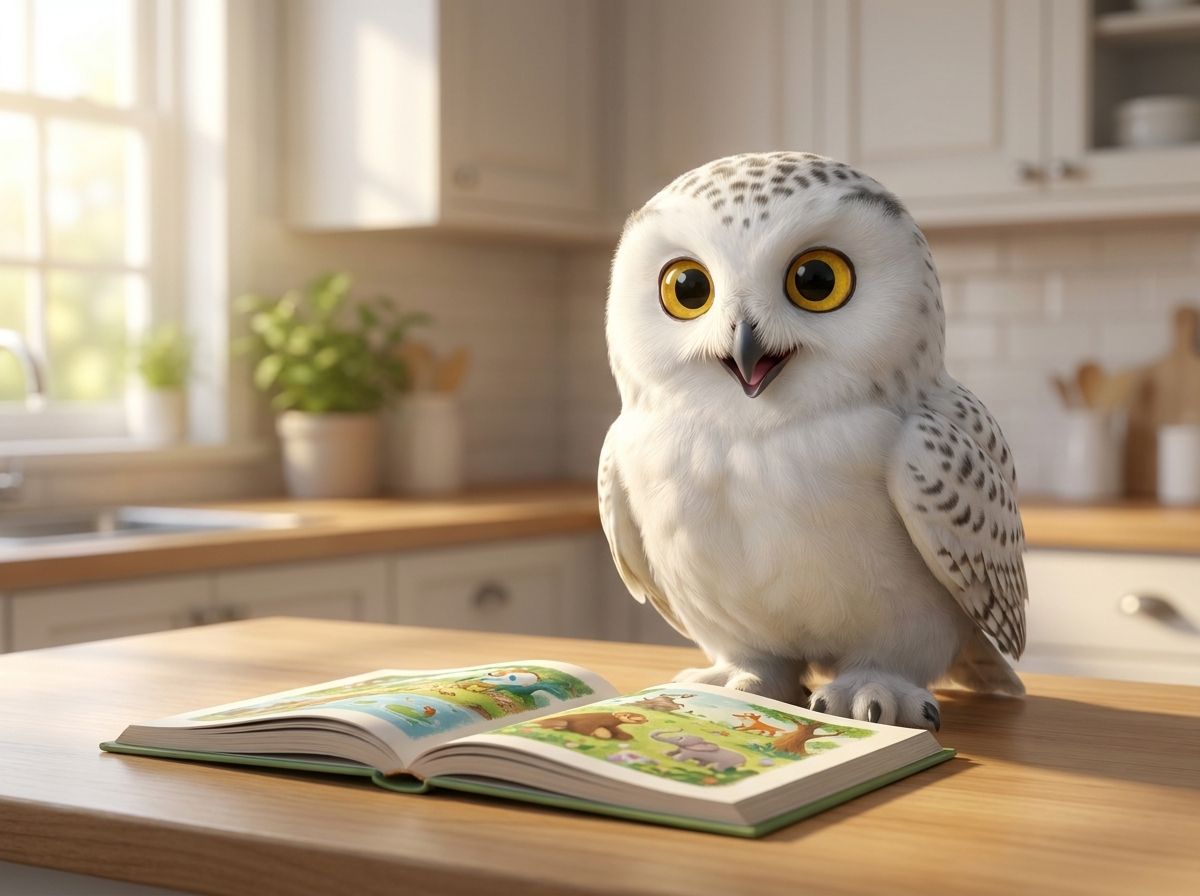
Luma's role here is simple. She can remind you to slow the moment down, accept the first attempt, and leave room for your child to communicate in their own way.
How Luma makes asking feel safe
Imagine Luma sitting beside your child during a story about a train. The train disappears into a tunnel. Your child says, "Again," points to the tunnel, or taps a picture of the train. Luma does not insist on, "Where did the train go?" She helps you notice the meaning underneath the attempt.
You might say, "You want to know where the train went." Then you can answer, "It went through the tunnel." If your child wants more, they can point again, use another word, or move on. All three are valid endings.
A safe question routine has a few steady parts:
- Notice what has caught your child's attention.
- Name the possible question without demanding agreement.
- Give a short answer and wait.
- Accept movement away as a complete response.
This approach protects curiosity from becoming a performance. Your child does not have to repeat a question three times, look at your face, or explain why they want to know. You can be curious about their meaning without putting them on the spot.
For example, 5-year-old Priya points at a ceiling vent in the kitchen and says, "Wind?" Her mother answers, "Yes, the vent moves air." Priya covers her ears. Her mother adds, "It is loud. We can go to the living room." The question led to useful information, not a lesson she had to finish.
You can also model questions without handing your child a quiz. Try, "I wonder why the spoon is wet," or "I'm wondering what is inside this box." Keep your voice casual. Then answer your own question sometimes. That shows your child that questions can be thoughts, not tests waiting for a perfect reply.
Communication activities for neurodivergent children
You do not need a special table, printed curriculum, or a cheerful craft apron. Your home already has plenty of questions hiding in plain sight. The trick is to choose activities where your child can control the pace and the response method.
Try a mystery bag during snack time. Place a familiar object inside a cloth bag, such as a spoon, block, or sock. Let your child feel, shake, point, or peek. Model questions like "Is it soft?" and "Is it for eating?" Your child can answer yes, no, maybe, again, or not yet. You can stop after one turn if the activity has used up their energy.
During a walk near Riverside Park, 6-year-old Mateo notices a red delivery truck. You can offer a small choice: "Are you wondering what it carries or where it is going?" He might point to the truck, choose a picture, or say "where." You can answer that one part and leave the rest alone.
Other communication activities can include:
- Looking through a photo album and pausing before naming familiar people or places
- Building a block tower, then wondering what might make it taller or shorter
- Reading a wordless book and accepting pointing, sounds, facial changes, or drawing
- Sorting laundry and wondering which socks belong together
- Listening to a favorite song and pausing before a repeated line
For nonverbal communication activities, keep the goal broad. Offer a board with symbols such as "what," "where," "who," "more," "stop," and "show me." Your child might select one symbol, combine two, or simply move the board away. That movement communicates too.
If your child uses AAC, give the device time to load and give yourself time not to fill every pause. The American Speech-Language-Hearing Association supports multimodal communication, which means people can use speech, signs, gestures, pictures, and communication devices together. You are not taking speech away by accepting another method. You are making sure your child has a way to be heard right now.
How to support curiosity without pressure
Curiosity grows when your child gets a real response. That does not mean you need to answer every question with a mini lecture. Sometimes the best answer is short, honest, and followed by a choice.
Suppose 8-year-old Jonah asks, "Why rain?" while you are loading the car outside your apartment. You can say, "Rain comes from clouds. Do you want to hear more, or get inside?" He may choose inside. The question still counted.
Try these low-pressure habits:
- Answer the part you understand.
- Say "I don't know" when you do not know.
- Offer a way to find out later.
- Use fewer words when your child looks tired.
- Let your child return to the topic hours later.
And watch your timing. A child may ask a brilliant question while you are rinsing pasta, carrying groceries, or trying to locate the one missing shoe. (Honestly, the missing shoe moment is the worst possible time for a deep conversation.) You can say, "I heard your question. I need one minute." Then come back to it. A sticky note on the fridge may save the question from disappearing into the household soup.
You can also build curiosity around your child's interests rather than steering them toward your own. If trains, ceiling fans, worms, maps, or washing machines are the current obsession, start there. Ask less and observe more. "You noticed the spin cycle stopped." That sentence may invite a response without requiring one.
Supporting curiosity in children is not the same as making them curious about everything. Your child does not need to investigate the craft table, the museum, or the broccoli. A narrow interest can be a deep doorway into language, science, memory, and connection.
When the question looks different
Some children ask through repetition. A child may say, "School tomorrow?" six times because the answer has not settled their body yet. You can respond with the same brief sentence, then add a visual or concrete detail: "Yes, school tomorrow. The blue bus comes after breakfast." Repeating yourself calmly is not spoiling your child. It is helping information land.
Some children ask through action. They may put your hand on a jar, bring you a shoe, or stand near the door. Treat the action as a message before asking for words. "You want the jar opened." Then wait. If you guess incorrectly, offer a repair: "Not that? Show me."
Some children do not ask aloud at all. They may use a device, sign, writing, drawing, or body movement. A non-speaking child still has questions, preferences, jokes, opinions, and a rich inner life. Speech is one communication method, not a measure of understanding.
A useful response map looks like this:
- If your child points, name the object and offer a choice.
- If your child repeats a phrase, consider what the phrase may be doing.
- If your child pushes something away, accept "no" before asking again.
- If your child becomes upset, reduce language and help with the immediate need.
- If your child returns to a topic later, answer without saying, "We already talked about that."
This is where parent-visible transcripts in Ziggyloo's AI learning companion can help you notice patterns over time. You might see that your child asks more questions during stories, uses gestures when tired, or returns to the same topic after transitions. You can use those observations to shape practice gently, not to grade communication.
A simple weekly practice plan
You can practice question-making in five minutes a day. Choose a calm moment, not the busiest transition in your home. Monday might be a picture book. Tuesday might be a snack. Wednesday might be a walk to the mailbox.
Keep the routine predictable:
- Pick one interesting object or event.
- Model one question.
- Offer two ways to respond.
- Wait for five quiet seconds.
- Answer, reflect, or stop when your child signals enough.
On Monday, you might show 4-year-old Elsie a picture of a sleeping cat. You say, "I wonder where the cat is." She points to the couch. You answer, "The cat is on the couch." That is the whole activity. No quiz follows.
On Wednesday, you might put two cups on the bathroom counter and ask, "Which one is yours?" Your child can point, touch, look, or use a symbol. On Friday, pause a favorite story before a familiar event and wait to see whether your child requests "more," points, laughs, or turns the page.
Write down one observation, not a score. "Used point to ask for the red cup" tells you more than "did not answer why." If a method works, repeat it. If it does not, change the setting, shorten the activity, or leave it for another week.
Ziggyloo can fit into this practice when your child wants a digital activity. The story library, read-along stories, and conversational AI learning companion give you moments to pause and notice how your child responds. You remain the person who knows whether today is a question day or a blanket-and-silence day.
FAQ
How do I encourage questions in autistic children?
Respond to gestures, sounds, repeated phrases, symbols, and words as meaningful communication. Model short questions, answer without pressure, and give your child several ways to respond, including pointing, AAC, drawing, or moving away.
What are good communication activities for neurodivergent children?
Use low-pressure activities such as mystery bags, wordless books, photo albums, block building, songs with pauses, and sorting household objects. Let your child choose the pace and accept more than one response method.
What are useful nonverbal communication activities?
Offer picture choices, yes-or-no cards, gesture games, drawing, object exchange, and simple AAC practice during everyday routines. Keep the activity tied to a real need or interest so communication has a clear purpose.
Should I make my child use spoken words to ask questions?
No. Spoken language is not the only valid form of communication. Accept signs, gestures, pictures, writing, AAC, eye gaze, and body movements, and work with a qualified speech-language professional when you want help expanding communication access.
What should I do when my child repeats the same question?
Give a brief, consistent answer and add a concrete support, such as a picture, calendar, or "after breakfast" detail. Repetition may be helping your child manage uncertainty, so avoid treating it as misbehavior.
Tomorrow, choose one ordinary moment and leave five seconds of room inside it. Pause before opening the cupboard, turning the page, or answering the familiar question. Then accept whatever comes next. That small pause tells your child, "Your way of wondering belongs here."
Join the conversation
Subscribe to comment
Join the Ziggyloo family newsletter to leave a comment — and get gentle learning tips and community stories in your inbox. No spam, unsubscribe anytime.