
Luma the Lightbulb: Questions That Feel Safe (Not Demanding)
When kids feel anxious about learning, the wrong kind of question can shut them down. Luma helps you ask in a way that keeps curiosity alive.
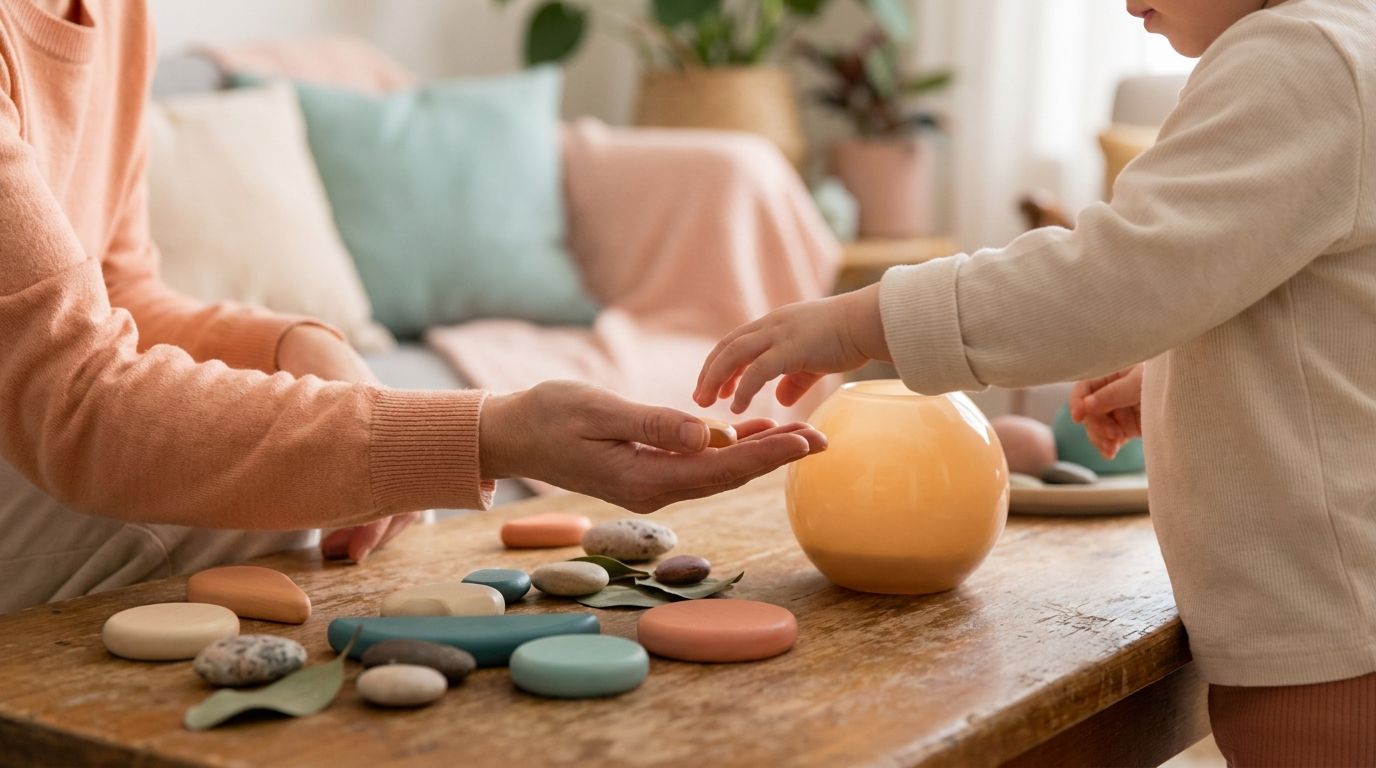
You're standing at the kitchen counter with a mug of tea going cold, and your child is staring at the toaster like it's a puzzle they never agreed to solve. You ask, "Why won't you answer me?" and their face tightens. That moment is the whole point: the question itself can feel like a test.
This post is about Luma the Lightbulb and the kind of questions that feel safe. With anxiety and learning in mind, you'll learn how to turn "answer this" into "curiosity can come closer," especially for kids with autism who may need fewer steps between a thought and a response. With Ziggyloo's adaptive learning system, you can match the question to the moment, not to your schedule.

What Luma teaches about asking questions
Luma the Lightbulb is the character you reach for when questions start to feel like pressure. The vibe is simple: questions are invitations, not inspections. When you use Luma-style questions, you slow down the "performance part" and speed up the "wonder part."
For kids dealing with anxiety and learning, this matters more than it sounds. A question can land as a demand if it has a hidden checklist inside it, like "Answer correctly," "Answer now," or "Prove you understand." Many kids with autism notice those hidden rules fast, and then their brain spends energy on safety instead of thinking.
So Luma asks in ways that reduce threat signals. She doesn't remove curiosity. She just removes the trapdoor.
Here's what safe questions usually do:
- They give your child time to think without watching the clock.
- They offer limited choices instead of open-ended performance.
- They let "I don't know" be a real answer.
- They keep your tone neutral, like you're opening a door, not grading a test.
And you get to keep your dignity too. Because sometimes you're in a rush and you still want your child to participate. Luma-style questions let you do that without turning the moment into a standoff.
A quick self-check you can do in your head: "If my child answered wrong, would I still treat it as information?" If the answer is no, soften the question before you ask it.
The difference between curiosity and interrogation
Let's name the sneaky cousin of curiosity: interrogation. Interrogation questions start with "Why" or "How come" when you already know what you want to hear. They also show up when you ask multiple questions in a row, or when you ask while your child is still processing sensory input.
One of the reasons this hits kids with autism so hard is that processing can take longer, especially when the environment feels busy. Research on anxiety and attention supports what you already see at home: stress narrows focus and makes it harder to retrieve information. In plain terms, if your child feels watched, their brain goes into "survive first" mode.
Here's a more Luma way to think about it. Curiosity questions help your child explore. Interrogation questions help you evaluate.
Try this switch in your language:
- From "Why did you do that?" to "What were you trying to do?"
- From "What's the answer?" to "Which one feels right to you?"
- From "Tell me how you did it" to "Show me another way you could try"
- From "Do you get it?" to "What part feels tricky right now?"
You can also change the structure. Open-ended questions can be hard when anxiety is high. A child might understand the concept but freeze on the response format.
Safer question formats include:
- Yes/no with a follow-up choice: "Was it heavy or light?"
- Two-option questions: "Is it blue or green?"
- Fill-in-the-blank: "It goes in the fridge because it needs to be... cold."
- "Point to it" questions: "Can you show me where it goes?"
This is not about dumbing things down. It's about reducing the number of steps your child has to hold at once.
In that kitchen moment, you could try: "Do you want to press the button, or would you like me to press it and you watch?" That keeps agency where it belongs. Then curiosity can happen after safety does.
Luma question tools you can use today
You don't need a whole new parenting personality. You need a handful of question tools that buy time and protect your child's confidence.
Think of these as "Luma knobs" you turn based on the moment.
Tool 1: The "two-choice question"
When your child looks stuck, offer two options that are both acceptable.
Example: At the table with flashcards, your child pushes them away.
- Interrogation: "What letter is this?"
- Luma: "Do you want A first or B first?"
If your child answers, great. If they point, great. If they say "neither," you still learned something: they're not ready for that format.
Tool 2: The "warm-up question"
Start with a question that is easy to answer. You're not tricking anyone. You're helping the brain switch on.
Example: Before math, you ask, "Is today a morning or an afternoon?" Then you move to the next task. It's a quick nervous-system bridge.
Tool 3: The "safe not-knowing"
Make "I don't know" a valid answer.
Example: During a storybook, you ask, "What do you think the character will do next?" Your child goes silent.
Try: "Want to guess, or want to listen and tell me later?"
This reduces the fear of being wrong. It also helps anxious kids practice staying in the conversation without the pressure to perform.
Tool 4: The "question with a pause"
Ask once, then count a slow breath before you add another sentence.
I know. Silence feels like a crime. But for many kids with autism, silence is processing space, not rejection.
You can even say, "Take your time." Then stop talking.
Tool 5: The "body-first question"
When anxiety is high, thinking questions can feel too abstract.
Example: If your child is melting down in the hallway, you ask, "Do you want a hug or do you want space?" Then you follow their lead.
After their body settles, questions about learning become possible again.
With Ziggyloo's adaptive learning system, the goal is the same: reduce the pressure signal while keeping the learning connection alive.
Three real-life scenarios where Luma helps
You asked for concrete moments, so here are three you can borrow almost word-for-word.
Scenario 1: The bedtime book that turns into a standoff
It's 7:45 pm. Your child is in bed. The book is open. You ask, "What do you think happens next?" and their eyes go flat.
Luma move: "Want to point to the page, or tell me one feeling the character might have?"
Pointing is easier than speaking. Feelings are easier than predictions for some kids when bedtime anxiety is loud. If they choose pointing, you still get participation. If they choose feelings, you still get connection.
Then you keep it short. One safe question. One small response. Close the book with warmth.
Scenario 2: The school worksheet question that feels like a trap
Your child is at the dining table with a worksheet. You ask, "Why did you write that?" and their shoulders rise.
Luma move: "Do you want to fix it together, or do you want to show me what you were thinking?"
Fixing together keeps you aligned. "Show me what you were thinking" turns the question from evaluation into explanation. Even if the answer is wrong, you've learned how they approached it.
If they shut down, you don't push. You switch to a smaller step: "Can you circle the word you recognize?"
Scenario 3: The car ride question that makes anxiety spike
You're driving. Your child is restless. You ask, "What's wrong?" because you want the problem solved.
Luma move: "Do you want quiet music or silly songs?"
Then you watch their body. If they relax, the "what's wrong" conversation can come later, when their brain is safer. If they don't relax, you try another option: "Do you want the window cracked or the fan on?"
This is not avoiding the issue. It's building readiness first.
These scenarios share a pattern. You're not chasing the correct answer. You're protecting your child's ability to think at all.
How to ask when your child is anxious and learning feels hard
Anxiety and learning can bump into each other in ways that look like "refusing," but feel like "I can't." If your child freezes, it's often not about effort. It's about fear of getting it wrong, fear of being judged, or fear that the question means something bigger than it is.
So you can shift three things: the question, the timing, and the response options.
1) Change the question's job
Before you ask, decide what you want the question to do.
- Do you want information? Ask about choices.
- Do you want connection? Ask about feelings or preferences.
- Do you want problem-solving? Ask about steps they can show.
If you want connection, "Why won't you?" is the wrong job. Luma would pick something like "Do you want help or do you want to try one more time?"
2) Change the timing by using "micro-windows"
You don't have to wait for a perfect calm. You look for micro-windows. They are short. Like 20 seconds. A sip of water. A moment when your child's eyes track your voice.
In that micro-window, ask one safe question. Then stop. If you keep talking, you can miss the opening.
3) Change the response options
Some kids can think, but can't speak on demand. Others can speak, but can't write. Others can do the task, but not explain it.
So you offer alternative responses:
- "Point" instead of "say."
- "Show" instead of "tell."
- "Pick one" instead of "answer everything."
This aligns with what you already know about learning differences. When kids with autism experience reduced cognitive load, they often perform better. That can be as simple as fewer steps, clearer choices, and less pressure to be fast.
A helpful research reminder: anxiety is linked to working memory and attention. When anxiety rises, it becomes harder to hold instructions in mind. That's why Luma questions are short and specific. You're helping their brain stay in the room.
And yes, you might still get silence. Silence is information too.
Using Ziggyloo alongside Luma-style questions
You can use Luma questions anywhere, but pairing them with adaptive learning can make a bigger difference than you'd expect.
Ziggyloo's adaptive learning system is built to respond to your child's pace and needs. That means you can keep the learning connection going without turning every question into a test. Instead of "Do you understand?" you can ask "Which choice helps you?"
Here's what that looks like in real parent life.
When your child is stuck
Use a Luma question to reduce pressure, then let the learning activity continue.
- "Do you want to try the easy one or the fun one?"
- Then you start the activity.
If your child chooses the easy one, you still get learning. If they choose the fun one, you still get learning. You're letting curiosity lead.
When your child is overwhelmed
Use a body-first question, then pause.
- "Do you want water first or a stretch first?"
Once their body settles, you return to learning with one safe question. Not five.
When your child is anxious about being wrong
Use safe not-knowing.
- "Want to guess, or want to listen and try later?"
This protects curiosity and reduces the fear signal.
If you want one guiding rule, it's this: you're allowed to ask questions that your child can actually answer. You're not failing at teaching by making it easier. You're building the conditions where learning can happen at all. (And honestly? That's the harder skill.)

FAQ
How do I ask questions without making my child feel tested?
Use fewer open-ended questions and more choice-based questions. "Do you want A or B?" often feels safer than "What's the answer?" You can also validate not-knowing by treating "I don't know" as a real response.
What if my child says "I don't know" every time?
Start with a warm-up question that matches their current comfort level, then move one step at a time. Offer two options they can point to, rather than asking them to generate an answer from scratch. If they still say "I don't know," you've learned that the format is too demanding right now.
Why do questions make kids with autism shut down?
Questions can carry hidden pressure, like speed, correctness, or explaining. Anxiety also narrows attention, so the brain may freeze when the question feels like an evaluation. Luma-style questions reduce those signals by offering limited choices and allowing time.
How long should I pause after asking a question?
Try one slow breath, then stop talking. If your child needs longer, you'll notice their eyes shift or their body relax. The goal is to give processing space, not to fill silence.
Can Luma-style questions work during meltdowns?
During a meltdown, thinking questions usually land too late. Use body-first choices first, like space or comfort, water or a stretch. Once your child is calmer, switch back to safe learning questions.
Your next step: pick one Luma question and use it twice
Tonight, choose one Luma-style question you can say the same way twice. For example: "Do you want quiet music or silly songs?" or "Do you want A first or B first?"
Then watch what changes. If your child responds with more curiosity, keep that question. If they freeze, soften it further by offering pointing, choosing, or a warm-up question.
Learning gets easier when questions feel safe. You just made that happen.
Join the conversation
Subscribe to comment
Join the Ziggyloo family newsletter to leave a comment — and get gentle learning tips and community stories in your inbox. No spam, unsubscribe anytime.