
Neurodiversity in the home: everyday strategies for parents
Discover practical tips and heartfelt strategies to create a nurturing environment for your neurodiverse child.
In the early morning light, you're standing in the kitchen, coffee smell curling through the air, already replaying the chaos of getting everyone out the door. You hear your child's voice from the other room, bright with excitement about some new project, but threaded through with worry about showing it to their class. You breathe. You remind yourself: this is just part of the journey you're on together.
Parenting a neurodiverse child can feel like navigating a maze with no map. Some days are pure joy. Others bring tears, slammed doors, and a level of exhaustion no one warned you about. But you are not alone. So many parents are right here with you, figuring it out one morning at a time. Let's look at some everyday strategies to help your whole family thrive.
Creating a sensory-friendly space
Have you ever noticed how your child reacts to certain sounds, lights, or textures? Maybe they love the weight of a thick blanket but completely unravel when the vacuum starts up two rooms away. Children with sensory sensitivities don't just notice the world differently, they feel it differently, all the way down.
Creating a sensory-friendly corner of your home can give your child a place to land when everything feels like too much.
- Identify sensory triggers: Watch and take notes. Does your child cover their ears when the microwave beeps? Freeze up under fluorescent lights at the grocery store? That kind of observation is your starting point, because you can't adjust what you haven't noticed yet.
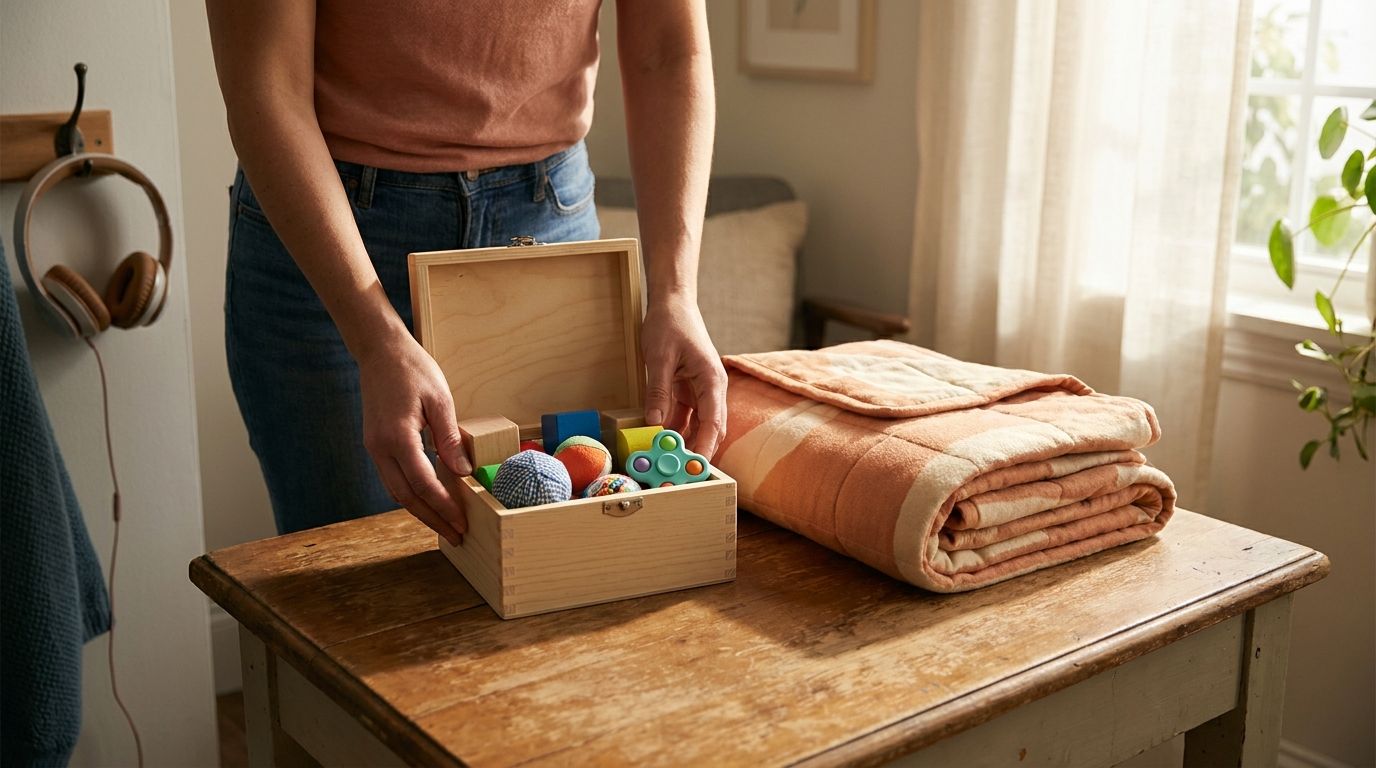
- Designate a calm corner: A cozy nook with soft pillows, noise-canceling headphones, or a small pop-up tent can become your child's personal reset button. Tuck in a weighted blanket and their favorite books. Make it theirs.
- Incorporate sensory activities: Bins filled with rice, kinetic sand, or play-dough give little hands something grounding to do. These aren't just distractions, they're genuinely calming for a nervous system that's been working overtime all day.

Establishing routines and rituals
Routines aren't about being rigid. They're about giving your child a reliable map of the day, so their brain isn't constantly bracing for what comes next. Predictability is safety, and safety is everything.
- Morning routines: A colorful visual chart with pictures for each step (brush teeth, pack lunch, grab backpack) can transform a chaotic morning into something manageable. Add Velcro tabs so your child can physically check things off. That small act of control matters more than you'd think.
- Transition times: A short, familiar song or a silly hand signal can do real work here. Singing a specific tune when it's time to clean up gives your child a heads-up that a change is coming, and a moment to prepare for it emotionally.
- Bedtime rituals: Keep it quiet, keep it consistent. Soft music, a few pages of a favorite book, maybe a gentle essential oil diffuser or a warm nightlight. The goal is a landing strip, not a crash landing.
Encouraging open communication
Building a home where your child can say the hard stuff out loud, without fear of being dismissed or corrected, is one of the most powerful things you can do. And honestly, it takes practice for all of us.
- Active listening: Put the phone down. Get on their level. When they tell you a classmate left them out at recess, don't jump to fixing it. Try: "I hear that you felt sad when your friend didn't include you in their game. Can you tell me more?" That pause before problem-solving is everything.
- Use emotions charts: A chart with illustrated faces covering a range of emotions gives kids a vocabulary when words fail them. During a meltdown, pointing at a picture is so much easier than finding the right sentence. (I've seen parents use these at the dinner table nightly, just as a low-key check-in, and it genuinely changes the conversation.)
- Validate their feelings: A simple "I see that you're really upset right now, and that makes sense" can de-escalate faster than any clever strategy. Your child needs to know their inner world is real and welcome, not something to be managed away.
Finding your community
Some days this whole thing can feel incredibly isolating, like you're the only parent whose kid melted down in the school pickup lane at 3 PM on a Tuesday. You're not. There is a whole community of people who get it, and finding even a small corner of it can change everything.
- Join local support groups: Local organizations, parent networks, and school-based groups can connect you with people who've already figured out some of the things you're still searching for answers on. The National Autism Association is a good place to start looking.
- Online forums and social media: Facebook groups like "Parenting Neurodiverse Kids" and dedicated Reddit communities offer a place to share wins, vent frustrations, and ask questions at midnight when no one else is awake. Real support, no commute required.
- Involve your child: Look for inclusive programs, art studios with sensory-friendly classes, drama groups, team sports that emphasize cooperation over competition. Helping your child find their people is just as important as finding yours.
Practical tips for daily life
Small shifts in how you frame daily tasks can reduce friction in ways that feel almost magical once you find the right combination for your kid.
- Break tasks into smaller steps: Instead of "clean your room," try "first, put your clothes in the hamper. Then make your bed. Then put the toys away." Smaller steps mean fewer places for overwhelm to sneak in.
- Use positive reinforcement: A high-five, a sticker chart, a genuine "I noticed how hard you worked on that" goes a long way. Celebrate the small stuff, because the small stuff is actually the big stuff.
- Be flexible: Routines matter, but so does rolling with it when things go sideways. Modeling "okay, that didn't work, let's try something else" teaches your child something no curriculum can.
- Involve them in decision-making: Letting your child choose their outfit or pick between two lunch options gives them a sense of agency over their own life. That feeling of control builds confidence, quietly and steadily, over time.
FAQ
What are some effective neurodiversity strategies for at-home learning?
Creating a structured learning environment with clear expectations can help. Use visual schedules, sensory breaks, and positive reinforcement to encourage engagement. Incorporate hands-on activities and breaks to maintain focus and motivation.
How can I support my child's emotional needs?
Listening actively and validating their feelings is crucial. Consider using emotion charts or simple phrases to help them express themselves better. Encourage journaling or drawing to process their thoughts and feelings. These creative outlets can be incredibly therapeutic.
What should I do if my child struggles with social interactions?
Encourage social skills through role-playing or structured playdates. Consider involving them in group activities that match their interests, which can help ease social anxiety. Look for programs that promote social skills, such as drama classes or team sports that emphasize cooperation.
How can I find resources for my neurodiverse child?
There are many books, websites, and organizations dedicated to neurodiversity. Local support groups and online communities can also offer valuable guidance. Consider checking out resources like Understood.org or the Autism Society for helpful articles, guides, and community connections.
How can I effectively communicate with my neurodiverse child?
Use clear, simple language and avoid idioms or abstract expressions that might trip them up. Encourage them to express their feelings by asking open-ended questions. Offering choices in daily activities can also promote communication and independence.
What are some fun activities I can do at home with my child?
Sensory play, arts and crafts, cooking together, building with blocks, backyard science experiments. Outdoor time, nature walks, even just digging in the garden, gives kids space to explore and decompress at their own pace.
As you navigate all of this, please remember: you are doing your best, and your best is genuinely enough. Your child's strengths are real, even on the days they're hard to see. Celebrate the moments of connection and growth, especially the quiet ones that don't look like much from the outside.
Every single day is a fresh chance to learn alongside your kid. Your love is the most important resource in this whole equation. So take a breath, finish that coffee before it goes cold, and know this: you've absolutely got this.
Join the conversation
Subscribe to comment
Join the Ziggyloo family newsletter to leave a comment — and get gentle learning tips and community stories in your inbox. No spam, unsubscribe anytime.