
Neurodiversity myths debunked: what every parent should know
Explore the truth behind common neurodiversity myths and learn how to support your child’s unique journey with confidence.

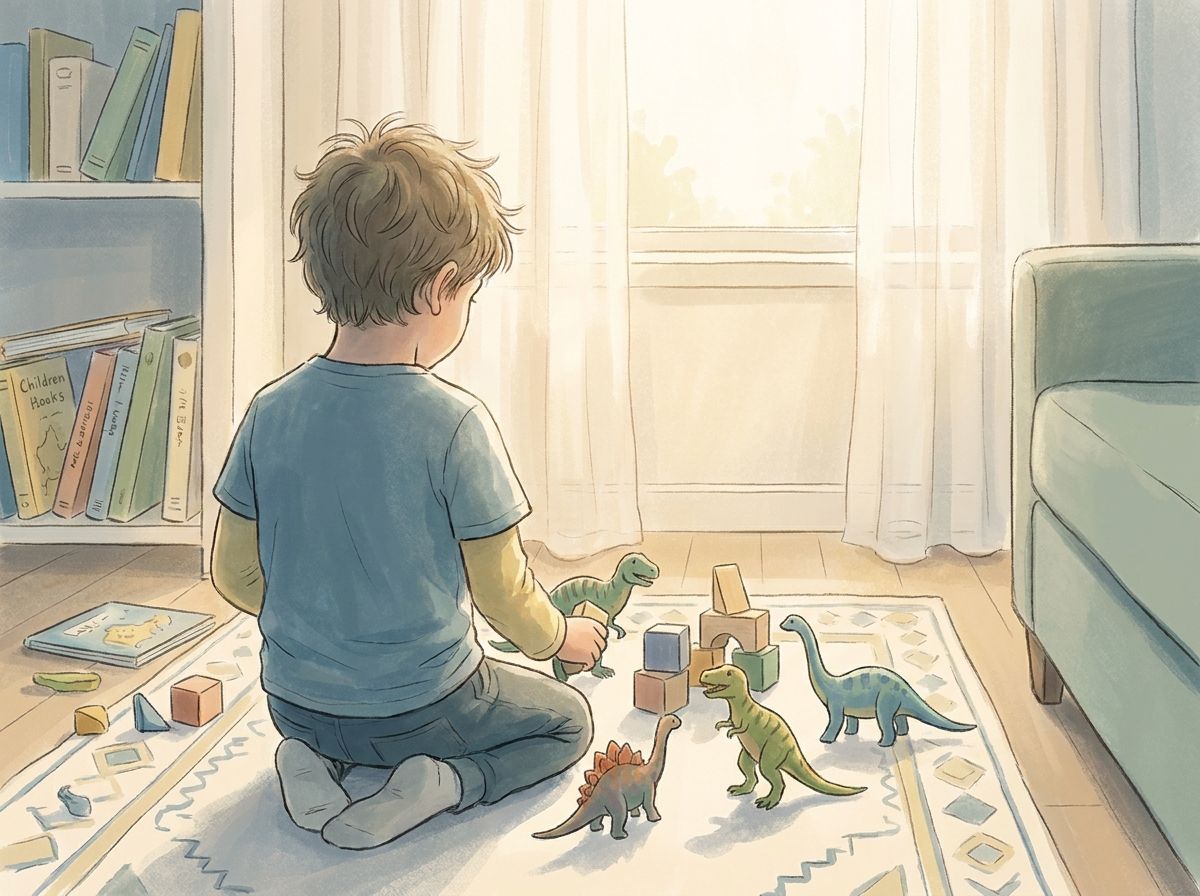
Sitting at the kitchen table, you watch your child meticulously line up their toy dinosaurs. Each one has its exact place. For a moment, the chaos of the day just melts away, and you smile. But then that familiar nagging thought creeps in: "Is this obsession just a phase? Am I doing this right?" The pressure to measure your kid against some invisible yardstick of "normal" is relentless, especially when you're parenting a neurodiverse child.
If you've ever felt like you're navigating this alone, you're really not.
Neurodiversity is one of the most misunderstood topics out there, and the myths swirling around it can genuinely cloud how parents see their own children. So let's dig into the most common ones and take them apart, so you can meet your child's unique brain with confidence instead of doubt.
Myth 1: Neurodiverse children are broken or need fixing
This one does real damage. The idea that a child who doesn't behave like their neurotypical classmates must have something fundamentally wrong with them is not only false, it's harmful in ways that linger.
Neurodiversity is built on a different premise entirely: that brains simply function in different ways, and those differences carry genuine value. Kids with ADHD, autism, dyslexia, and other neurodiverse profiles bring strengths and perspectives that a cookie-cutter classroom often misses entirely. Your child might struggle with conventional social scripts but absolutely dazzle when it comes to creative thinking or spatial problem-solving. That's not a deficit dressed up nicely. That's a real gift.
Consider Lucas, who was diagnosed with ADHD at seven. Sitting still in class was genuinely hard for him, but hand that kid a bucket of Lego and he'd engineer something that'd make your jaw drop. His teachers were quick to flag him as a problem. His parents, though, worked with the school to build in more hands-on learning, and today Lucas is designing models for science fairs. Same kid. Different environment.
Notice your child's strengths and say them out loud, often. If they spin an elaborate story around their dinosaur collection, tell them their imagination is remarkable. If they hold it together in a tricky social moment, name that courage specifically. Small celebrations build something real over time.
Myth 2: All neurodiverse children exhibit the same behaviors
People hear "autism" or "ADHD" and immediately reach for a mental checklist. But neurodiverse kids are individuals, full stop, with their own personalities, quirks, and wildly different challenges.
Take Mia and Jake, both on the autism spectrum. Mia lights up during imaginative play with her friends, she seeks that connection out. Jake finds group settings genuinely overwhelming and does his best thinking alone, drawing or building models in his room. Neither experience is more "autistic" than the other. They're just two different kids. And a child with ADHD might be bouncing off the walls in one setting but surprisingly focused and calm in another, depending on what's actually holding their interest.
So watch your child. Not to diagnose or compare, but to actually see them. Join them in what they love (I started doing Saturday dance parties with my niece for exactly this reason, and honestly it's the best part of my week). That kind of attention tells your child their inner world matters to you, and it builds a bond that makes everything else easier.
Myth 3: Medication is the only solution for neurodiverse children
Medication helps a lot of kids, genuinely. But it's one tool in a much larger toolbox, not the whole shed.
The Johnson family learned this firsthand. Their son Ethan was diagnosed with ADHD young, and after a long conversation with their pediatrician, they decided to try lifestyle shifts before anything else. Structured daily routines, regular outdoor time, and some simple mindfulness exercises made a noticeable difference in Ethan's focus and overall mood. Medication stayed on the table as an option, but it wasn't where they started.
Approaches like cognitive-behavioral therapy (CBT), occupational therapy, and social skills training can give kids concrete tools for navigating their world. What works brilliantly for one child might do nothing for another. The key is working closely with professionals who actually know your child's specific profile and staying genuinely open to trying more than one path.
Myth 4: Neurodiversity is a new phenomenon
Neurodiversity isn't a trend. People with neurodiverse traits have existed across every culture and every era of human history. What's new is the language, and the growing willingness to listen.
Albert Einstein, widely regarded as one of history's most brilliant thinkers, is frequently speculated to have had traits associated with autism. His particular way of seeing and solving problems didn't fit neatly into conventional boxes, and that's precisely what made his contributions so extraordinary. Knowing this history matters because it reframes the story. Your child isn't an anomaly. Their kind of mind has always been here, always been valuable.
Use that history as fuel for advocacy. Talk about neurodiversity with other parents, with teachers, with anyone who'll engage honestly. The more voices in that conversation, the safer the world gets for all of our kids.
Practical takeaways for navigating neurodiversity
- Challenge stereotypes: Whenever you hear someone making sweeping generalizations about neurodiverse children, speak up. Sharing your personal experiences can help shift perceptions.
- Create a supportive environment: Surround your child with understanding peers and adults who celebrate their uniqueness. This can foster self-acceptance and resilience.
- Educate yourself: Read about neurodiversity, attend workshops, and connect with other parents. The more you know, the better equipped you'll be to support your child.
- Practice patience: Remember, every child's journey is different. Allow your child to grow at their own pace, and be patient with yourself as you navigate this journey together.
- Seek out resources: There are many organizations dedicated to supporting neurodiverse children and their families. For example, the Autism Society and CHADD (Children and Adults with Attention-Deficit/Hyperactivity Disorder) offer valuable resources and community support. Engaging with these organizations can provide you with further insights and connections.
- Model acceptance: Show your child how to embrace differences by modeling acceptance in your own life. Celebrate diversity in all forms, whether it's through friendships, books, or media that reflect various experiences.
FAQ
Why is it important to debunk neurodiversity myths?
Debunking neurodiversity myths is crucial for fostering understanding and acceptance. It allows parents to better support their children and helps create a more inclusive environment for all. Dispelling myths also reduces stigma and opens the door to honest conversations that actually go somewhere.
How can I support my neurodiverse child?
Supporting your neurodiverse child involves understanding their unique strengths and challenges, celebrating their achievements, and advocating for their needs in various settings. Creating a structured yet flexible environment, one that bends without breaking, can make a real difference in how they move through their days.
Are all neurodiverse children the same?
No, each neurodiverse child is unique. They may share some traits with others but also have their own personalities, strengths, and challenges. It's essential to see them as individuals and to recognize their distinct pathways.
What are some resources for parents of neurodiverse children?
There are many resources available, including local support groups, online communities, educational websites, and literature focused on neurodiversity. Connecting with other parents can be especially helpful. Organizations like the National Center for Learning Disabilities also provide information and resources tailored to specific needs.
How can I help my child advocate for themselves?
Teaching your child self-advocacy skills can empower them to express their needs and preferences. Encourage open communication, help them articulate their thoughts, and role-play different scenarios to build their confidence in various situations, such as asking for help in school or expressing their feelings.
What signs should I look for if I suspect my child is neurodiverse?
Common signs can include difficulty with social interactions, challenges in following directions, or unusually intense specific interests. Every child develops on their own timeline, so if something feels off, trust that instinct and reach out to a pediatrician or child psychologist for a proper conversation.
You're not alone in this. Not even close. Embracing neurodiversity opens up a whole different way of seeing your child, one where their quirks become clues to who they really are. Every single day is a chance to learn something new about them, to cheer for them, and to build a home where they feel completely, wholly themselves. That's not a small thing. That's everything.
Join the conversation
Subscribe to comment
Join the Ziggyloo family newsletter to leave a comment — and get gentle learning tips and community stories in your inbox. No spam, unsubscribe anytime.