
Personalized learning for neurodiverse children: what should adapt besides difficulty?
Personalized learning is more than making work easier or harder. Learn how to adapt sensory input, timing, communication, interests, and feedback at home.
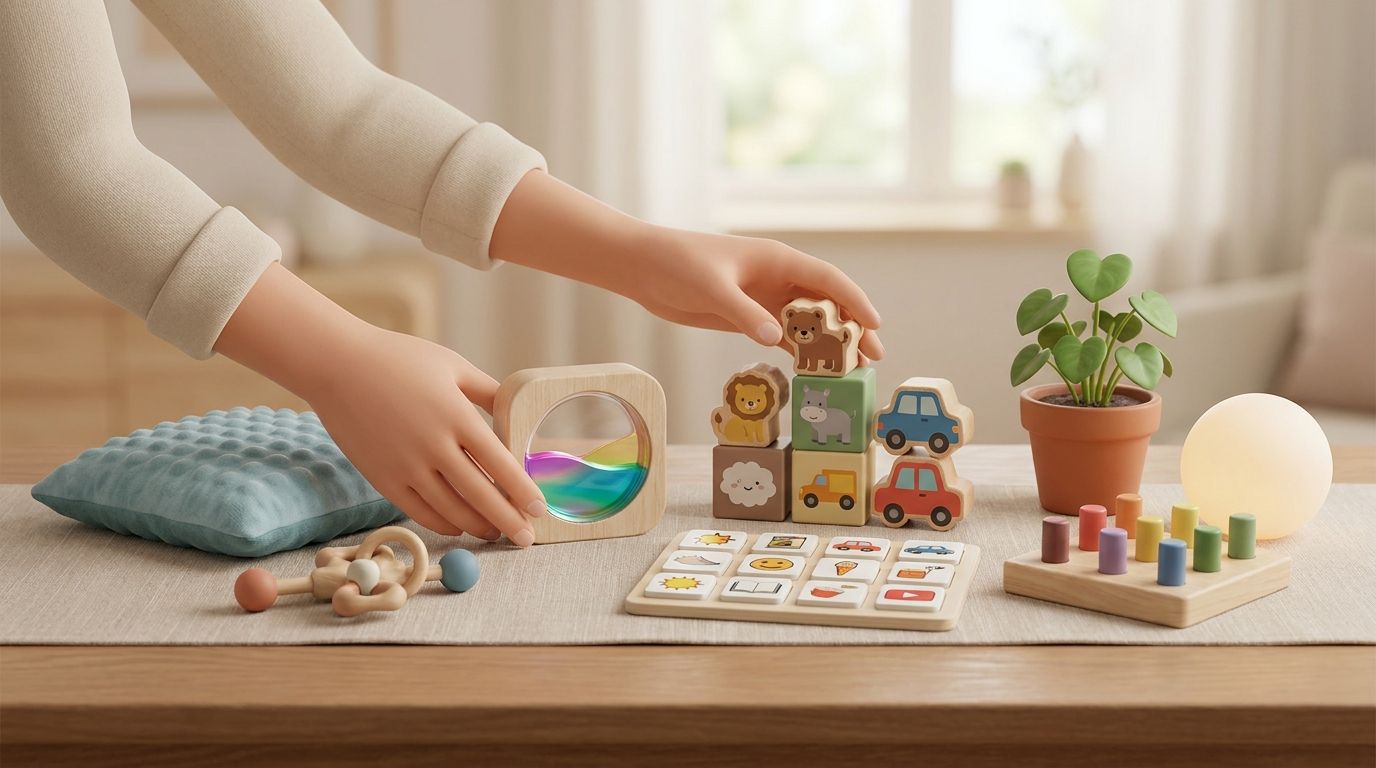
At 7:42 on a Tuesday morning, Jordan is under the kitchen table with one sock on, while a worksheet waits beside a cooling waffle. The math is not too hard. The room is too loud, the instructions are too long, and the worksheet gives Jordan no clear place to begin. Personalized learning for neurodiverse children works best when it adapts more than difficulty. It also adapts the route, timing, sensory load, communication style, choices, and the way your child can show what they understand.
The short answer is simple: keep the learning goal steady when you can, then shift the conditions around it. You might shorten the task, offer movement, read directions aloud, use pictures, or let your child answer by speaking instead of writing. The goal is access, not a smaller education.
That distinction matters at home. If a child struggles, your first instinct might be to lower the level, and sometimes that is exactly right. Other times, the child understands the idea but cannot reach it through the current format. Your detective hat is optional, a parent-sized cup of coffee may help though.
Personalized learning for neurodiverse children changes more than difficulty
Difficulty is only one setting. A learning activity also has a starting point, a pace, a sensory profile, a response method, and a social demand. Adjust those parts, and your child may show skills that were hidden by the original setup.
Imagine Priya at the dining table in Manchester, working on a reading passage about insects. She answers every question when you read the passage aloud, but her independent reading falls apart after four lines. That pattern gives you useful information. It may point to a difference between understanding spoken language and managing decoding, visual tracking, or sustained effort on the page.
You can keep the reading goal while changing the path. Try an audio read-along, a shorter passage, a larger font, or a chance to answer with movable picture cards. If Priya still grasps the main idea, the support has not made the learning fake. It has removed a barrier that had nothing to do with the concept you wanted to check.
Research on universal design for learning, including guidance from CAST, describes this as offering more than one way to engage, take in information, and respond. The approach fits what parents see every day: a child can know something at 10 a.m. and lose access to it at 5 p.m. after a noisy school day.
Try asking these questions before you make work easier:
- What exactly is the learning goal?
- Which part is blocking access?
- Can you change the input without changing the goal?
- Can your child show the answer another way?
- What support can you fade later, if your child is ready?
You do not need a perfect diagnosis of the barrier. You need a small experiment and a willingness to notice what changes.
Adapt sensory input before you adapt the lesson
A child who is covering their ears may not be refusing phonics. They may be trying to hear the sounds through the washing machine, a sibling's cartoon, and a chair scraping the floor. Sensory input can decide whether learning feels reachable before the activity even starts.
The CDC's 2023 autism monitoring report identified autism in about 1 in 36 eight-year-old children in the United States. That number does not describe every autistic child, and neurodiversity includes many experiences beyond autism. It does remind us that families need learning plans that account for real differences in communication, attention, movement, and sensory processing.
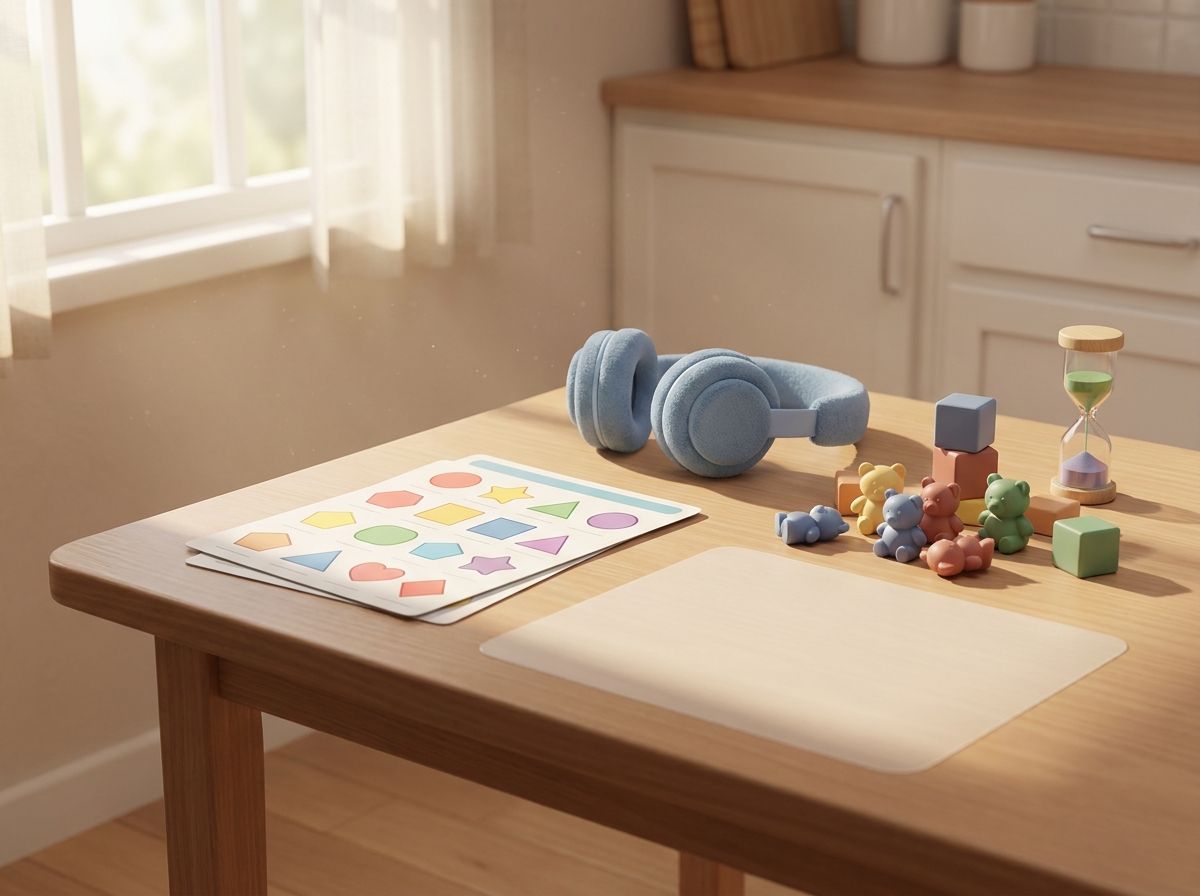
Start with the setting. At 4 p.m. in a busy kitchen, Leo may work best with headphones, a plain placemat, and one worksheet square visible at a time. At 9 a.m. on the same Saturday, he may enjoy learning at the kitchen counter while standing. The activity is not the whole story. The surroundings are part of the lesson.
You can test one sensory change at a time:
- Lower background sound by turning off one device.
- Reduce visual clutter by clearing half the table.
- Add movement before seated work, such as wall pushes or a short walk.
- Offer a fidget or textured object if it helps your child stay present.
- Change lighting when bright overhead bulbs seem to drain attention.
Watch the result without treating it as a permanent label. A child may need quiet for writing but music for building. A child may seek movement during spelling and stillness during a story. Personalization is not a fixed profile pinned to the fridge, it is a set of observations that can shift with sleep, hunger, illness, and the demands of any given day.
If Ziggyloo is part of your home routine, you can use the parent-visible chat transcripts to notice patterns across activities, then bring those observations into ordinary learning time. The transcript is not a diagnosis. It is one more place to notice what helped.
Adapt communication and the way your child responds
Instructions often fail because they ask a child to listen, remember, plan, and act all at once. A child may hear "Get your notebook, turn to page six, write the date, and answer the questions" as one large blur. Adaptive education strategies break the blur into something a brain can actually hold.
Try changing the message before changing the work. Use a picture, gesture, written phrase, or demonstration. Give one direction, pause, and check what your child heard. You can say "Show me the page" instead of asking "Do you understand?" A nod can mean many things. Showing you gives better information.
Ava, age six, freezes when an adult asks her to explain how she solved a subtraction problem. At home in Bristol, she can build the same problem with counters and point to the group she removed. She may not be ready to narrate every mental step, but her demonstration gives you a real window into her thinking.
Offer several response routes when the goal allows it:
- Speaking, signing, pointing, or using a communication device.
- Drawing, arranging cards, building with objects, or acting out an answer.
- Typing, circling, selecting from choices, or recording a short voice message.
- Showing the skill during play instead of answering a direct question.
This does not mean accepting every response for every task. If the goal is handwriting, your child needs some handwriting practice. If the goal is understanding a story, writing may be an unnecessary barrier. Say the goal out loud to yourself. That one habit prevents many accidental battles.
Also notice the pressure carried by your wording. "Tell me now" may close the door. "You can point, draw, or tell me when you are ready" leaves a handle on it. Warmth is not a reward for compliance, it can make communication possible in the first place.
Adapt timing, pacing, and transitions
Time changes performance. A child may solve a puzzle after a long pause, then miss the same problem when a timer is running. That does not automatically mean the child lacks the skill. It may mean the response window is too narrow.
Children with ADHD may need more external support for time, working memory, and task initiation. The CDC reported in 2022 that about 7 million children and adolescents ages 3 to 17 in the United States had ever received an ADHD diagnosis. A number cannot tell you what your child needs, but it does help explain why "just focus" is not a useful learning plan.
Use timing as a design choice. Begin with a short work period that ends before your child is completely spent. Add a visible finish point, then build in a real break. Not a lecture disguised as a break.
For Mateo, an eight-year-old in Leeds, spelling after school works better as two five-minute rounds than one twenty-minute block. He chooses a movement break after the first round, then returns to write two words and dictate the rest. The spelling practice is still there. The route has changed enough for him to use it.
You can experiment with:
- A "now and next" card for the immediate task and what follows.
- A timer that shows passing time without sounding an alarm.
- A choice between starting with the easiest item or the most interesting one.
- A transition warning at five minutes, two minutes, and the final minute.
- A stopping rule, such as "three tries, then we pause and review."
Avoid turning every pause into a test of endurance. More minutes do not always create more learning. Sometimes they create a tired child, a tired parent, and a pencil that has mysteriously rolled under the sofa for the fifth time.
Adapt interest, choice, and context
Interest is not a bribe. It is information about where attention may become easier to reach. A child who ignores a workbook may spend twenty minutes sorting toy animals by habitat, then bring that same focus to comparing numbers or describing patterns.
You can connect a target skill to an interest without letting the interest swallow every activity. If ten-year-old Noah loves buses, you might practise money by planning a pretend bus trip, reading a route map, or comparing travel times. The maths remains maths. The context gives it a reason to matter.
Choice also changes the emotional demand. Offer choices that are small enough to answer quickly: pencil or marker, floor or table, two problems or four, read first or listen first. Too many options can feel like another task, so keep the menu short and familiar.
Personalized learning at home can include choices about:
- The topic used to introduce a new skill.
- The place where practice happens.
- The order of two tasks.
- The tool used to answer.
- The size of the first attempt.
Keep an eye on the difference between interest and avoidance. If a child only practises what already feels easy, gently widen the path. Start with the favourite topic, then add one less familiar step. Noah might choose the bus route, then practise reading a short paragraph about a train.
Ziggyloo's StorySpark Studio, story library, Song Cloud, and Game Zone can give you different contexts for the same broad skill, but you do not need an app to use this idea. A homemade pretend shop, a chalk map on the pavement, or a recipe measured with cups can do plenty. The point is not novelty. It is a meaningful doorway into practice.
Adapt feedback, confidence, and what happens next
Feedback tells a child what to do with the next attempt. "Good job" may feel kind, but it gives little information. Specific feedback helps your child notice the action that worked: "You checked the picture before choosing," or "You kept the blocks in groups so you could count them."
Be careful with speed-based praise. Fast is not always better, and a quick answer can hide guessing. Praise useful actions such as returning after a break, asking for a different tool, checking work, or trying a new route. Those habits build a child's learning confidence without demanding a certain personality.
After an activity, jot down three observations for yourself:
- What helped my child start?
- What made the task harder?
- What should I keep, change, or remove next time?
- What did my child communicate through words, movement, or behaviour?
That last question matters. A child who pushes away a worksheet may be telling you the page is too crowded, the task is unclear, or the demand arrived at the wrong time. Behaviour is not always a deliberate message, but it is always information worth checking.
You can use a simple weekly note with four columns: goal, support, response, next experiment. Keep it brief. A two-minute note is more useful than a beautiful chart you cannot maintain. (Speaking from experience, my own abandoned charts could fill a small cupboard.)
When a support works, keep it available. You do not have to remove it quickly to prove independence. Independence can mean choosing the support, asking for it, or using it without a reminder. Over time, you can invite your child to decide: "What would make this easier to start?" That question hands over control without handing over the whole burden.
A practical plan for your next learning moment
You can try this process during one ordinary activity this week. Pick something already on your schedule, such as reading before bed or counting coins at the kitchen table. Do not redesign the whole house.
1. Name the goal in one sentence. For example: "I want Jordan to identify the main idea."
2. Notice the barrier. Is it sound, handwriting, memory, language, time, movement, or uncertainty?
3. Change one condition. Read aloud, cover part of the page, add a visual, or offer a different response method.
4. Watch what your child does, not only whether the task is finished.
5. Record the result and choose the next small experiment.
If the change helps, repeat it in a new setting. If it does not, that is useful too. Try another route rather than deciding your child cannot learn the skill.
You can also ask your child for a rating after the activity. Use a five-point scale, colours, or hand signals: "Was this easy to start, hard to start, or somewhere in the middle?" Their answer may reveal a problem you could not see from across the table.
Personalized learning does not mean making every moment custom-built. It means staying willing to adjust the conditions when the current route blocks the learner. Start with one goal, one barrier, and one small change tonight. Then let the next attempt teach you what to try after that.
FAQ
What should personalized learning adapt besides difficulty?
It can adapt sensory input, timing, task length, instructions, response methods, interests, choices, and feedback. The learning goal can stay steady while the route to that goal changes.
How can I personalize learning at home without buying special equipment?
Use ordinary tools such as paper, counters, timers, cushions, sticky notes, picture cards, and household objects. Change one part of the activity at a time so you can notice what helps.
Does giving my child choices make learning less structured?
Not when the choices are small and clear. Offering "table or floor" or "write or dictate" keeps the boundary while giving your child a workable way to enter the task.
How do I know whether my child needs easier work or a different format?
Check whether your child can show the skill with support, orally, through movement, or with a shorter task. If understanding appears in another format, the original barrier may be access rather than difficulty.
Can an adaptive learning app replace support from a parent or teacher?
No. An app can offer practice and patterns to notice, but you bring context, care, and judgment. Use tools such as Ziggyloo alongside observation and conversations with your child's educators or care team.
Join the conversation
Subscribe to comment
Join the Ziggyloo family newsletter to leave a comment — and get gentle learning tips and community stories in your inbox. No spam, unsubscribe anytime.