
The importance of neurodiversity in today's classrooms
Discover how embracing neurodiversity in education transforms classrooms into inclusive spaces where all children thrive.

On a crisp Tuesday morning, you're pouring cereal while Jamie rattles off dinosaur facts at approximately ninety miles an hour. Then - mid-sentence - the chatter stops. Eyes wide. "Mom, why can't I go to school like everyone else?" Your heart drops straight to the kitchen floor. You know Jamie is different, wonderfully quirky, and you know that difference is not a problem to be fixed. But the question hangs in the air anyway. Moments like that one remind us these conversations don't start at a school board meeting - they start right here, over a bowl of Cheerios.
Understanding neurodiversity in today's classrooms is more than a feel-good buzzword. It's a real, urgent conversation about inclusion, acceptance, and what it means to truly celebrate every kind of mind.
Understanding neurodiversity in education
Neurodiversity is the idea that variations in brain function and behavior are natural - and genuinely valuable. Not "valuable despite the challenges." Valuable, full stop. This perspective asks our education system to stop treating one style of learning as the default and everyone else as a deviation from it.
Research backs this up. Neurodiverse children - including those with ADHD, autism, dyslexia, and other conditions - often carry remarkable strengths alongside their challenges. Kids with ADHD, for instance, frequently excel at creative problem-solving in ways that catch their teachers off guard. A 2021 study in the Journal of Attention Disorders found that children with ADHD often show enhanced divergent thinking skills, the exact kind of mental flexibility that drives artistic and innovative work. When educators recognize those strengths instead of just managing the struggles, something shifts - classrooms become places where more kids actually belong.
Why is neurodiversity important?
- Promotes acceptance and empathy: When children learn about neurodiversity early, they build a broader, more generous picture of the humans around them. Programs that introduce these concepts in elementary settings have been shown to reduce bullying and increase kindness among students, according to the National Center for Learning Disabilities. Empathy, it turns out, is a skill - and it needs to be taught.
- Enhances creativity: Diverse minds produce ideas that homogenous groups simply won't. When neurodiverse children collaborate with neurotypical peers on a classroom project, the results can be genuinely surprising - unexpected visual solutions, narrative twists, ways of framing a problem nobody else thought to try. That's not a nice bonus. That's the whole point.
- Prepares for real-world challenges: Today's workplaces actively seek out cognitive diversity. Companies like Microsoft and SAP have formal programs to recruit neurodiverse talent, specifically because of the problem-solving abilities those employees bring. Schools that embrace neurodiversity aren't just being kind - they're preparing every kid in the room for the world they're actually going to live in.
- Supports mental health: Belonging matters. A 2022 study published in Child Development found that neurodiverse children who felt genuinely included in their classrooms reported significantly lower levels of anxiety and depression. Feeling seen isn't a luxury. It's the foundation everything else is built on.
Strategies for supporting neurodiverse children in classrooms
You might be wondering where to even start when it comes to advocating inside your child's school. Here's the honest answer: you start small, you start early, and you stay consistent.
Collaborate with teachers
Get in touch with your child's teacher before the year really gets rolling - not after the first rough week. Share what you know about your child's specific strengths and sticking points. You know things no assessment can capture, like the fact that Jamie shuts down completely when instructions come in a numbered list but thrives with a visual chart. Open communication early in the year changes the whole dynamic, turning the teacher from a gatekeeper into a genuine partner.
Encourage individualized learning plans
Ask about individualized education plans (IEPs) or 504 plans - these aren't just paperwork, they're tools. Accommodations like extended test time, modified assignments, or scheduled sensory breaks can make the difference between a child who's white-knuckling through the day and one who's actually learning. If your child consistently hits a wall with long reading passages, advocating for shorter, more engaging texts isn't asking for special treatment - it's asking for access.
Create an inclusive environment
Push for classroom practices that work for more kinds of learners. This can include:
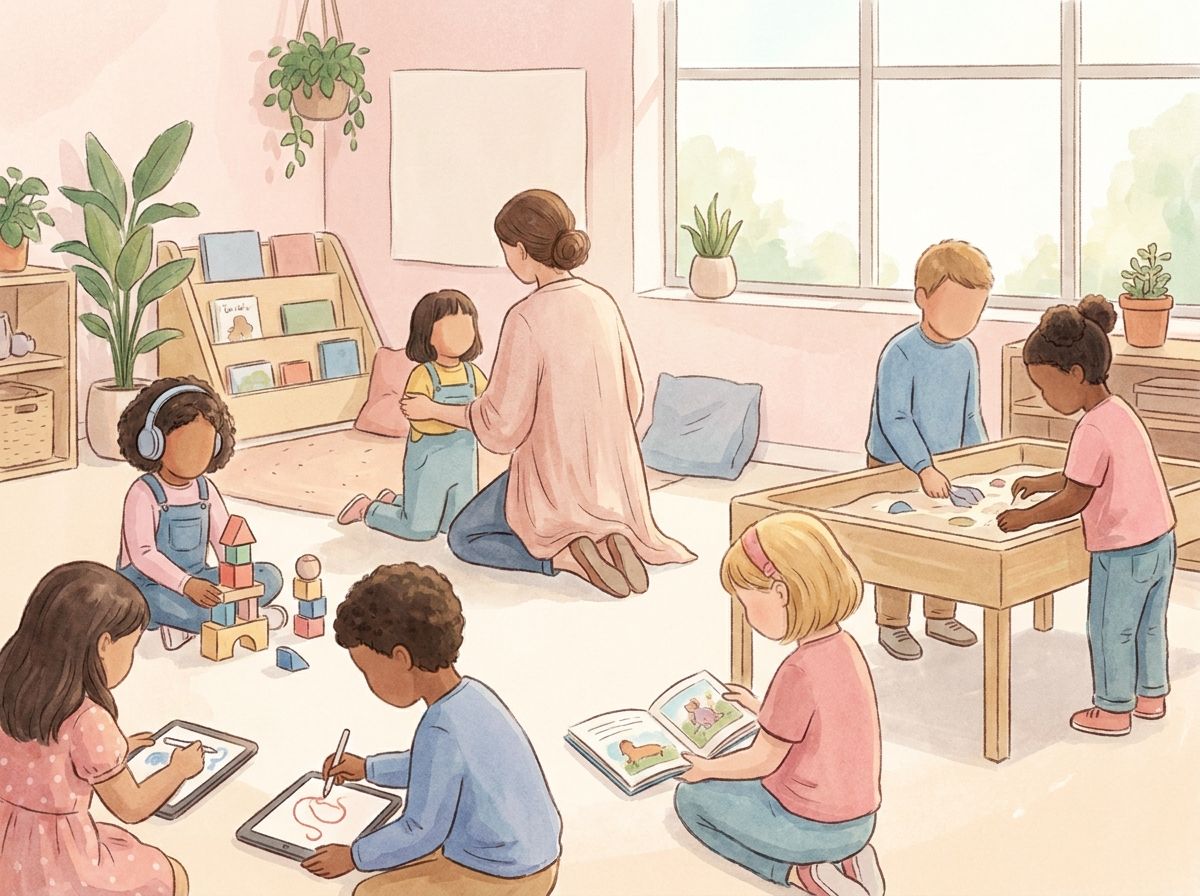
- Incorporating diverse teaching methods (like visual aids, hands-on activities, and technology). Visual schedules, for example, can give children with autism a reliable map of the day that reduces anxiety before it even starts.
- Ensuring classroom materials represent various cultures and abilities. Books featuring neurodiverse characters help every child see themselves somewhere in the story.
- Encouraging peer mentoring programs, where neurotypical children support their neurodiverse classmates - building real friendships in the process, not just tolerance.
Advocate for teacher training
Teachers want to reach every student - most of them genuinely do - but they can't do it without training. Encourage your school to invest in professional development specifically around neurodiversity. Programs like the Neurodiversity in Education Initiative offer practical, classroom-ready resources that help educators move beyond good intentions into actual strategy.
The role of parents and the community
You are not a passive bystander in this. When parents advocate loudly and consistently for neurodiversity, the ripples spread further than you'd expect.
- Start conversations: Bring it up at the coffee chat, at the PTA meeting, at the soccer pickup. Share your family's experience - not to perform vulnerability, but because your story normalizes these conversations for parents who are still finding their footing.
- Support local initiatives: Get involved with organizations focused on neurodiverse children. Volunteering, attending events, or even just sharing a post from groups like Autism Speaks or The Arc puts more oxygen into the room. Every bit counts.
- Celebrate differences: Share stories of famous neurodiverse individuals - Albert Einstein, Temple Grandin - not to pressure your child into genius, but to show them that their brain has good company. Art projects that explore different abilities can make this feel like play rather than a lesson.
- Connect with other parents: Find your people. Online forums, local support groups, platforms like Understood - these communities offer strategies you haven't thought of yet and a reminder that you're not doing this alone.
Nurturing neurodiversity through school policy
Individual effort matters, and so does systemic change. Both things are true at once.
- Attend school board meetings: Bring your story into those rooms. Personal narratives move people in ways that statistics alone don't, and the board needs to hear what inclusive - or non-inclusive - education actually looks like on the ground.
- Promote inclusive policies: Work with administrators to build policies that make inclusivity structural rather than dependent on whichever teacher happens to "get it" this year. Suggest training programs, push for specialist hiring, make the case that this benefits every student in the building.
- Engage with local legislators: Reach out to your local representatives about funding for programs that support neurodiverse children. Frame it the way it actually is: an investment in the whole community, not a charity for a few.
FAQ
Why is it essential to support neurodiverse children in education?
Supporting neurodiverse children in education is vital because it builds classrooms where every student can actually thrive - not just survive the day. Acceptance of different learning styles strengthens creativity and empathy across the whole class, and studies consistently show that inclusive classrooms produce better academic outcomes for all students, not just neurodiverse ones.
How can teachers accommodate neurodiverse students?
Teachers can implement individualized education plans, vary their teaching methods, build in sensory breaks, and cultivate a classroom culture where every child's contribution is treated as worth something. Practical adjustments - flexible seating, sensory-friendly spaces, multiple ways to demonstrate knowledge - can quietly transform a child's experience without disrupting anyone else's.
What can I do if my child feels isolated at school?
Start by listening without rushing to fix it. Then open a conversation with their teacher about what's happening socially and academically. Help your child find peers who share their specific interests - dinosaurs, trains, a particular video game - and consider facilitating playdates or group activities outside school where the social stakes feel lower.
How can I talk to my child about their neurodiversity?
Keep the language simple and genuinely positive - not "positive" in a way that glosses over hard things, but honest about the fact that different brains work differently, and that's actually interesting. Lead with their strengths. Share stories of neurodiverse people who've done remarkable things. Let them ask questions, even the uncomfortable ones.
What resources are available for parents of neurodiverse children?
Organizations like The National Autism Association, Dyslexia Foundation, and Learning Disabilities Association of America offer tools, support groups, and advocacy guidance. Understood is particularly useful because it offers resources tailored to your child's specific profile rather than a one-size-fits-all approach.
How can I encourage my school to celebrate neurodiversity?
Start the conversation with teachers and administrators directly - not as a complaint, but as an invitation. Suggest awareness events or workshops. Propose bringing in a speaker. Connect the school with local organizations that already have programming ready to go. You don't have to build it from scratch; you just have to open the door.
Your journey through all of this is your own, and nobody else's path will map exactly onto yours. But every conversation you push yourself to have, every meeting you show up to, every time you tell Jamie that their brain is worth celebrating - it adds up. It matters more than you know. There's a whole community of parents doing this alongside you, and we are absolutely cheering you on.
Join the conversation
Subscribe to comment
Join the Ziggyloo family newsletter to leave a comment — and get gentle learning tips and community stories in your inbox. No spam, unsubscribe anytime.