
Understanding sensory needs: tips for supporting your child at home
Navigating sensory needs can be challenging. Here are practical tips to support your neurodiverse child in a warm, understanding environment.

You stepped into the living room and the chaos hit you before your eyes even adjusted. Milo was ricocheting off the furniture, shrieking with delight one second and dissolving into tears the next. The ceiling fan light blazed down like a stage spotlight, the TV hammered away in the background, and the whole scene had that particular electric quality that means things are about to go sideways. You took a breath. This is Milo being Milo. But quietly, underneath that breath, came the real question: how do I help him feel at home in his own body?
That question matters. Kids with sensory sensitivities don't just "react" to the world, they experience it at a different volume altogether. Sounds, lights, and textures that barely register for most people can feel genuinely overwhelming to them, and that overwhelm has nowhere to go except out, usually loudly, usually at the worst possible moment.
You're not helpless here, though. Not even close.
Know the signs of sensory overload
Every child is different, and learning to read your child's specific warning signs is genuinely a game-changer. For Milo, it might start with a small shoulder twitch or a furrow between his brows, easy to miss if you're not watching. Other kids cover their ears, squeeze their eyes shut, or go suddenly, eerily quiet.
Here are some common signs to watch for:
- Physical reactions: Your child may fidget, rock back and forth, or have full meltdowns. Milo's meltdowns often occur when he is in a noisy place like a grocery store.
- Emotional responses: Changes in mood, such as sudden anger or sadness, can be clues. For example, Milo might suddenly get upset when his favorite toy is missing, leading to a breakdown.
- Avoidance behaviors: If your child shies away from certain activities or places, it might be due to sensory discomfort. Milo avoids birthday parties because of the loud music and crowd.
Catching these signals early means you can step in before the storm fully breaks. A quiet room, a weighted blanket, five minutes away from the noise. Small interventions that let Milo find his footing again.
Create a sensory-friendly environment
Once you know your child's signs, the next step is shaping your home so it works with his nervous system instead of against it. And here's the good news: you don't need to gut-renovate anything.
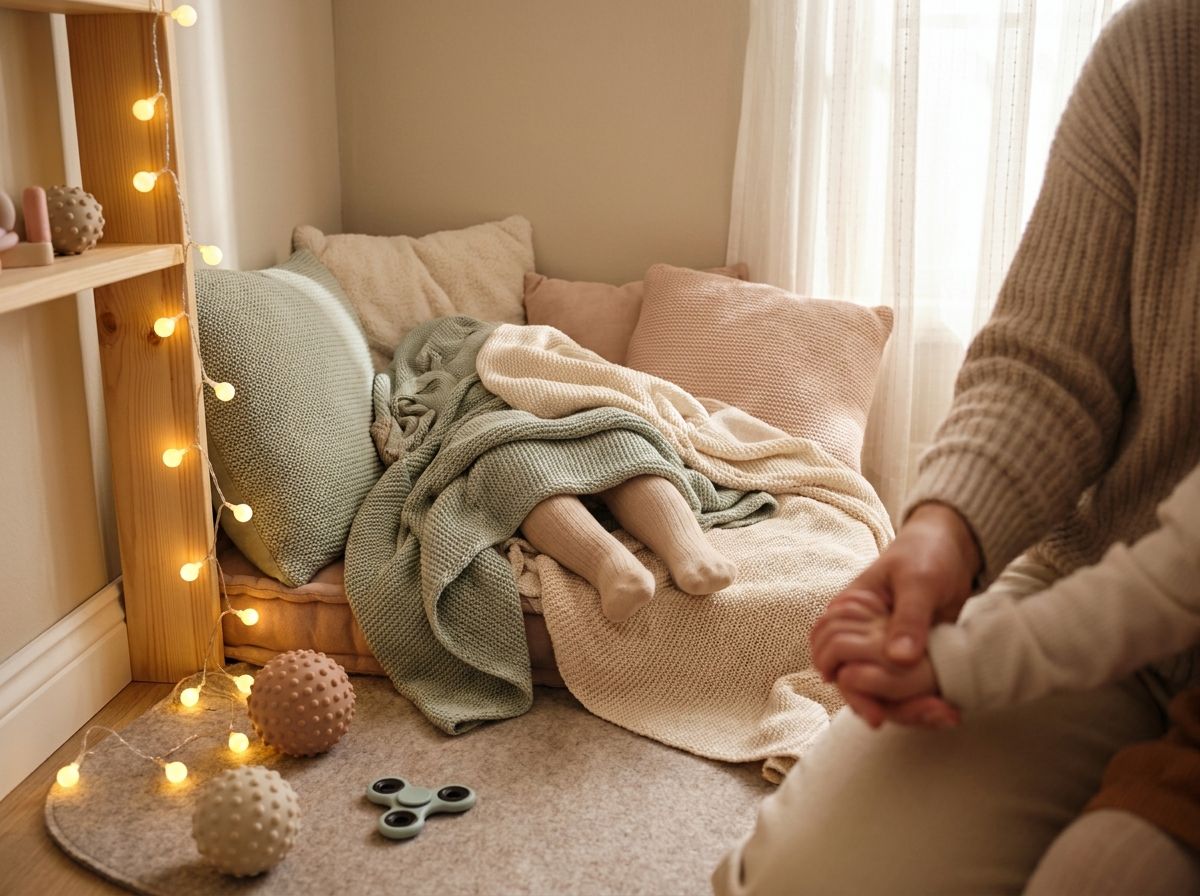
1. Designate a calm space: Set up a cozy corner with soft pillows, blankets, and perhaps some sensory toys. This is Milo's escape when he needs a break. A small tent with fairy lights can make a great hideaway, filled with cushions, stuffed animals, and some books he loves to read.
2. Control lighting: Use dimmable lights or soft lamps instead of harsh overhead lighting. Installing LED strips that change colors can help create a soothing atmosphere. Milo often relaxes better when the room has a softer glow, especially with warm tones like orange or soft blue.
3. Manage noise levels: Invest in noise-canceling headphones or play calming music to help drown out overwhelming sounds. A playlist of soft instrumental tracks, or nature sounds like rain and ocean waves, can work beautifully during quiet time.
4. Incorporate textures: Offer a variety of textures through toys, blankets, or clothing. Experimenting with different materials can help your child find what soothes them. A sensory bin filled with rice, beans, or kinetic sand gives Milo something specific and satisfying to dig into.
5. Use scents thoughtfully: Some children respond well to calming scents, like lavender or chamomile. A diffuser with essential oils can bring a peaceful quality to a room, just go gently, because some scents can tip right into overwhelming for sensitive noses.
These changes give Milo a home base he can return to, somewhere that feels manageable, so the bigger, louder world outside doesn't have to be quite so draining.
Encourage open communication
Creating a sensory-friendly space is one piece of it. The other piece is making sure Milo knows he can tell you when something feels like too much. You might try something like, "I notice you seem upset when the lights are bright. Can you tell me more about how that feels?" Simple, open, no pressure.
Here are some strategies to promote open communication:
- Use visuals: Visual aids, like mood charts or feelings cards, can help your child articulate their emotions. A feelings wheel with different faces works well, Milo can just point to the one that fits.
- Practice role-playing: Use scenarios to teach Milo how to express discomfort or ask for help. If a sound is too loud, he could practice saying, "Can we turn that down a little?" Having the words ready makes using them so much easier in the moment.
- Validate their feelings: Affirm that it's okay to feel overwhelmed. Something like, "It's totally normal to feel that way when it's noisy. Let's find a quieter place to play," reassures Milo that his feelings are real and that expressing them is safe.
- Check-in regularly: Make it a habit to check in with Milo about his sensory experiences, especially after outings or new activities. This helps you spot patterns and plan ahead.
The more comfortable he feels talking about what's happening in his body, the better equipped he'll be to navigate the world on his own terms. (And honestly, those little check-in conversations can become some of the sweetest ones you have.)
Collaborate with professionals
Sometimes the most powerful thing you can do is bring in backup. Occupational therapists specialize in exactly this territory. They can assess Milo's specific sensory profile and build a plan around it, not a generic one-size plan, but strategies that actually fit him.
Consider the following resources:
- Occupational therapy: A therapist can assess your child's sensory processing challenges and create a personalized plan. They might suggest specific exercises or tools to help Milo develop better sensory regulation.
- Support groups: Connecting with other parents can provide both emotional support and practical tips for navigating similar challenges. Look for local meetups or online communities where you can share experiences and resources.
- Workshops and webinars: Look for local or online workshops focusing on sensory needs and neurodiversity to deepen your understanding. Many organizations offer free or low-cost resources that can equip you with real, usable knowledge.
- School resources: If Milo is in school, consider discussing his sensory needs with his teachers or school counselor. They might offer additional strategies or accommodations to help him thrive in the classroom.
Knowing you're not the only one carrying this is its own kind of relief. Reach out. The right people want to help.
FAQ
What are sensory needs?
Sensory needs refer to how individuals process sensory information from their environment. Children with sensory sensitivities might seek or avoid certain sensory experiences, which can impact their daily lives. These needs can vary widely among children, meaning each child may require different kinds of support.
How can I tell if my child has sensory issues?
Signs may include extreme reactions to sensory input, such as covering ears, avoiding specific textures, or becoming overwhelmed in busy environments. Observing their responses can help you understand their sensory needs better. Keep a journal of your child's behaviors in different situations to identify triggers over time.
Can sensory issues change as my child grows?
Yes, sensory sensitivities can evolve over time. Some children may outgrow certain sensitivities, while others might develop new ones. Continuously observing and adapting to your child's needs is essential. Regularly check in with your child about their feelings and experiences to stay attuned to any changes.
How can I help my child cope during sensory overload?
Creating a calm space, using calming tools like weighted blankets, and encouraging deep breathing exercises are effective strategies for helping your child during moments of overload. Practicing mindfulness techniques can also help your child learn to self-soothe when they start to feel overwhelmed.
What are some helpful sensory activities I can do with my child?
There are many sensory activities you can try at home! Here are a few ideas:
- Sensory bins: Fill a bin with rice, beans, or sand and provide scoops and containers for your child to explore.
- Play dough: Making and manipulating play dough can be a great tactile experience.
- Nature walks: Take walks in nature where your child can feel different textures, hear various sounds, and see beautiful sights. Collect items like leaves or stones to explore later.
- Art projects: Use different materials like paint, glitter, or fabric to stimulate your child's senses creatively.
Here's what I want you to hold onto as you close this tab: you are doing the best you can, and that best is a lot. Parenting a neurodiverse child is a journey with genuine hard days and also these small, luminous victories that no one else would even notice. Celebrate those. Reach out when you need to. You are not alone in this, and your love and dedication to understanding Milo will make all the difference. Together, you two can find ways to explore the world that feel safe, joyful, and entirely his own.
Join the conversation
Subscribe to comment
Join the Ziggyloo family newsletter to leave a comment — and get gentle learning tips and community stories in your inbox. No spam, unsubscribe anytime.