Unlocking creativity: how Ziggyloo's characters inspire artistic expression
Discover how Ziggyloo's characters can spark your child's creativity and inspire artistic expression through imaginative play.
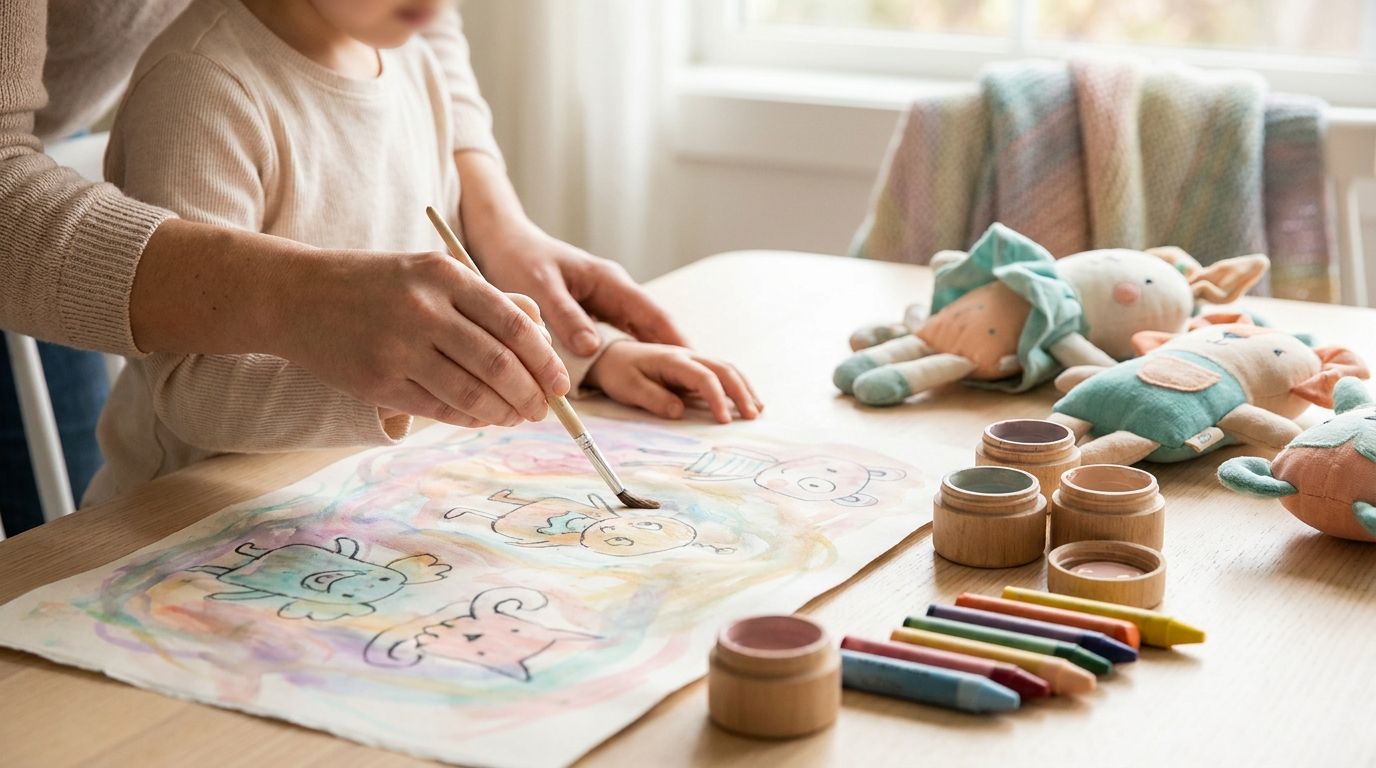
It starts with blue paint on the ceiling. You're not even sure how it got there, but your kid is beaming, brush in hand, completely in their element. And honestly? You wouldn't trade that chaos for anything.
That's the magic Ziggyloo taps into. The characters aren't just adorable faces on a screen - they're creative sparks, the kind that make a quiet Saturday afternoon feel like a full-blown art studio. Each one carries its own personality, its own emotional world, and kids pick up on that fast. "What would Bramble do?" your child asks, already reaching for the red paint.
Embracing emotions through art
One of the most powerful things art can do is give feelings somewhere to go. Ziggyloo's characters carry a whole range of emotions: Bluster's hot, fizzing anger, Flicko's steady warmth. Kids recognize themselves in that range. When your child connects with a character, they find a way to say what they can't quite put into words yet.
Try this: if your child is frustrated, invite them to paint a Bluster picture. Big, bold strokes. Dark swirling colors. No rules. It's not about making something pretty - it's about making something true, and that's where the real relief lives.
Research backs this up. A 2020 study published in the Journal of Arts and Humanities found that regular creative activity leads to measurable reductions in anxiety and depression among children. That's not a small thing. That's your kid painting their way to a steadier afternoon.
"Bluster's Storm," your child might announce, holding up a canvas of red and black. And just like that, they've named something they've been carrying all day. That kind of expression turns big, overwhelming feelings into something constructive, something theirs.

Storytelling through art
Kids don't just imagine things, they build entire worlds. Ziggyloo's characters give those worlds a starting point. Take Tavi the Elephant: your child might decide Tavi needs an adventure in a magical forest, and suddenly every drawing becomes a scene from a story only they can tell.
Ask questions as they work. "What does Tavi see when he gets to the river? Who's hiding behind that big tree?" The answers will surprise you, and they'll draw faster than you can ask. This is storytelling and art braided together, each one making the other richer.
A simple story map helps here: sketch out a beginning, middle, and end on three separate pages. Maybe Tavi meets Boji the Tiger halfway through and they face something scary together. Maybe they figure it out. Kids learn to structure their thinking while they're too busy having fun to notice.
And the cognitive payoff is real. A 2019 study from the University of Cambridge found that storytelling builds empathy and helps children understand perspectives beyond their own. Your child isn't just drawing a cute elephant, they're quietly practicing how to see the world through someone else's eyes.
Collaborative creativity with friends
Some of the best art days are the messy, loud, everyone-has-paint-on-their-nose kind. Invite a few friends over and set up stations around the table: watercolors at one end, clay at another, maybe some collage materials in the middle. Let each kid pick their favorite Ziggyloo character and create something that feels like them.
Watch what happens when they start sharing ideas. One child's interpretation of fearless Boji the Tiger might unlock something in another kid who's been staring at a blank page. That's the thing about creative collaboration - it's generative. Ideas multiply.
At the end of the day, set up a little art show. Each child presents their piece and talks about it. (I've seen kids who barely speak in groups absolutely shine during this part.) You can make it festive with silly awards: "Most Unexpected Color Combination," "Best Use of Glitter," whatever fits the room. The point is that every contribution gets celebrated.
For something even more ambitious, roll out a big sheet of paper and let everyone add to a shared mural. Each child keeps their own style, but the whole thing belongs to all of them. That's teamwork they'll actually remember.
Using Ziggyloo's characters as creative prompts
Sometimes creativity just needs a door opened. Pick a theme - "Courage with Kiki the Bunny" or "Friendship with Chirp the Chicken" - and let that be the only instruction. What your child does with it will tell you more about where they are emotionally than almost anything else.
Swap mediums too. Sculpt Zorra the Zebra's stripes out of clay. Make a collage of everything Tarka the Triceratops might see on a brave day. Try digital tools if your child is drawn to screens. The character is the anchor, the medium is just the language they feel like speaking today.
Open-ended questions are your best tool here. "If Tarka could talk, what would he say about being brave?" There's no wrong answer, and your child knows it. That safety is everything. Art shouldn't feel like a test, it should feel like permission.
Remind them - and yourself - that there are no mistakes in creativity. Only the next interesting thing to try.
Closing thoughts
Every brushstroke tells a story. Every scribbled page is evidence of a mind working something out. Ziggyloo's characters are companions in that process, giving kids a familiar face to lean on when they're reaching for something they can't quite name yet.
Celebrate all of it. The ceiling paint, the crumpled attempts, the triumphant "Bluster's Storm" held up with both hands. These aren't just art projects - they're your child learning to know themselves a little better.
Grab the brushes. Lay down some newspaper. Dive in together.
FAQ
How can I encourage my child's creativity?
Encouraging creativity starts with a safe, low-pressure environment. Let your child explore different materials and express themselves freely, without worrying about the result. Ask questions about their art and ideas, and genuinely celebrate what they make. Exposure helps too - visiting a local gallery or watching a short documentary about an artist can open doors they didn't know existed.
What are some activities I can do with my child to foster creativity?
Host an art day with friends, try illustrated storytelling, or use Ziggyloo's characters as jumping-off points for projects. Seasonal crafts work beautifully too - making gifts for family members, creating holiday decorations, anything with a real-world purpose. Keep it fun and judgment-free, and your child will keep coming back to it.
How do Ziggyloo's characters help with emotional expression?
Each character embodies specific emotions, giving children a relatable mirror for their own inner world. That connection makes it easier to express feelings creatively. A child feeling anxious might relate to Zapz and create a piece that traces a path from worry toward calm, drawing on Zennu for inspiration. It turns abstract feelings into something visible and workable.
Can art help with my child's emotional well-being?
Yes, genuinely. A 2021 study in the Journal of Child Psychology found that children who engage in regular creative activities report lower anxiety and higher happiness levels. Art gives feelings somewhere constructive to go, which is especially valuable for kids who process the world more intensely than others.
How can I integrate Ziggyloo's characters into learning?
Use them as writing prompts, as characters in simple math problems, as inspiration for science observations. An addition problem starring Milo the Alligator and Tula the Giraffe is just more fun than a worksheet, and fun is what keeps kids engaged. The emotional connection to familiar characters makes new concepts feel less intimidating.
What if my child struggles with self-expression?
Start small and stay patient. A simple drawing, a torn-paper collage, even just choosing which colors feel right today - these are all valid starting points. Model it yourself by sharing your own feelings out loud, and creating something alongside them. Sometimes just knowing it's safe to express things, in any form, is the whole breakthrough.
With Ziggyloo's adaptive learning system, creativity and skill-building grow together. Embrace the messy, joyful, paint-on-the-ceiling journey - and watch your child step into their own.
Join the conversation
Subscribe to comment
Join the Ziggyloo family newsletter to leave a comment — and get gentle learning tips and community stories in your inbox. No spam, unsubscribe anytime.