
What is strengths-based learning? A parent’s guide for neurodivergent children
Learn how strengths-based learning helps your child build skills through interests, confidence, and flexible ways to show what they know.
At 7:42 on a Tuesday morning, Priya is at the kitchen table with one cold piece of toast, a half-finished spelling sheet, and her son Arlo's carefully sorted collection of bottle caps. Arlo can explain every color pattern in that collection without missing a beat, but the worksheet has ended with a pencil dragged across the page. Strengths-based learning starts right here: you notice the skill living inside the struggle, then use it as a bridge toward something harder.
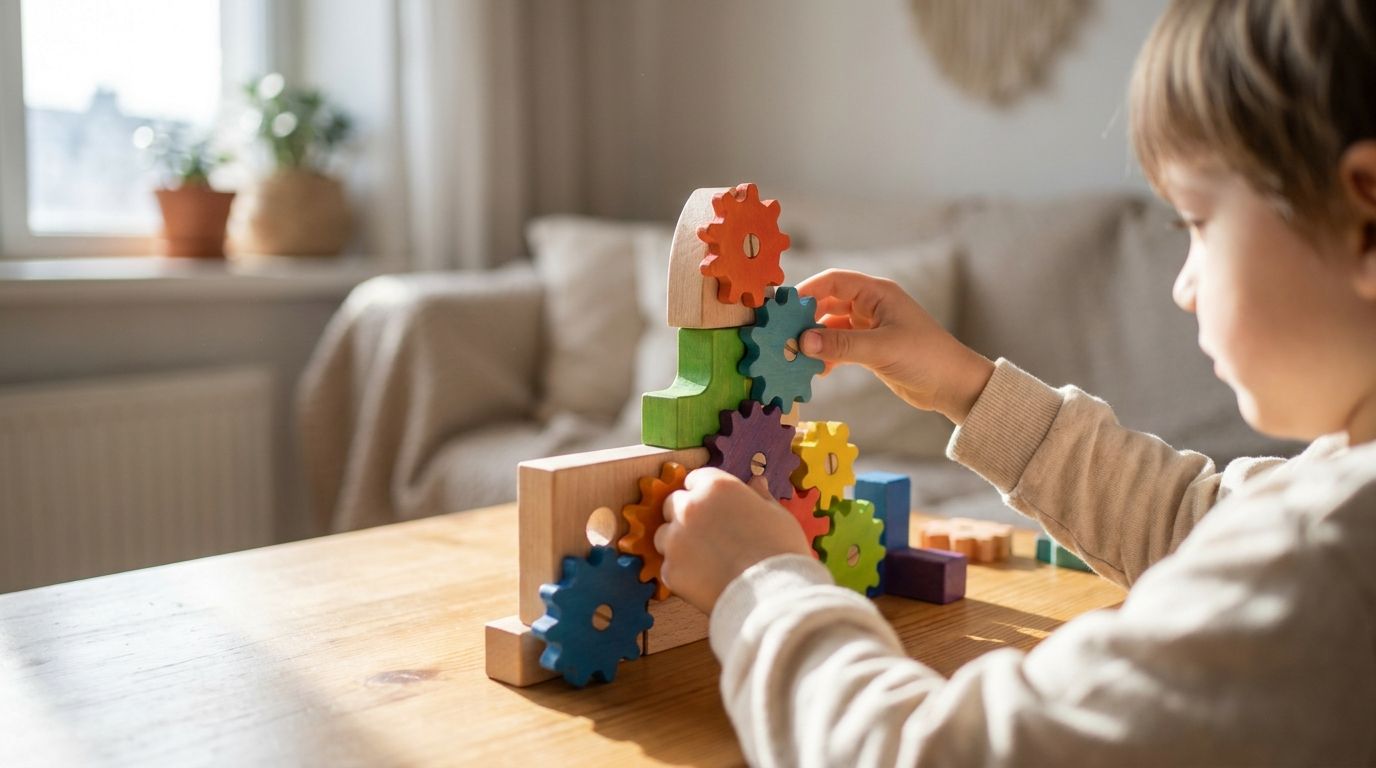
Strengths-based learning means teaching from a child's interests, abilities, and working preferences instead of treating differences as problems to erase. For neurodivergent children, strengths-based education can make learning feel safer, more useful, and more connected to real life. It does not mean ignoring reading, writing, math, communication, or daily routines. It means finding a better doorway into them.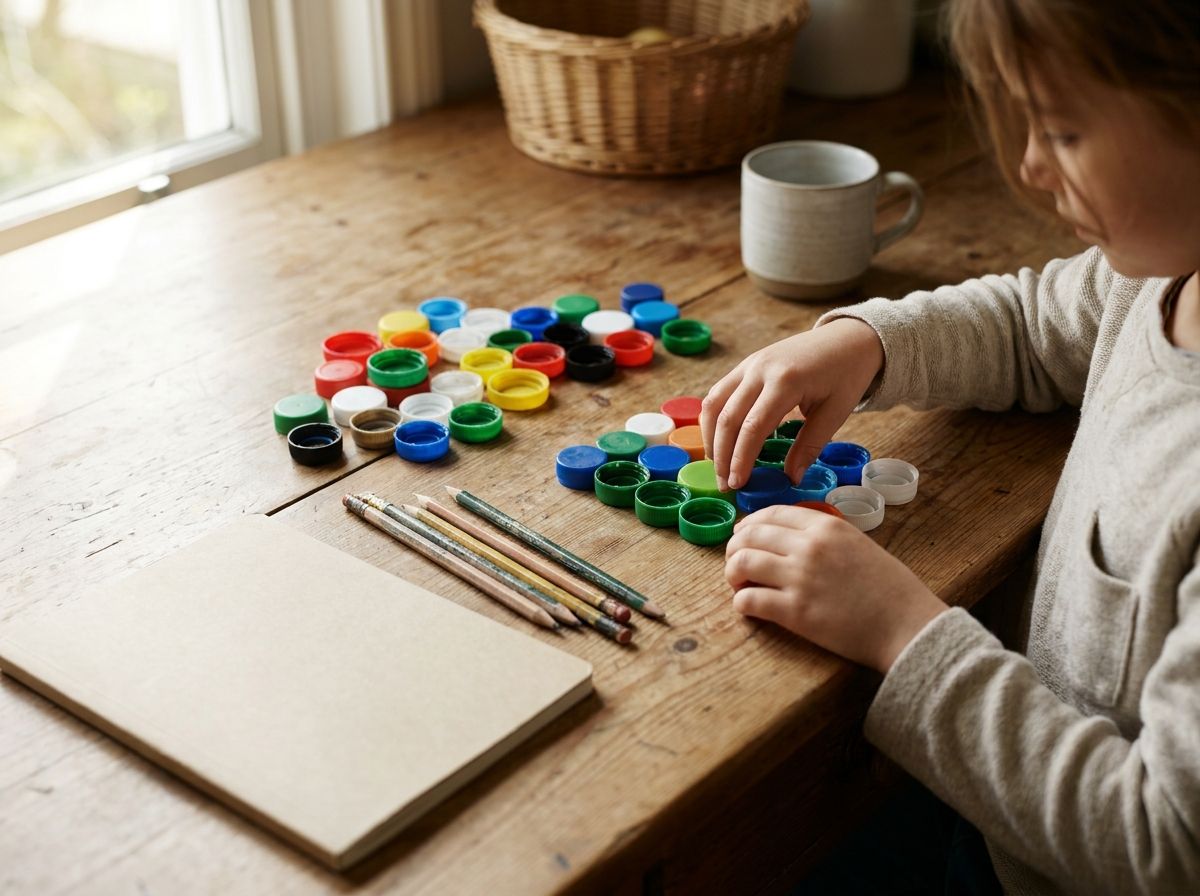
What strengths-based learning really means
A strengths-based approach asks a different opening question. Instead of "Why won't my child do this?" you might ask, "What is already working here, and how can I build from it?" That small shift can soften the whole afternoon.
A child's strength may be a deep interest in trains, a sharp memory for dialogue, careful observation, strong visual thinking, physical coordination, humor, persistence, or a talent for noticing patterns. It may also be a preference for doing rather than talking, watching before joining, or working in short bursts.
This approach is not the same as praising everything. You still teach the skill your child needs. You simply stop assuming that one format is the only honest way to learn it.
For example, Arlo's bottle-cap sorting can lead into:
- Counting groups and comparing quantities.
- Writing labels for colors and sizes.
- Building repeating patterns for early math.
- Explaining a sorting rule through speech, drawing, or pointing.
His interest is not a distraction from learning. It is information about how his mind organizes the world.
The 2012 "double empathy problem" work by Damian Milton described how misunderstandings can happen between autistic and non-autistic people, rather than existing only inside the autistic child. That idea matters at home. When your child is not responding to a worksheet, the problem may be the fit between the task and the learner, not a lack of care or ability.
Strengths-based learning also leaves room for uneven development. A child may read far above grade level and still need help with buttons, transitions, or written output. Uneven skills are not evidence that a child is lazy or refusing to grow.
Why this approach can help neurodivergent children
Learning asks for more than knowledge. It asks a child to manage attention, language, movement, memory, sensory input, uncertainty, and the emotional risk of getting something wrong. When a task is already hard in several of those ways at once, repeated correction can push a child toward protecting themselves by avoiding the task entirely.
A strength gives the task a safer starting point. If Maya loves animals, you might use animal facts to practice reading comprehension. If Jonah remembers songs easily, you might turn a sequence of steps into a short chant. If Lila thinks in pictures, a sketch may come before a written paragraph.
This is not a trick to make children perform. It is a way to reduce unnecessary barriers so the actual skill has a chance to appear.
Research on Universal Design for Learning, including guidance from CAST, has long encouraged teachers to offer more than one way to engage, take in information, and show understanding. A child should not have to produce neat handwriting to prove they understand a science idea. They may explain it verbally, build a model, select an image, or record an answer.
The CDC's Autism and Developmental Disabilities Monitoring Network reported in 2023 that 1 in 36 eight-year-old children in the United States had been identified with autism in 2020. That number does not describe one learning style. It reminds us that a large group of children will need classrooms and homes that can respond to different ways of paying attention, communicating, and showing knowledge.
A strengths-based approach can help you notice progress that ordinary grades miss:
- A child starts a task with one reminder instead of five.
- A child asks for a break before becoming overwhelmed.
- A child uses a drawing, device, gesture, or short phrase to explain an answer.
- A child returns to a difficult activity after stepping away.
Those are real learning behaviors. They deserve to be seen, not brushed aside because the worksheet is unfinished.
How to find your child's real strengths
You do not need a formal assessment to begin. You need a notebook, a phone note, or the back of an unopened grocery receipt. Watch what your child does when nobody is grading them.
Pay attention to moments when your child loses track of time in a comfortable way. Notice what they repeat, collect, remember, build, imitate, explain, or repair. A strength often appears long before a child has the words to name it.
On Saturday morning in Tacoma, eight-year-old Nia spends twenty minutes arranging toy animals into "families," then shifts them into groups based on habitat. Her parent initially sees a play routine. A closer look reveals classification, memory, flexible grouping, and storytelling. Those observations can guide the next lesson. (Honestly, some of the richest learning data I've heard about came from a Saturday morning with a pile of plastic animals and zero worksheets in sight.)
Try this small observation process:
- Write down what your child chose without being asked.
- Record what held their attention and what made them leave.
- Note whether they communicated through words, movement, pictures, objects, or sound.
- Look for the conditions that helped: dim light, movement, a familiar place, music, or a quiet adult nearby.
Then separate a strength from a preference. A preference is something your child likes. A strength is something they can use to notice, understand, create, communicate, or solve. The two can overlap, but they are not identical.
A child who loves dinosaurs may have strong memory for facts. A child who watches the same video repeatedly may be studying sequence, facial expression, or sound. A child who refuses pencil work may have strong ideas but a painful or tiring writing process.
Ask yourself, "What does my child know that the current task is failing to reveal?" That question is especially helpful after a difficult school note. "Did not participate" tells you very little, "Answered accurately when allowed to point to pictures" gives you something to use tomorrow.
You can also ask your child's teacher, therapist, or support team for examples of moments when learning went well. Ask for conditions, not labels. "What was happening right before she joined?" is more useful than "Is she motivated?"
How to turn a strength into a learning bridge
Once you notice a strength, connect it to one new skill. Keep the bridge short. If you pile reading, handwriting, turn-taking, and tidy cleanup onto one activity, your good idea may collapse under its own tiny backpack.
Suppose Mateo loves maps and struggles with reading unfamiliar words. You might begin with a map of the local park. Label three places together. Read one label, match it to a location, and let Mateo trace the route with a finger. The goal is reading practice, but the map supplies meaning and movement.
Here are useful bridge patterns:
- Interest to literacy: Use a child's favorite topic for labels, captions, recipes, signs, or short fact cards.
- Pattern to math: Use collections, building pieces, beads, or calendar routines to compare, count, sequence, and predict.
- Movement to memory: Pair a body motion with each step in a routine, spelling pattern, or number fact.
- Visual thinking to communication: Offer drawings, icons, photos, or written choices before expecting spoken answers.
- Strong memory to flexibility: Ask the child to find two different ways to reach the same answer.
At home in Columbus, six-year-old Jordan loves making elaborate snack plates but avoids number worksheets. Jordan's parent places four crackers on one plate and six on another, then asks which plate has more. Later, Jordan draws the plates and writes the numbers with help. The activity still teaches comparison, but it begins with something those hands already understand.
Keep the academic target visible to yourself. You might say, "Today we are practicing comparing amounts," rather than pretending the lesson is only play. Your child does not need a lecture about the target. You need a clear plan.
Give your child a way to show learning that fits the moment. Speaking is not always easier than writing. Writing is not always easier than pointing. A correct answer that arrives through a different route is still a correct answer.
Ziggyloo can fit into this kind of plan through its AI learning companion, which adapts conversations to a child and lets you review parent-visible transcripts. You can notice whether your child explains an idea more easily through a story, a question, or a short exchange, then carry that observation into offline practice.
How to protect strengths from becoming pressure
A strength can become a new box if adults turn it into a permanent assignment. The child who loves drawing may not want every lesson converted into art. The child who knows every train line may not want to answer train questions all day. Interests are doors, not handles for pulling a child through every task.
Keep the choice real. Offer two ways to begin, not ten options that create another decision problem. "Do you want to sort the cards or draw the groups?" is enough. If your child says no, you can pause and check whether the task, timing, noise, or expectation needs adjusting.
Watch for signs that an interest is becoming work:
- Your child stops choosing it during free time.
- The activity brings more correction than enjoyment.
- Your child says, "I'm bad at this," after previously feeling capable.
- The adult is doing most of the talking and directing.
A strengths-based approach also avoids turning positive traits into reasons to skip support. "She is creative" should not mean she receives no reading help. "He has a great memory" should not mean people expect him to remember every instruction without a visual reminder.
The goal is access, not admiration. Your child deserves tools for areas that are hard, along with genuine respect for the areas that come naturally.
Try using a consent check: "Do you want to use your animal cards for this, or try the plain version?" If your child chooses the plain version, let that be fine. If they choose neither, offer a break and return later. Autonomy can protect the very curiosity you hope to support.
And please allow imperfect learning. You may begin with a brilliant plan involving homemade number cards, a themed snack, and a color-coded basket. Your child may walk away to inspect a sock. That is not a failed parenting intervention. It is Tuesday.
How to use strengths-based education at school
You can bring this approach into an IEP meeting, parent-teacher conference, or quick email without presenting a full research paper at 6:15 a.m. Start with a specific observation and connect it to a support.
For example: "When Rafael can use a diagram, he explains the science concept accurately. Could he use diagrams before writing a paragraph, then dictate or type his response?" That request describes an ability, a barrier, and a practical adjustment. Three things. Clean and concrete.
Ask the team to record strengths in useful language. "Good with computers" is broad. "Uses visual software to organize six-step projects with one reminder" gives adults something they can actually build on.
You might request:
- Multiple ways to receive instructions, such as spoken directions paired with pictures.
- Multiple ways to show understanding, such as typing, pointing, building, or speaking.
- Time to process a question before an adult repeats or rephrases it.
- Access to movement or a quiet space without loss of learning time.
- Examples of successful conditions in the home and classroom.
The 2020 National Academies report on autism services described the value of individualized supports and participation in ordinary settings. That does not mean every child must learn in one standard way. It means support should help a child take part, communicate, and build a life that belongs to them.
If a teacher says, "He is not trying," ask for a concrete description. What happened after the direction? What format was offered? How much time passed? What helped him begin on another day? Specific details can turn a blame statement into a solvable problem.
Share what you see at home, too. A child who cannot answer a question at school may explain it perfectly while walking the dog. A child who avoids group talk may contribute through a shared document. Those details matter because performance shifts with setting, audience, sensory load, and trust.
A simple strengths-based routine for this week
You can begin without buying anything. Choose one task your child often avoids and one ability you have seen in a relaxed moment. Then make the task smaller and connect the two.
On Monday, observe without correcting. Write down what your child notices, remembers, builds, or communicates. On Tuesday, choose one bridge. If your child likes movement, let them walk to matching cards. If they love facts, use one fact as the reading passage. If they draw detailed scenes, let a picture hold the first part of an explanation.
On Wednesday, offer two ways to respond. On Thursday, reduce one barrier, such as handwriting, background noise, or a long verbal direction. On Friday, ask what felt easier, not whether your child "did well."
A short routine might look like this:
- Notice: "You remembered where every animal belongs."
- Name the skill: "That is sorting by a rule."
- Stretch gently: "Can you make one new group?"
- Offer a response choice: "Tell me, point, or draw it."
- Stop before overload: "We can finish tomorrow."
The point is not to turn every interest into a lesson. The point is to collect better information about how your child learns. Over time, those observations can shape homework, school conversations, therapy goals, and daily routines.
If you use Ziggyloo, you can compare your observations with patterns in your child's conversations and learning activities without treating one session as a verdict. A quiet day does not erase a strength. A hard day does not define a child.
FAQ
Is strengths-based learning the same as letting my child do whatever they want?
No. Strengths-based learning still teaches necessary skills and sets clear, kind expectations. It changes the route, timing, materials, or response format so your child has a fair chance to learn.
How do I find my child's strengths if they struggle in school?
Watch what your child chooses during calm, ungraded moments. Notice interests, memory, problem-solving, movement, communication, and the conditions that help them stay engaged, then share specific observations with the school team.
Can strengths-based education help a child with ADHD?
Yes. You can use interests, movement, novelty, visual reminders, and short work periods to make tasks easier to start and complete. The approach does not remove support needs; it uses what already holds your child's attention to build access.
What if my child has no obvious special interest?
Look for smaller patterns rather than one big passion. Your child may prefer certain sounds, textures, routines, people, tools, topics, or ways of solving problems, and those preferences can still guide learning.
How can I use strengths-based learning with homework?
Choose one academic goal, reduce extra barriers, and offer a familiar way into the task. A child might dictate instead of handwrite, use objects for math, read about a favorite topic, or complete two problems before taking a planned break.
This week, pick one ordinary moment when your child is already capable. Write down what they are doing, what conditions help, and one small skill you can connect to it. Then build from there. You do not need a perfect lesson plan. You need one fairer doorway.
Join the conversation
Subscribe to comment
Join the Ziggyloo family newsletter to leave a comment — and get gentle learning tips and community stories in your inbox. No spam, unsubscribe anytime.