
Dyslexia, ADHD, and the "Hidden" Strengths: Flipping the Script on Neurodiversity
The narrative surrounding neurodivergence-specifically diagnoses like Dyslexia and ADHD-often centers on remediation and deficit management. At Ziggyloo, our AI-driven philosophy flips this script by viewing these cognitive differences not as barriers, but as specialized processing styles. We design our educational tools to leverage 'hidden' strengths such as hyper-focus and pattern recognition, moving the focus from correcting weaknesses to optimizing potential.
Let’s be honest: most days, parenting a neurodiverse child feels like a relentless game of whack-a-mole with challenges. We manage the meltdowns, navigate the IEPs, soothe the sensory overload, and worry about the reading delays. Our entire world becomes focused on what our children struggle with.
It’s exhausting. Your coffee goes cold while you're trying to help with homework that seems to stretch on forever. And more importantly, it’s an incomplete picture.
Imagine if we spent as much energy celebrating their superpowers as we do managing their struggles. Because here is the beautiful, science-backed truth: Your child’s brain isn’t broken; it’s specialized.
The "flip side" of the diagnosis
When we look past the challenges of dyslexia, ADHD, and autism, we often find a remarkable set of "hidden" strengths. These aren't just nice personality traits; they are cognitive advantages wired into their unique brains.
The pattern detectors
Many neurodiverse individuals possess exceptional pattern recognition and observational skills. They see connections, trends, and details that others completely miss. This might mean they notice the smallest change in their environment, like when a picture frame is slightly tilted, or can quickly decode complex systems, like the rules of a new board game.
One study found that individuals with dyslexia are often better at picking out visual information from a noisy background. This skill can translate to strengths in fields that require strong pattern recognition, such as architecture, coding, or even detective work. Imagine your child noticing a small detail in a painting that everyone else ignores, or solving a puzzle that leaves you stumped. These moments are glimpses into their unique way of interacting with the world.
This ability to notice minute details can become a superpower. I remember sitting in a café with my son, who has ADHD, as he pointed out a tiny bird perched on a distant tree branch while I was lost in my phone. It’s these moments that remind me to appreciate his world view, even if it means pausing my other tasks.
The creative engines
The same brain wiring that can make linear thinking difficult often excels at creative and unconventional thinking. They are the out-of-the-box problem solvers, the artists, and the inventors. For instance, a child with ADHD might struggle with a traditional math worksheet but could excel in creating a new game with its own set of rules.
Think of the stories of Thomas Edison or Leonardo da Vinci, both believed to have traits of ADHD. Their ability to think differently led to innovations that changed the world. When we nurture this creative spark, we open doors to a future where they might design the next iconic skyscraper or write the next bestseller.
In our home, we have a "creation corner" filled with art supplies, old electronics for tinkering, and books. My daughter, who finds it hard to sit through a whole book, spends hours creating stories through her drawings. It’s her own version of storytelling, and it’s just as valid as any written narrative.
The hyper-focused experts
While attention can be a challenge, when a neurodiverse individual is passionate about a topic, their ability to hyper-focus is unparalleled. They can become deep subject-matter experts in ways neurotypical brains often cannot. IEP meetings might highlight their inability to focus on mundane tasks, but when it comes to their interests, they can spend hours immersed, forgetting even to eat or sleep.
This intense focus is often seen in children with autism, who might become encyclopedias of information about dinosaurs, trains, or space. For them, learning isn't a chore; it's a passion project. This can be especially beneficial in today's world, where expertise and deep knowledge are highly valued in many fields.
I recall a teacher once telling me about a student who, while uninterested in classroom subjects, could recite every detail about the Titanic's history. It wasn’t just memorization; it was a deep dive into something that truly fascinated him.
Nurturing the superpowers
So, how do we shift our focus from managing deficits to nurturing these strengths?
Become a "strength detective"
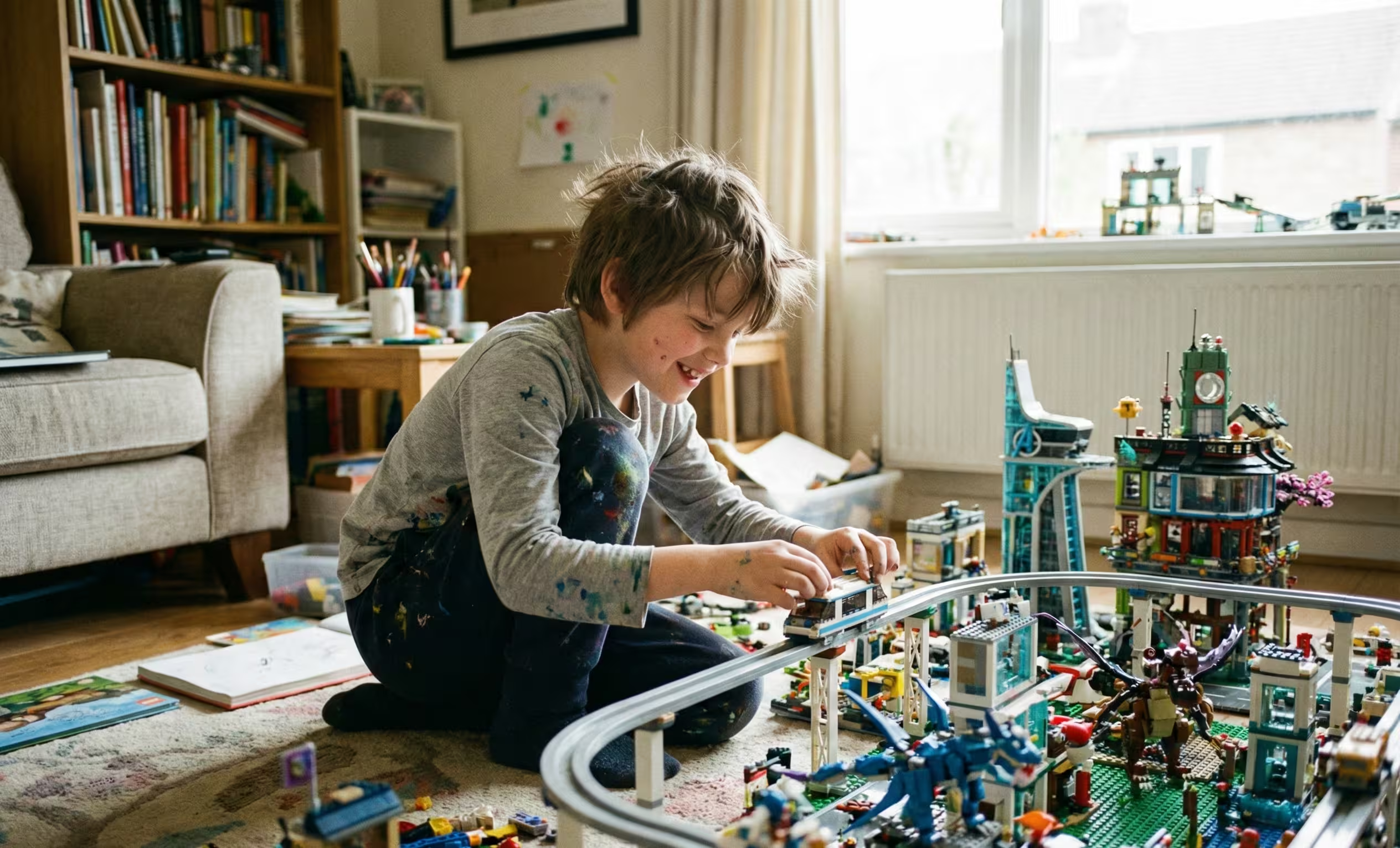
Watch your child when they are totally engaged and happy. What are they doing? Are they building complex Lego structures (spatial reasoning)? Are they drawing intricate worlds (creative thinking)? Are they memorizing every fact about dinosaurs (deep focus/memory)? These are clues to their superpowers.
Think about a weekend afternoon when your child is lost in their own world, constructing an elaborate Lego city. While it might seem like play, they are developing spatial skills that could one day lead to a career in engineering or architecture. By remaining observant and curious, you can spot these moments and gently guide them toward activities that build on these strengths.
Consider keeping a "strength journal" where you jot down these observations. It can help track patterns over time and become a resource for planning activities or even discussions during IEP meetings.
Lean into their interests
If your child is obsessed with Minecraft, don't just see it as screen time. See it as a platform where they are using their spatial, creative, and problem-solving skills. Find ways to connect their passions to learning.
For example, if they're intrigued by Minecraft, consider introducing them to basic coding through platforms that use the game as a foundation. This not only keeps them engaged but also builds valuable skills. It's about finding the overlap between their interests and educational opportunities, transforming what might seem like a hobby into a learning opportunity.
I once read about a mom who used her child’s interest in Pokémon to teach math. They calculated probabilities and created story problems based on battles and stats. It turned math into an adventure rather than a chore.
Reframe the narrative
Instead of saying, "You're easily distracted," try, "You notice everything going on around you." Instead of, "You're stubborn," try, "You have incredible persistence when you care about something." The way we talk about their brains shapes how they see themselves.
This reframing helps shift your mindset too. When you're at the grocery store and your child is captivated by the colors and sounds, instead of seeing it as a distraction, recognize it as their brain engaging with the world in a unique way. Over time, this practice can build their self-esteem and encourage them to embrace their identity.
Try practicing these reframes in a journal or with a partner. It may feel awkward at first but becomes more natural with time. Remember, it’s not about ignoring the challenges, but about balancing the narrative.
Provide the right tools
Give them outlets that align with their strengths. This could be art supplies, coding classes, building kits, or tools like Ziggyloo that adapt to their unique way of learning, allowing their strengths to shine without the frustration of traditional methods.
Consider technology that supports their learning style. For example, audiobooks might be a game-changer for a child with dyslexia, allowing them to enjoy stories without the struggle of decoding text. Or, if they love art, a digital drawing tablet could open up new creative possibilities. It's about providing the right scaffolding to build on their innate abilities.
Join online communities or local parent groups to share resources and ideas. Other parents might have insights into tools that have worked wonders for their kids. It's a great way to build a network of support and inspiration.
The bottom line
Your child is not defined by their diagnosis. They are defined by their whole, beautiful, complex self. By flipping the script and celebrating their hidden strengths, we don't just build their confidence; we empower them to become the incredible thinkers, creators, and innovators they were meant to be.
And in those moments when the weight of parenthood feels heavy, remember this: every small step you take to notice, nurture, and celebrate their strengths contributes to a world where they can thrive. It’s okay to leave the laundry unfolded and the dishes undone sometimes. Embrace the journey, messy and beautiful as it is, knowing that you're not alone. In this shared experience, we find strength and hope together.
Find comfort in the small victories-a morning without a meltdown, a new word learned, a moment of genuine laughter. These are the building blocks of resilience, for both you and your child. The journey is challenging, but it is filled with moments that remind you of the unique beauty of raising a neurodiverse child.
FAQ
What strengths can children with dyslexia, ADHD, or autism have?
The article highlights pattern recognition, observational skills, creative thinking, unconventional problem-solving, and intense focus on areas of interest. These strengths may appear differently from child to child, such as noticing small details, inventing games, or developing deep knowledge about a favorite subject.
How can I identify my child’s hidden strengths?
Watch your child when they are engaged and happy, and note what they do naturally. Building complex Lego structures, drawing intricate worlds, or memorizing facts about dinosaurs may reveal spatial reasoning, creativity, deep focus, or memory.
How can parents nurture a neurodiverse child’s strengths?
Parents can keep a strength journal, observe recurring interests, and guide children toward activities that build on what they enjoy. The article also recommends connecting passions such as Minecraft or Pokémon to learning opportunities involving coding, math, creativity, or problem-solving.
Can hyperfocus be a strength for children with ADHD or autism?
The article explains that attention may be difficult during mundane tasks, but a child may focus intensely when a topic is genuinely interesting. This can lead to deep knowledge and subject-matter expertise, such as knowing extensive details about dinosaurs, trains, space, or the Titanic.
Join the conversation
Subscribe to comment
Join the Ziggyloo family newsletter to leave a comment — and get gentle learning tips and community stories in your inbox. No spam, unsubscribe anytime.