
Finding the "Glimmer": Small Joys in Chaos
In the lexicon of neurobiology, 'glimmers' are not just poetic moments of joy; they are physiological cues of safety that regulate the nervous system. At Ziggyloo, our mission extends beyond academic tutoring to the preservation of these critical connections. By using adaptive AI to minimize the friction of learning, we aim to clear the 'static' of daily stress, allowing parents and children more bandwidth to recognize and celebrate the small, neurological wins of the day.
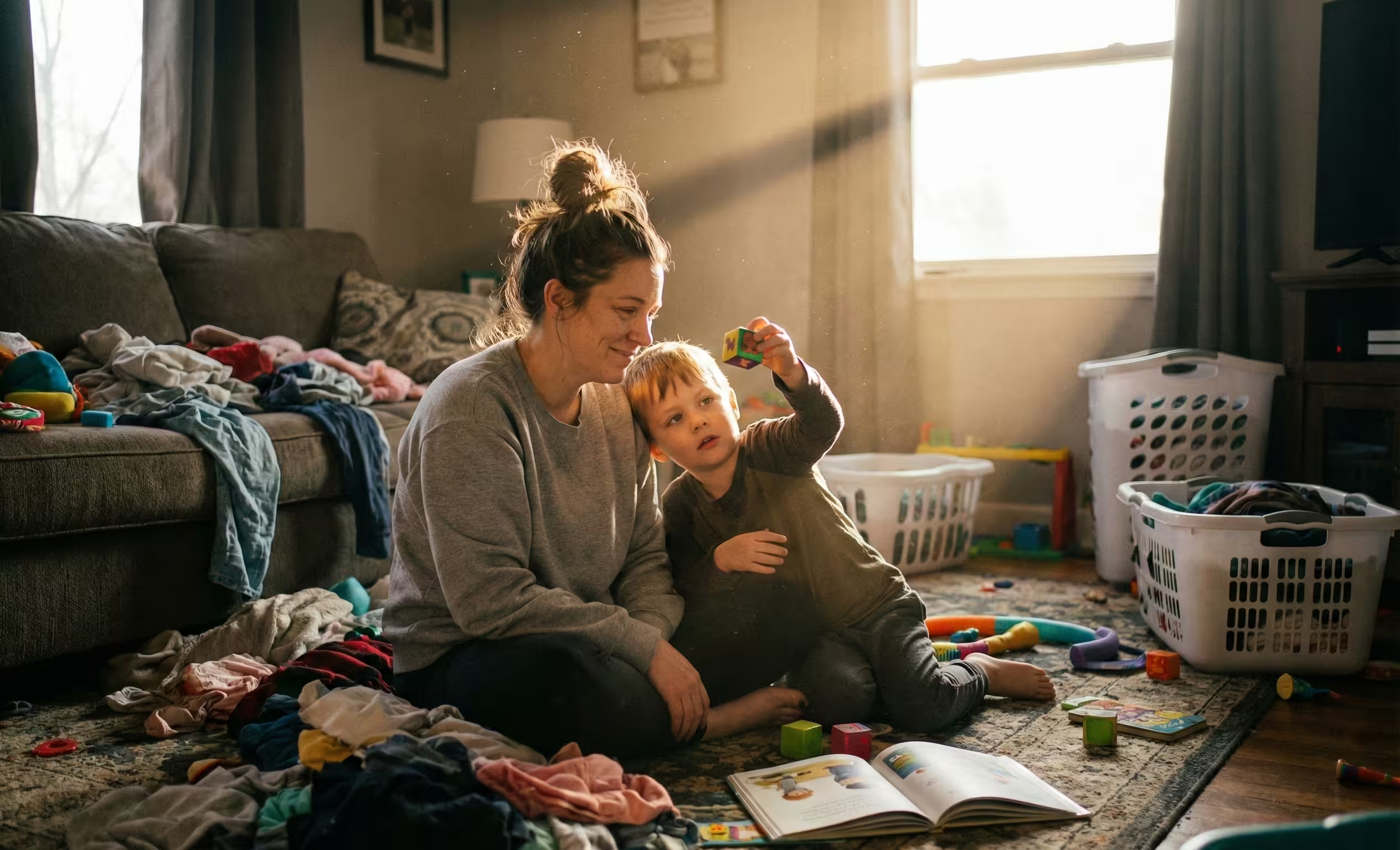
Some days, parenting a neurodiverse child feels less like a journey and more like trench warfare. You are dodging sensory meltdowns, navigating rigid routines, advocating in endless meetings, and managing your own exhaustion. The kitchen counter is a battleground of half-empty coffee cups and emergency snacks, and the clock seems to tick both too slowly and too quickly toward the next appointment or therapy session.
When you are deep in the trenches, survival mode takes over. Your brain becomes hyper-focused on the next crisis, the next struggle, the next fire to put out. It is incredibly hard to see the sun when you are just trying to keep your head above water. You might find yourself pouring over the IEP binder late at night, the pages blurring as you try to prepare for yet another meeting, or you might be frantically searching for a lost comfort item that your child needs to fall asleep.
But if we only focus on the struggle, we miss the full picture of our lives-and the beautiful reality of our children. Those all-consuming moments of stress can obscure the tiny sparks of joy that are often hidden in plain sight.
The paradox of high stress and deep love
It seems contradictory, but the data backs up what many of us feel in our bones. Research shows that despite experiencing very high levels of parenting stress, many mothers of autistic children simultaneously report high levels of emotional closeness and positive interactions with their kids. One study found that the intense challenges of parenting a neurodiverse child can coexist with profound moments of connection and joy. It’s akin to standing in the eye of a storm, where amidst the chaos, there is a calm and often unspoken understanding that binds you together.
The stress is real. But the love is just as real, and just as powerful. The problem is that the stress is often loud and demanding, while the moments of connection are quiet and fleeting. These moments might be as simple as your child’s hand slipping into yours while watching their favorite show, or the way they light up when you understand their unspoken needs.
We need to train our brains to see them. It's about recalibrating our internal radar to pick up on the subtle, often overlooked signals of joy and love that are always there, even when the going gets tough.
Consider the quiet joy of a bedtime routine that finally clicks. The way your child snuggles into your shoulder, their breathing slowing as the day's chaos fades. It's a moment of peace that feels like a whisper amidst the noise.
For some, it's the unexpected calm during a walk in the park. When you both stop, mesmerized by the way the sunlight dances through the leaves, sharing a moment of wonder without needing words. These instances remind us that love is not always loud-it’s often a gentle presence.
What is a "glimmer"?
You have heard of "triggers"-those cues that signal danger and spark anxiety. They are the sudden loud noises, the unexpected changes in routine, or the sensory overloads that send your child spiraling. Triggers are often what we find ourselves bracing against, the anticipatory tension of wondering when the next one will hit.
A "glimmer" is the opposite. It’s a term introduced by polyvagal theory expert Deb Dana. Glimmers are micro-moments that signal safety, connection, or joy to your nervous system. While triggers can feel like alarm bells, glimmers are more like gentle whispers reminding you of the peace and connection that can exist even in the midst of chaos.
In a neurodiverse household, glimmers aren't usually big, Instagram-worthy milestones. They are tiny, blink-and-you'll-miss-them sparks:
- The way your child stims happily-a flap or a wiggle-when they see you. It's a dance of pure delight, their unique way of saying, I’m happy you’re here.
- Five minutes where they are hyper-focused and genuinely content building Lego, their little hands meticulously piecing together a world of their own creation.
- An unexpected, crushing bear hug when you least expect it, a reminder of the unfiltered, raw affection they feel for you.
- A shared laugh over a private joke that only the two of you understand, a secret world where your connection shines through in a way words can’t express.
- Sitting silently together, regulating each other’s nervous systems without saying a word. The shared quiet, the mutual calm, is a testament to your unspoken bond.
These glimmers are the heartbeats of your relationship, the moments where all the hard work and patience feel undeniably worth it.
Imagine the joy of hearing your child’s laughter echo through the house, a sound that cuts through any stress or worry. Or the sense of accomplishment that comes from watching them master a task they once struggled with, their face lighting up with pride.
Glimmers might also be found in the soft moments before sleep, when they whisper, "I love you," and you feel the weight of the day lift, if only for a moment. These are the instances that fill the spaces between the challenges, the moments that remind you why the effort is worth it.
The Ziggyloo "Glimmer Challenge"
Because our brains are wired to notice danger (the struggles) more easily than safety (the joys), we have to actively practice "glimmer hunting." This isn’t about wearing rose-colored glasses or ignoring the very real challenges. It’s about training your mind to hold space for both difficulty and delight.
We are challenging our community to shift the lens, even just for today. This isn't about adding another thing to your to-do list. It's about creating a momentary pause in the day to let in a little light.
Here is your challenge: Keep Your Eyes Open: Today, your only goal is to spot one glimmer. Just one tiny moment where you feel a spark of connection, peace, or warmth with your child. It might be the way they softly hum while concentrating, or how they gently tuck their favorite toy beside them at bedtime. Capture It: You don't have to take a picture (sometimes pulling out a phone ruins the moment). But mentally capture it. Write it down in your notes app. Tell your partner. Give it weight by acknowledging it. Maybe scribble it onto a sticky note to be tucked into a journal or the fridge door-a little reminder for tougher days. Share the Light: If you have the energy, share your glimmer with another neuro-parent. Joy is contagious. This isn't about comparison or competition; it's about community and connection. You might send a quick text to a fellow parent, creating a ripple effect of shared experiences and support.The chaos might not go away tomorrow. The trenches are still there. But when we start actively looking for the glimmers, the darkness doesn't feel quite so overwhelming. You are doing a hard thing, but don't forget to see the beautiful things happening right in the middle of it. Each glimmer is a small, yet powerful, reminder that you and your child are navigating this journey together, hand in hand.
In those moments when everything feels like too much, remember: it’s okay to rest. It’s okay to let the laundry pile up or the dishes wait. Your worth as a parent isn't measured in productivity but in love and presence. And sometimes, it’s in the quiet acceptance of imperfection that the most profound glimmers emerge.
Reach out to a community of fellow parents if you feel isolated. There’s comfort in knowing others are walking the same path. Sharing your experiences can bring unexpected glimmers of support and understanding.
Let’s remind ourselves that parenting is not a sprint-it’s a marathon. And on this journey, glimmers are like water stations, providing the refreshment we need to keep going. Embrace them. Cherish them. Let them illuminate your path.
FAQ
What is a glimmer in a neurodiverse household?
A glimmer is a micro-moment that signals safety, connection, or joy to your nervous system. Unlike a trigger, which can spark anxiety, a glimmer offers a quiet reminder of peace and connection amid chaos.
What are some examples of glimmers with a neurodiverse child?
Glimmers can include your child happily stimming when they see you, concentrating contentedly on building Lego, sharing a private joke, or sitting silently together. They can also be a bedtime cuddle, a shared laugh, or hearing your child say, "I love you."
Why can it be difficult to notice glimmers?
During periods of high stress, the brain becomes focused on the next crisis, struggle, or problem to solve. Because danger is easier to notice than safety, quiet moments of connection can be overlooked.
Does looking for glimmers mean ignoring the challenges of parenting?
No. The article presents glimmer hunting as a way to hold space for both difficulty and delight. It does not require pretending that sensory meltdowns, rigid routines, advocacy, or exhaustion are not real.
How can I begin the Glimmer Challenge?
Start by keeping your eyes open for one glimmer today. Look for a tiny moment of connection, peace, or warmth, such as your child softly humming while concentrating or gently placing a favorite toy beside them at bedtime.
Join the conversation
Subscribe to comment
Join the Ziggyloo family newsletter to leave a comment — and get gentle learning tips and community stories in your inbox. No spam, unsubscribe anytime.