
Holidays and Sensory Overload: Your Permission to Say "No"
The holiday season is often marketed as a time of joy, but for the neurodiverse brain, it represents a massive spike in sensory and executive function demands. At Ziggyloo, we champion the principle that 'regulation precedes expectation.' While our AI tools provide a predictable, adaptive learning environment to minimize academic stress, the unpredictable nature of the holidays requires a similar strategy: the deliberate curation of sensory input to preserve your family’s emotional well-being.
The twinkling lights are flashing at strobe-light speed. The holiday music is blasting in every store. The schedule is packed with parties, and Aunt Muriel is already offended because your child wouldn't give her a hug the second you walked in the door.
It’s supposedly "the most wonderful time of the year." But for neurodiverse families, it often feels more like a sensory minefield designed to trigger a meltdown.
If you find yourself dreading the holiday season, we want to offer you something important right now: A giant, guilt-free permission slip to say "NO."
The truth about holiday isolation
You are not a Scrooge for wanting to skip the chaos. You are a protective parent tuned into your child’s needs.
The pressure to participate in "traditional" holiday fun is immense, but the reality is that for many of us, the cost of admission is just too high. The sensory assault, the disrupted routines, and the social demands are a recipe for disaster.
Picture this: it's 4 PM, and your child is melting down because the holiday parade was too loud, too crowded, and too long. By the time you get home, everyone is frazzled, your coffee is cold, and you just want to crawl under a blanket. But there's another event tomorrow, and the thought of facing it is overwhelming.
It’s no wonder that social isolation is a primary coping mechanism for 40% of families like ours. We retreat because it’s the only way to survive the season with our sanity intact. One study found that parents of neurodiverse children often experience heightened stress during the holidays, not because they don’t love their families, but because they are managing the needs of their children in environments that are not designed with them in mind.
Consider the story of Sarah, a mom of two, who recalls the pressure to attend her extended family’s annual holiday party. The noise, the unfamiliar faces, and the overwhelming smells from the kitchen were always too much for her son, Marcus. The dreaded meltdown was a given. Despite this, Sarah felt obligated to attend until she realized that the price of social conformity was too high for her family’s well-being.
But survival isn't the same as celebration. What if we stopped trying to survive traditions that don't fit us, and started creating new ones that do?
Rewriting the holiday rules: low-sensory traditions
The goal of the holidays is connection, joy, and peace. If the traditional route gets you stress, tears, and sensory overload instead, it’s the wrong route.
It is okay to rewrite the rules. Here are some ideas for "low-sensory" traditions that actually feel like a celebration:
The "pajama feast" (say no to the big dinner)
Formal clothes, unfamiliar foods, and a loud, crowded table are a sensory nightmare.
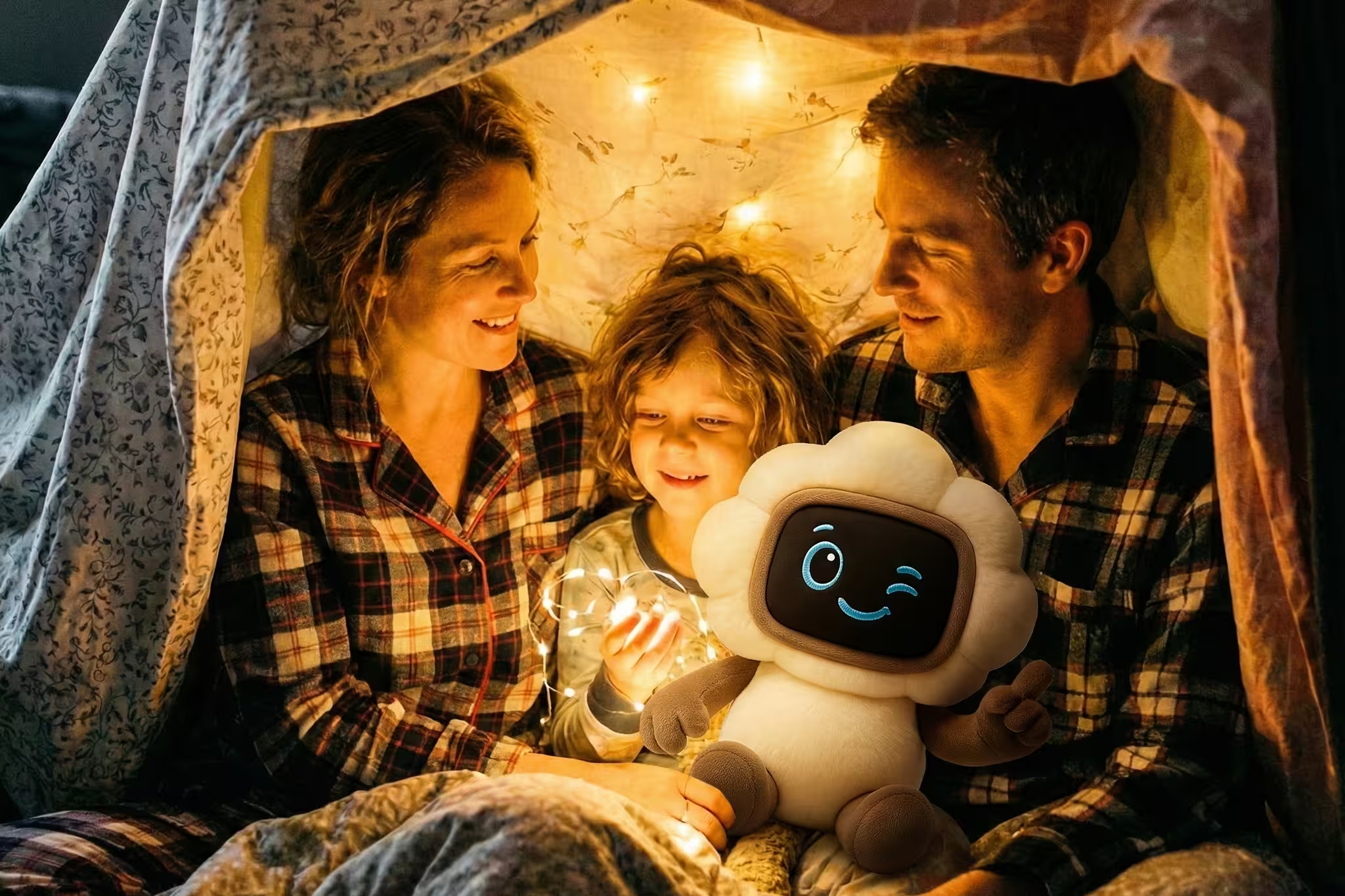
- The New Tradition: Stay home. Wear pajamas all day. Cook your child's absolute favorite "safe foods," even if it’s chicken nuggets and macaroni. Put on a holiday movie at a low volume. That is a feast.
Imagine your child snuggled up in their favorite pajamas, munching on their comfort foods, while a gentle holiday classic plays softly in the background. You might be eating on the couch, and that's okay. It's about being together, not about fitting into a mold of what a holiday "should" look like.
This approach reminds me of my friend Jess, who traded the fancy dinner and stiff clothes for cozy PJs and a simple meal. She noticed her daughter, Lily, who usually had a hard time during holiday meals, was giggling and relaxed. It was the first time in years we truly enjoyed Christmas dinner, Jess told me.
The "quiet light" tour (say no to the mall Santa)
Standing in a loud line to sit on a stranger's lap? Hard pass.
- The New Tradition: Pack hot cocoa in travel mugs, get in the car, turn on calm instrumental music, and drive around looking at holiday lights from the quiet safety of your own vehicle.
This tradition allows you to enjoy the beauty of the season without the chaos. Maybe your child wears noise-canceling headphones, or you pause often to discuss which lights are their favorite. It's about creating a space where they can engage at their own pace.
A family I know has made this a tradition. They call it their "Silent Night Adventure." Each year, they find a new neighborhood to explore. With their son wrapped in his favorite blanket, they sip cocoa and point out the most dazzling displays. Their son’s face lights up in a way that he rarely does in crowded settings.
The "consent and connection" gathering (say no to forced affection)
If you do visit family, set boundaries before you arrive.
- The New Tradition: Send an email ahead of time: "We are excited to see you! Please remember that [Child's Name] shows affection in their own way, so we won't be forcing hugs or kisses. Also, we will need a quiet back bedroom where they can retreat if things get too loud."
This kind of communication can be empowering. It sets the stage for a visit that respects your child's boundaries and needs. You might even find that relatives appreciate the clarity and are more willing to adapt.
Think of it like building a bridge instead of a barrier. Your family might initially resist the change, but over time, they may come to appreciate the deeper connections that respect and understanding build.
Tips for managing holiday expectations
- Communicate early and clearly: Let loved ones know your plans and the reasons behind them. Most people will appreciate your honesty and the opportunity to support you.
- Create a "holiday survival kit": Include noise-canceling headphones, fidget toys, a favorite book or tablet, and snacks. Having these on hand can be a lifesaver during overstimulating moments.
- Prioritize downtime: Schedule intentional rest periods between activities to allow your child to recharge. This can be as simple as a quiet afternoon at home or a short walk outside.
- Practice self-care: You can't pour from an empty cup. Whether it's a warm bath, a good book, or a few minutes of meditation, find small ways to care for yourself amid the season's demands.
The final word
A magical holiday is one where your child feels safe, regulated, and happy. If that means a smaller, quieter, "weirder" holiday than what you see on Instagram, then so be it.
Saying "no" can be hard, especially when faced with expectations from others. But remember, saying "no" to one thing often means saying "yes" to something else-something that brings your family genuine joy.
Take the permission slip. Say "no" to the stress, so you have the energy to say "yes" to the joy that actually fits your family.
In those quieter moments, you may find a new kind of magic. One that isn't about perfect pictures or grand gestures, but about the peace that comes from honoring your child's needs and your own. You're not alone in this, and it's okay to choose the path that works for you.
Remember, the best traditions are the ones that bring you closer, not the ones that fit someone else's idea of perfect.
FAQ
Is it okay to skip holiday events because of sensory overload?
Yes. The article gives parents permission to say no when sensory demands, disrupted routines, and social expectations are too much for their family. Choosing to stay home is presented as a protective decision, not a failure to celebrate.
What are some low-sensory holiday traditions for neurodiverse families?
The article suggests a pajama feast with safe foods and a holiday movie at low volume. It also recommends taking a quiet drive to look at holiday lights or creating a gathering with clear boundaries around affection and access to a quiet retreat.
How can I prepare relatives for my child's holiday needs?
Communicate early and clearly about your plans and your child's needs. Before visiting, you can explain that affection will not be forced and request a quiet room where your child can retreat if things become too loud.
What should I include in a holiday sensory survival kit?
The article recommends packing noise-canceling headphones, fidget toys, a favorite book or tablet, and snacks. These items can help during overstimulating moments.
Join the conversation
Subscribe to comment
Join the Ziggyloo family newsletter to leave a comment — and get gentle learning tips and community stories in your inbox. No spam, unsubscribe anytime.