
I Don't Get It! - Why Traditional Homework is a Square Peg
For neurodiverse students, the phrase 'I don't get it' is rarely an admission of inability; it is a signal that the delivery method does not match the processing style. At Ziggyloo, we believe that traditional homework often acts as a 'standardized filter' that unfairly penalizes unique thinkers. Our AI platform is designed to replace this rigid structure with adaptive learning pathways, but understanding why the traditional model fails is the first step in advocating for your child’s educational success.
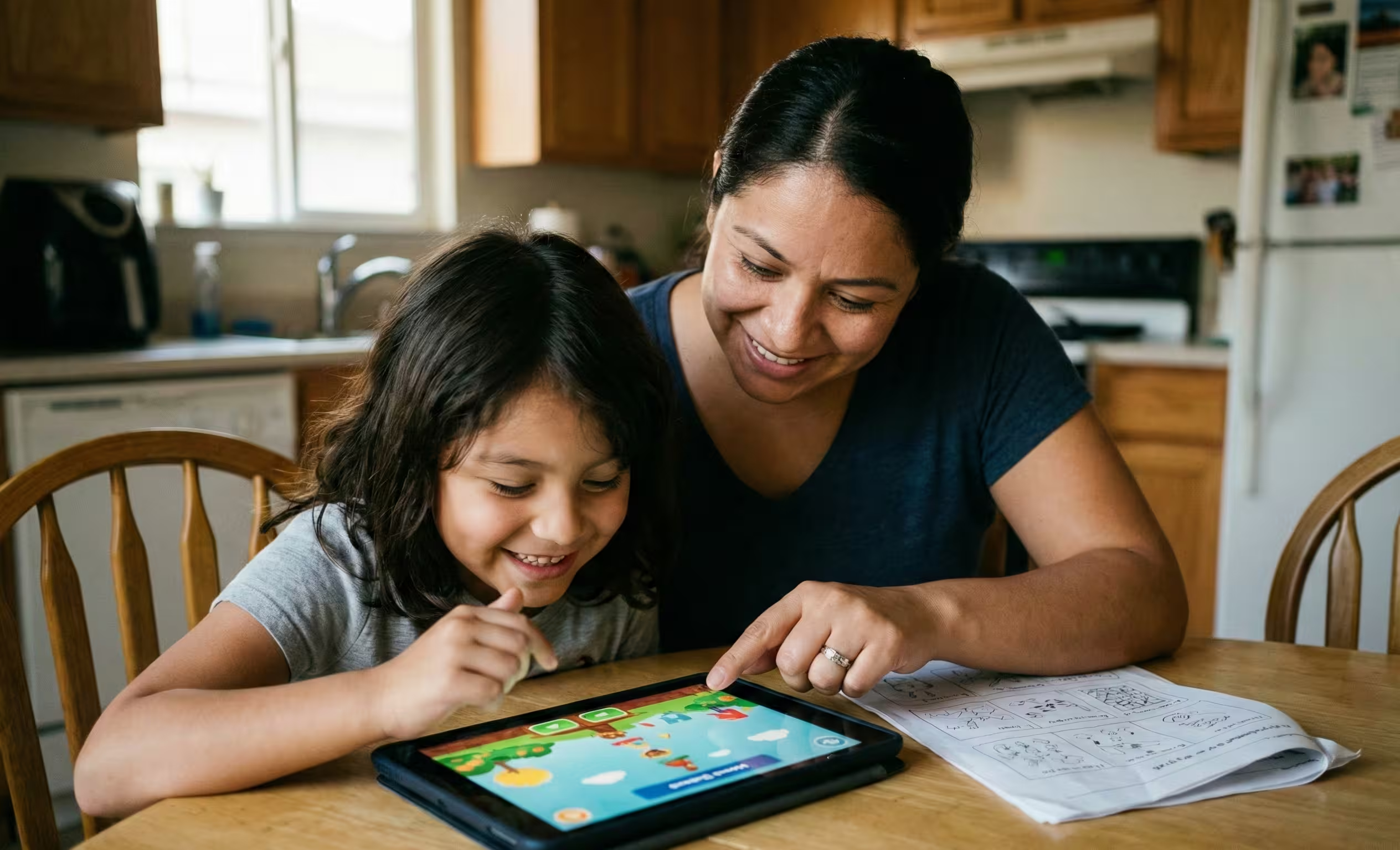
It’s 6:00 PM. Dinner is getting cold, your patience is fried, and your child is staring at a worksheet like it’s written in an alien language. Then comes the phrase that makes every parent’s stomach drop: "I don’t get it."
Cue the frustration, the tears (from both of you), and the inevitable battle.
If this scene sounds familiar, I want you to take a deep breath and listen: The problem is not your child. The problem is likely the method.
The "Square Peg" of Traditional HomeworkFor decades, homework has looked one way: read a textbook, answer questions on a worksheet. This "one-size-fits-all" approach assumes every brain processes information linearly.
But for neurodiverse students-kids with ADHD, dyslexia, autism, or other learning differences-this traditional method is often a square peg being forced into a round hole. Their brains are wired differently. They may struggle with dense text, multi-step instructions, or sitting still for long periods.
I remember one evening, the clock ticking past 7 PM, my son with ADHD was still at the dining table, his attention scattered like the crumbs from the sandwich he had for lunch. The worksheet's endless rows of math problems seemed more like a wall than a path to understanding. As a parent, watching him was heartbreaking. The more he struggled, the more I realized that these traditional methods just didn't fit his unique brain.
When we force them to learn in a way that works against their brain's natural design, we aren't teaching them the material; we're teaching them that learning is painful.
For many parents, this constant battle can lead to feelings of guilt and questioning if they're doing enough. Shouldn't I be able to help them? This is where a gentle reminder comes in handy: you are enough. Your child’s learning struggles are not a reflection of your abilities as a parent. They are simply an indication that we need to find a different key for the lock.
It's important to remember that an evening spent battling homework doesn't define your parenting. You're not failing because your child can't complete the task in front of them. Instead, you're succeeding every time you choose to see their struggle as a signpost pointing to a need for a different approach.
Offering "Multiple Entry Points" to LearningThe good news is that there isn’t just one way to learn something. Experts agree that neurodiverse students often require "multiple entry points" to engage with course content.
Think of it like a house. If the front door (the textbook) is locked, you don't just give up. You try the side door (a video), the back door (a hands-on activity), or a window (a gamified app).
One study found that using multiple modalities-visual, auditory, and kinesthetic-can significantly improve engagement and retention for neurodiverse learners. This means diversifying the methods can be more effective than you might think.
Here is how to swap the yelling for strategies that actually work:
- Ditch the Dense Text: If reading a chapter is causing a meltdown, find a high-quality educational video that explains the same concept. Visual and auditory learning can be a game-changer. My daughter, who has dyslexia, finds comfort in videos. Watching a science experiment unfold on screen makes the concept come alive in ways a textbook never could. Websites like Khan Academy offer free, high-quality lessons in a wide range of subjects, often with the added benefit of interactive exercises.
- Make it Active: Instead of just reading definitions, have your child create flashcards, act out the vocabulary words, or build a model. "Active reading" helps engage different parts of the brain. One evening, we turned spelling practice into a game of charades. Laughter replaced tears, and those words stuck better than ever before. Research suggests that physical activity can increase cognitive performance, so a quick dance break or some jumping jacks can sometimes reset a frustrated mindset.
- Gamify the Struggle: Apps like Ziggyloo are designed specifically to turn learning into an engaging, personalized experience. When it feels like a game, the pressure is off, and the learning can sneak in. My son, who usually avoids reading like the plague, can't wait to see what new adventure Ziggyloo has in store each week. Other popular options include Prodigy for math and Duolingo for languages, both of which turn learning into a series of fun, competitive challenges.
- Break it Down: A giant worksheet can feel insurmountable. Cut it in half. Do the evens tonight and the odds tomorrow. A smaller task is less daunting and provides a quicker sense of accomplishment. I keep a pair of scissors in the junk drawer just for this purpose. It's amazing how a little snip can change the whole evening's mood. Remember, it’s okay to take breaks and spread out the work. Learning doesn’t have to be a marathon; it can be a series of sprints.
Another mom shared how she uses a timer to help her child focus. They set it for 15 minutes of work followed by a 5-minute break. This approach, known as the Pomodoro Technique, can help children manage their time and reduce the feeling of being overwhelmed by a task.
The Bottom LineYour goal isn't to force your child to complete a worksheet; your goal is to help them learn. By recognizing that traditional homework methods may not fit their unique brain, you can stop fighting the "square peg" battle and start finding the entry points that unlock their potential-without the tears.
It's important to remember that our neurodiverse children are not broken-they're just different. And different is beautiful. They have strengths and abilities that can outshine what’s measured by standard educational methods.
One mom shared her story of how her child, who struggled with reading, could memorize entire scripts of his favorite movies. This strength in memory and passion for storytelling opened doors to learning through scripts and screenplays rather than traditional books.
As parents, we need to be open to these alternative pathways. This might mean advocating for accommodations or modifications at school, like requesting more time for assignments or access to audiobooks. An Individualized Education Plan (IEP) or a 504 Plan can be valuable tools in ensuring your child gets what they need.
Feeling overwhelmed is natural. Take it one step at a time. Remember, you're not alone in this journey. Surround yourself with a community of understanding parents who can offer support and share their experiences. There are countless parents out there who have been in your shoes, and many who are still on this path with you.
Sometimes, it helps to have a dedicated space for homework that's free from distractions-a corner of the kitchen or a small desk in their room. Keep supplies handy, like pencils, paper, and a timer. Knowing where everything is can reduce some of the chaos.
Ultimately, the most powerful tool you have is your unconditional love and belief in your child’s potential. Keep advocating, keep experimenting with different approaches, and celebrate every small victory along the way. These are the moments that build resilience and joy in learning, for both you and your child.
Let's redefine success-not by the traditional standards of completed worksheets, but by a child's growth, happiness, and willingness to learn. Now, that is something worth celebrating.
As you navigate this path, remember that you are a pioneer, crafting a new way forward for your child. You're not just helping them with homework; you're teaching them that their unique brain is something to be proud of. You're showing them that there are multiple ways to solve a problem, and those lessons will last a lifetime.
FAQ
Why can traditional homework be difficult for neurodiverse students?
Traditional homework often relies on dense text, multi-step instructions, and sitting still for long periods. For students with ADHD, dyslexia, autism, or other learning differences, this one-size-fits-all approach may not match how they process information.
What are multiple entry points to learning?
Multiple entry points are different ways to engage with the same course content. They can include videos, hands-on activities, visual or auditory learning, and gamified apps instead of relying only on a textbook or worksheet.
How can I make homework less overwhelming?
Break a large worksheet into smaller tasks, such as completing the even-numbered problems one day and the odd-numbered problems the next. You can also use short work periods followed by breaks, such as 15 minutes of work and a 5-minute break.
What are some alternatives to dense reading for learning?
A high-quality educational video can explain the same concept using visual and auditory learning. Active options include creating flashcards, acting out vocabulary words, building a model, or using interactive exercises.
How can movement or games support learning?
Turning practice into a game, such as charades for spelling words, can make learning more engaging and reduce pressure. A quick dance break or some jumping jacks may also help reset a frustrated mindset.
Join the conversation
Subscribe to comment
Join the Ziggyloo family newsletter to leave a comment — and get gentle learning tips and community stories in your inbox. No spam, unsubscribe anytime.