
Sibling Squabbles: When It's More Than Just "He Started It!"
In a neurodiverse household, sibling conflict is rarely just about a stolen toy; it is often a collision of competing sensory needs and communication styles. At Ziggyloo, we design our learning tools to adapt to these distinct cognitive profiles, but we know that managing the 'mixed-neurotype' dynamics of a family requires its own set of translation skills. To foster a supportive environment for learning and living, we must move beyond standard refereeing and start decoding the neurological root of the argument.
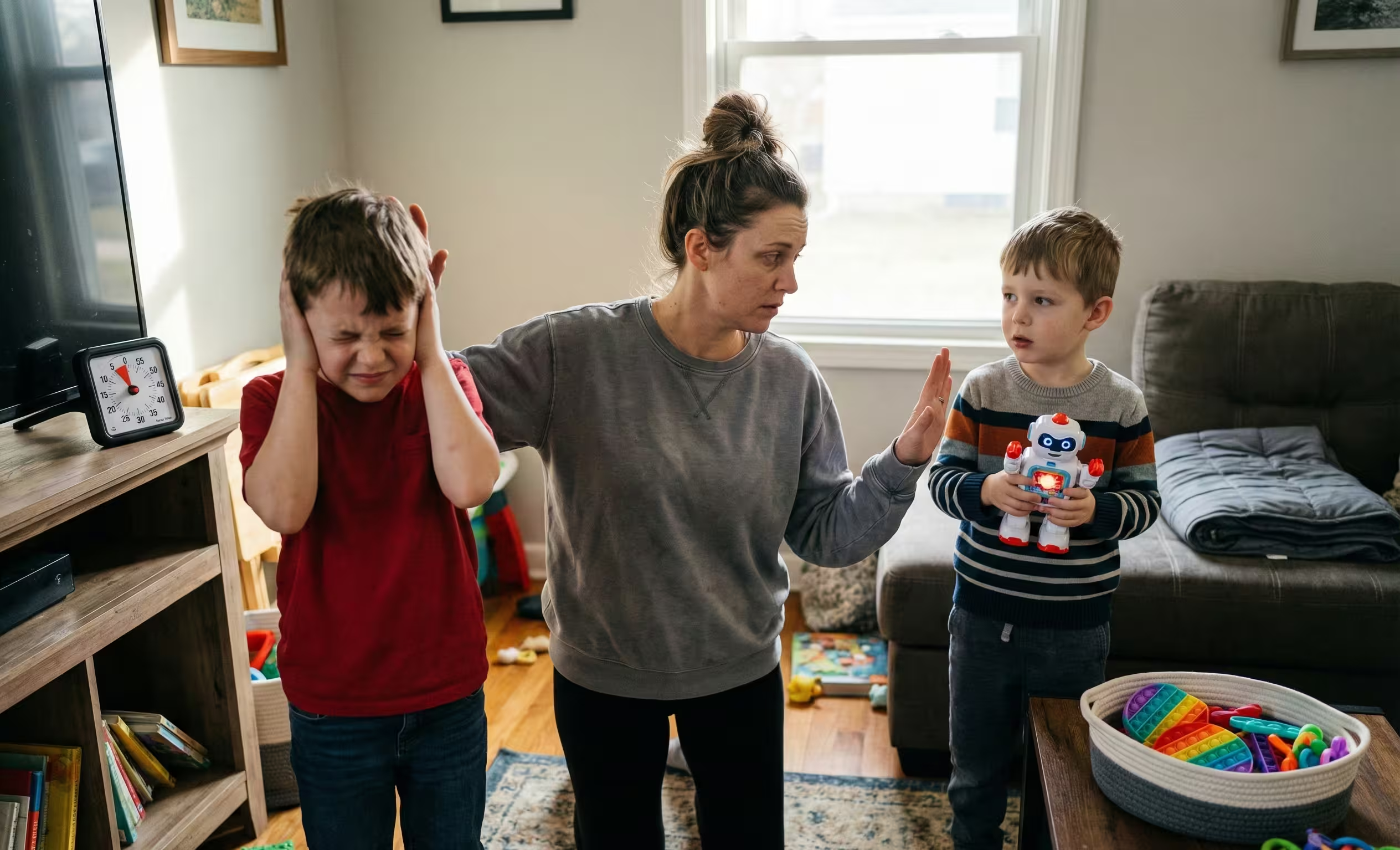
If you have more than one child, you know the sound. The sudden screech, the thud of a thrown toy, and the immediate, synchronized chorus of: "Mooooooom! He started it!" You might be mid-sip on a cup of coffee that’s already gone cold, wondering if you’ll ever be able to enjoy it hot.
In a typical household, you might mediate, threaten to take the toy away, or tell them to "work it out."
But yours isn't a typical household.
When one or more children are neurodiverse, sibling rivalry isn't just about who got the blue cup. It’s about sensory thresholds being crossed, rigid expectations being violated, or communication barriers that turn a simple misunderstanding into a full-blown meltdown.
Standard refereeing doesn't work when the players are using entirely different rulebooks.
The Reality of the "Mixed-Neurotype" Home
If it feels like your household is a complex ecosystem of competing brain types, it’s because it probably is. Research indicates that the recurrence rate of autism in siblings is around 20%. This means that many of us are navigating homes where multiple children have unique sensory profiles, communication styles, and executive functioning challenges. Each child might have a different definition of what "too loud" or "just right" means, making it feel like you're juggling multiple realities.
Imagine a typical afternoon. Child A is building an intricate Lego tower, deeply focused, and in their zone. Meanwhile, Child B charges in, seeking the satisfying crash of blocks falling, not realizing that to Child A, the tower isn't just a toy-it's a structure as important as a skyscraper. What seems like a simple squabble over Lego is actually a collision of coping mechanisms. One study found that children with autism often use repetitive activities as a way to self-regulate.
What looks like a fight over a toy might actually be a fundamental clash of needs, not just wants.
It's not just about toys, either. Consider a family meal. One child might be overwhelmed by the smells and textures of dinner, while the other is distracted by the clinking of utensils. A sibling's tapping might feel like a relentless drumbeat to one child, while another sees it as an absent-minded habit. These are not just minor annoyances; they're barriers to peace that neurotypical strategies often overlook.
Conflict resolution when brains don't speak the same language
Traditional advice like "use your words" or "say sorry" often backfires in neurodiverse homes. "Using words" might be impossible during sensory overload, and a forced apology teaches nothing if the child doesn't understand the social nuance of why the other person is upset. I remember a time when my son, overwhelmed by his sister's incessant humming, couldn't articulate why he was so frustrated. Asking him to "use his words" was like asking him to fly.
We need a different toolkit based on de-escalation and translation. Think of it as learning to speak multiple dialects of the same language-each child has their own way of expressing needs and understanding the world.
To illustrate, imagine being at a friend's house where everyone speaks only Mandarin, and you are fluent in Spanish. The frustration of not being understood or able to understand mirrors what our children experience. Our role is to become the interpreters, the ones who bridge these language gaps with understanding and patience.
Script 1: The Sensory Pause Button (De-escalate first)
When sensory systems crash, logic leaves the building. Do not try to resolve the conflict while anyone is yelling or physical. I’ve been there, standing in the hallway, feeling my own heart race as the noise level climbs.
The Goal: Safety and regulation. The Script: “Whoa. Too loud. Too much body energy. Everyone stop. [Child A], you go to the crash pad. [Child B], you come to the kitchen with me. We are not talking about this until bodies are calm.”A "crash pad" can be a lifesaver-a place where a child can jump, roll, or lie down to self-regulate. It doesn’t have to be fancy. A pile of cushions or a beanbag chair can do the trick. The key is to have a designated space where they know they can go to reset.
Sometimes, it's not just about having a physical space, but also creating a mental pause. A simple breathing exercise can be introduced as a family routine. Something like "let's all take three deep dragon breaths" can signal a group reset. The consistency of this practice can help children anticipate that a pause is coming, which can reduce anxiety and resistance.
Script 2: The Interpreter (Bridging communication gaps)
Often, neurodiverse kids struggle to take another's perspective. You have to be the bridge that explains one brain to the other without assigning blame. It’s like being a tour guide in your own home, explaining the terrain of one child’s mind to another.
The Situation: Sibling A is screaming because Sibling B is humming loudly while playing. The Script (to Sibling A): “Your ears hurt because that humming is too loud for your brain right now.” The Script (to Sibling B): “Your brother isn't trying to be mean. His ears work differently, and that sound actually hurts him. You need to hum in your room with the door closed, or you need to stop humming out here. Which do you choose?”This approach turns the situation into a choice rather than a command, giving the child some control and buy-in. It’s about setting boundaries that respect everyone’s needs while teaching empathy and understanding.
Visual supports can be quite effective here. A simple social story that explains how different sounds affect people differently can be revisited whenever conflicts arise. It's a gentle reminder that everyone in the house is learning to navigate each other's worlds.
Script 3: The "Fairness" Reframe
Neurodiverse kids often have a rigid sense of justice. "Fair" means "equal." But in your house, fair means everyone gets what they need. I’ve lost count of how many times I’ve had to explain this to my little ones.
The Script: “I know it doesn't feel equal that your sister gets to wear headphones at dinner and you don't. But 'fair' in our house means everyone gets the tools they need. She needs headphones to handle the chewing sounds so she can eat with us. You need [mention their specific tool/accommodation] to help you with [their challenge]. We all need different things.”Visual aids can be helpful here. A simple chart on the fridge showing different tools or accommodations each family member uses can make this concept more concrete. It’s a visual reminder that different people need different things to thrive.
Incorporate stories or books that highlight diverse needs and strengths. Books like All Are Welcome or We're All Wonders can reinforce the idea that everyone has unique needs and gifts. These stories can serve as conversation starters about fairness and acceptance.
The Final Word
Your goal isn't to eliminate squabbles-that’s impossible. Your goal is to shift from being a referee handing out penalties to being a translator helping different brains understand each other. It’s messy work, but it’s the only way to build lasting peace in a neurodiverse home.
Remember, it’s okay to not have all the answers. It’s okay to feel overwhelmed. You’re not alone in this journey. Reach out to communities online or in-person, and share experiences with other parents who get it. Sometimes, just knowing that someone else has been there too can make all the difference.
Join a local or online support group where parents share their real-life experiences. Hearing others' stories can provide new strategies and a sense of camaraderie. Remember, every parent has days where they feel like they're just barely keeping it together. It's okay to leave the laundry unsorted or the dishes undone if it means you can take a moment to breathe and regroup. You’re doing the best you can, and that’s more than enough.
FAQ
Why do traditional sibling conflict strategies often fail in neurodiverse homes?
Strategies such as telling children to use their words, say sorry, or work it out may not address sensory overload, communication barriers, or different expectations. A child may be unable to explain their frustration while overwhelmed, and a forced apology may not teach them why the other sibling is upset.
What should parents do when a sibling conflict becomes physical or extremely loud?
Focus on safety and regulation before trying to resolve the disagreement. Separate the children, direct them to calming spaces, and wait to discuss what happened until their bodies are calm.
What is a crash pad, and how can it help during sibling conflicts?
A crash pad is a designated space where a child can jump, roll, or lie down to self-regulate. It can be made from cushions or a beanbag chair, as long as it gives the child a familiar place to reset.
How can parents help siblings understand each other's sensory needs?
Parents can act as interpreters by explaining one child's experience to the other without assigning blame. For example, they can explain that a sound may hurt one child's ears and give the other child choices, such as humming in another room or stopping.
Join the conversation
Subscribe to comment
Join the Ziggyloo family newsletter to leave a comment — and get gentle learning tips and community stories in your inbox. No spam, unsubscribe anytime.