
The "Explosion" After School: Managing Restraint Collapse
The phenomenon of 'Restraint Collapse' is often misunderstood as a behavioral issue, but for neurodiverse students, it is fundamentally a matter of cognitive resource depletion. At Ziggyloo, we understand that the energy required to 'mask' and navigate a neurotypical school day leaves little reserve for the evening. While our adaptive learning tools are designed to reduce this friction during study time, understanding the mechanics of this after-school release is vital for creating a home environment where true regulation-and eventually, learning-can resume.
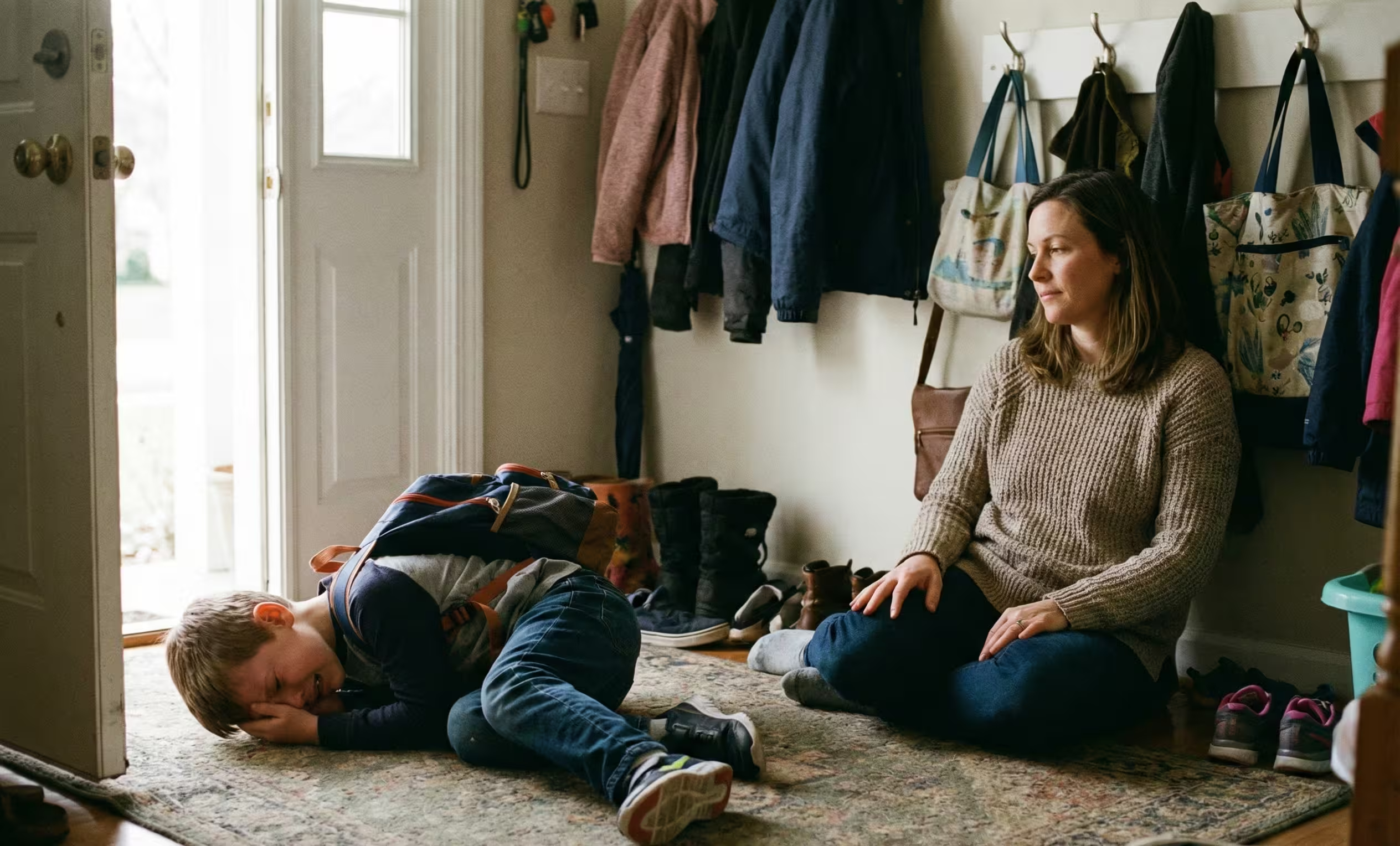
It’s 4:00 PM. The school bus pulls away, your child walks through the door, and… boom.
The backpack gets thrown. The shoes are kicked off with furious energy. A simple question like, "How was your day?" is met with a scream, tears, or a full-on meltdown on the kitchen floor.
You’re left standing there, bewildered. You just got an email from their teacher saying they had a "great day." What on earth happened in the thirty seconds between the bus and the front door?
Welcome to the "after-school explosion," known affectionately by experts as restraint collapse.
It’s not you, it’s safety (and exhaustion)
First, let’s reframe this moment. When your child falls apart the second they see you, it feels like a personal attack. In reality, it’s the highest compliment they can give you.
All day long at school, your neurodiverse child has been "holding it together." They’ve been masking, managing sensory input, navigating complex social rules, and following instructions. It takes an immense amount of cognitive and emotional energy.
Consider what it’s like for them: the constant hum of fluorescent lights, the unpredictability of peers, the sensory overload from crowded hallways. Each moment requires effort to process, adapt, and respond appropriately. By the time the final bell rings, they’re like a tightly wound spring.
One parent shared that for their child, the school day feels like "being on stage in a play where you don't know your lines." The pressure to conform can be overwhelming, leaving them exhausted by the time they reach home.
When they see you, their brain signals: "Safe. You can let go now." You are their safe harbor. The explosion is simply the release of hours of pent-up pressure.
This is compounded by the fact that 83% of autistic children have chronic sleep or behavioral difficulties. They are often running on an empty tank before the school day even begins. One study found that these children may have lower melatonin levels, contributing to sleep challenges and, in turn, affecting daytime behavior.
Knowing this can help you see the meltdown not as defiance or bad behavior, but as a natural response to their environment. It’s like the cold coffee you find on the counter at 10 AM - a reminder of how you started the day with good intentions, but life got in the way.
Imagine your child as a little superhero, wearing an invisible cape all day, maintaining their composure, and finally reaching a place where they can unmask and be vulnerable. This perspective shift can be powerful. It’s validating to know that their behavior isn’t a reflection of your parenting skills but rather a testament to their trust in you.
Your 4:00 PM sanity saver: The decompression routine
You can't stop the collapse, but you can manage the fallout. The key is a structured decompression routine that prioritizes regulation over demands.
Phase 1: The immediate landing (first 15-20 minutes)
The Goal: Sensory regulation and zero demands. The Rule: Do not ask "How was your day?" Do not ask about homework. Do not ask them to hang up their coat. The Routine: Have a "landing pad" ready. This could be a specific spot on the couch with a weighted blanket, a crunchy snack (for proprioceptive input), and a drink. Greet them warmly ("I'm so happy to see you!") and guide them to their spot. Then, back off. Let them be.Think of this time as their "sensory timeout," a moment where they can let their sensory system recalibrate. A study I read found that deep pressure, like from a weighted blanket, can reduce anxiety and improve focus. It's like giving their nervous system a reassuring hug after a long day.
Consider having a few fidget toys or a soft, calming playlist ready for them. Some parents find that a small tent or a quiet corner with soft lighting can be a perfect retreat. It’s all about creating a space where they can decompress without any expectations.
One mom shared how she uses a "calm-down bottle" filled with glitter and water. Watching the glitter settle can be mesmerizing for her child, offering a visual cue to transition from chaos to calm.
Phase 2: The bridge activity (next 20-30 minutes)
The Goal: Gentle transition from school mode to home mode. The Routine: Once they have regulated a bit, invite them to a low-stakes, preferred activity. This isn't homework time. It's time for Lego, drawing, listening to music, or using a calming app like Ziggyloo. This bridge helps their brain shift gears without pressure.These activities should be something they look forward to - a reward for making it through the day. My friend swears by a "quiet box," filled with sensory-friendly toys and activities, that her child only gets to open after school. It’s a simple way to make this transition special.
You might notice that on some days, their preferred activity changes. It’s good to have a few options available. Some days they might be drawn to building blocks, other days to a coloring book. Being flexible and allowing them a choice in how they decompress can empower them to listen to their own needs.
One father noticed that his son loved to build with blocks immediately after school. For him, the structured play was a way to process the day's events, stacking each block like his thoughts. On other days, his son preferred to curl up with a familiar book, finding comfort in the predictable storylines.
Phase 3: Reconnection (only when ready)
The Goal: Connection and, eventually, tasks. The Routine: Only after they are fully de-escalated should you attempt conversation or place demands. You'll know they're ready when their body is calm, their voice is level, and they can make eye contact. Now you can ask, "Did anything funny happen at lunch?" or "Let's look at your backpack together."This is the time to gently reconnect and rebuild the bridge to the rest of the evening. Some parents use this moment to engage in a shared activity, like cooking dinner or setting the table together. It’s less about what you do and more about creating a space where they feel heard and valued.
If your child enjoys stories, this can be a great time for a shared reading session. Picking a book that they love and reading together can be a comforting ritual. It creates a bond and serves as a gentle way to ease into the evening routine.
Another great reconnection strategy is a family walk. A short stroll around the block can be a low-pressure way to talk, or not talk, depending on your child’s mood. The rhythm of walking can be soothing, and moving together can feel like a reset button for the rest of the day.
The bottom line
The after-school explosion is messy, loud, and exhausting. But by understanding it as a sign of safety and implementing a predictable decompression routine, you can turn the 4:00 PM hour from a battleground into a time of gentle recovery-for your child and for your own sanity.
Remember, it’s okay to feel overwhelmed. Parenting a neurodiverse child is a journey filled with unexpected detours. On days when you’re feeling particularly drained, remind yourself that these meltdowns are not failures. They are moments of profound trust and vulnerability.
And when you’re standing there amid the chaos, take a deep breath. You’re not alone in this experience. Many parents are navigating the same turbulent waters, coffee cup in hand, heart full of love.
Think of this time as a dance, one where you’re learning the steps together. Some days will feel like you’re in perfect sync, and other days you’ll be stepping on each other’s toes. Both are okay. Both are part of the process.
There’s a quote from a favorite book of mine that goes, "The days are long, but the years are short." In the midst of these challenging moments, it’s a gentle reminder that this too shall pass. And when it does, you’ll have built a foundation of trust and understanding that will carry you both through many more 4:00 PMs to come.
As you stand by the door, watching your child decompress on the sofa, remember that it’s okay to have your own moment of pause. Whether it’s sipping that long-forgotten cold coffee or taking a deep breath, these small acts are like hitting the reset button. They remind you that you’re human too, doing the best you can in this beautifully complex dance of parenthood.
FAQ
What is an after-school explosion or restraint collapse?
It is when a child falls apart after arriving home from school, even if they appeared to have had a good day. The article explains that they may have spent the school day masking, managing sensory input, navigating social rules, and following instructions, then release that pressure when they feel safe at home.
What should I do during the first 15 to 20 minutes after school?
Prioritize sensory regulation and make no demands. Avoid questions about the day, homework, or putting away belongings, and offer a prepared landing spot with options such as a weighted blanket, a crunchy snack, a drink, fidget toys, soft lighting, or calming music.
What is a good bridge activity after my child has decompressed?
Invite your child to choose a low-stakes, preferred activity that helps them shift from school mode to home mode. The article suggests Lego, drawing, listening to music, a calming app such as Ziggyloo, building blocks, a familiar book, or another activity from a small selection of options.
When should I talk to my child or ask them to do tasks?
Wait until your child is fully de-escalated before starting conversation or placing demands. Signs they may be ready include a calm body, a level voice, and the ability to make eye contact; then you can gently reconnect or look at their backpack together.
Join the conversation
Subscribe to comment
Join the Ziggyloo family newsletter to leave a comment — and get gentle learning tips and community stories in your inbox. No spam, unsubscribe anytime.