
The Isolation Station: Finding Your Village When the Invites Stop Coming
Social isolation is not just an emotional byproduct of raising a neurodiverse child; it is a systemic barrier that impacts the entire family's ability to thrive. At Ziggyloo, we build AI tools to support your child’s unique learning journey, but we know that no app can replace the 'village' needed to raise them. Breaking the cycle of isolation is essential for building the resilience required to advocate for your child’s educational and social needs.
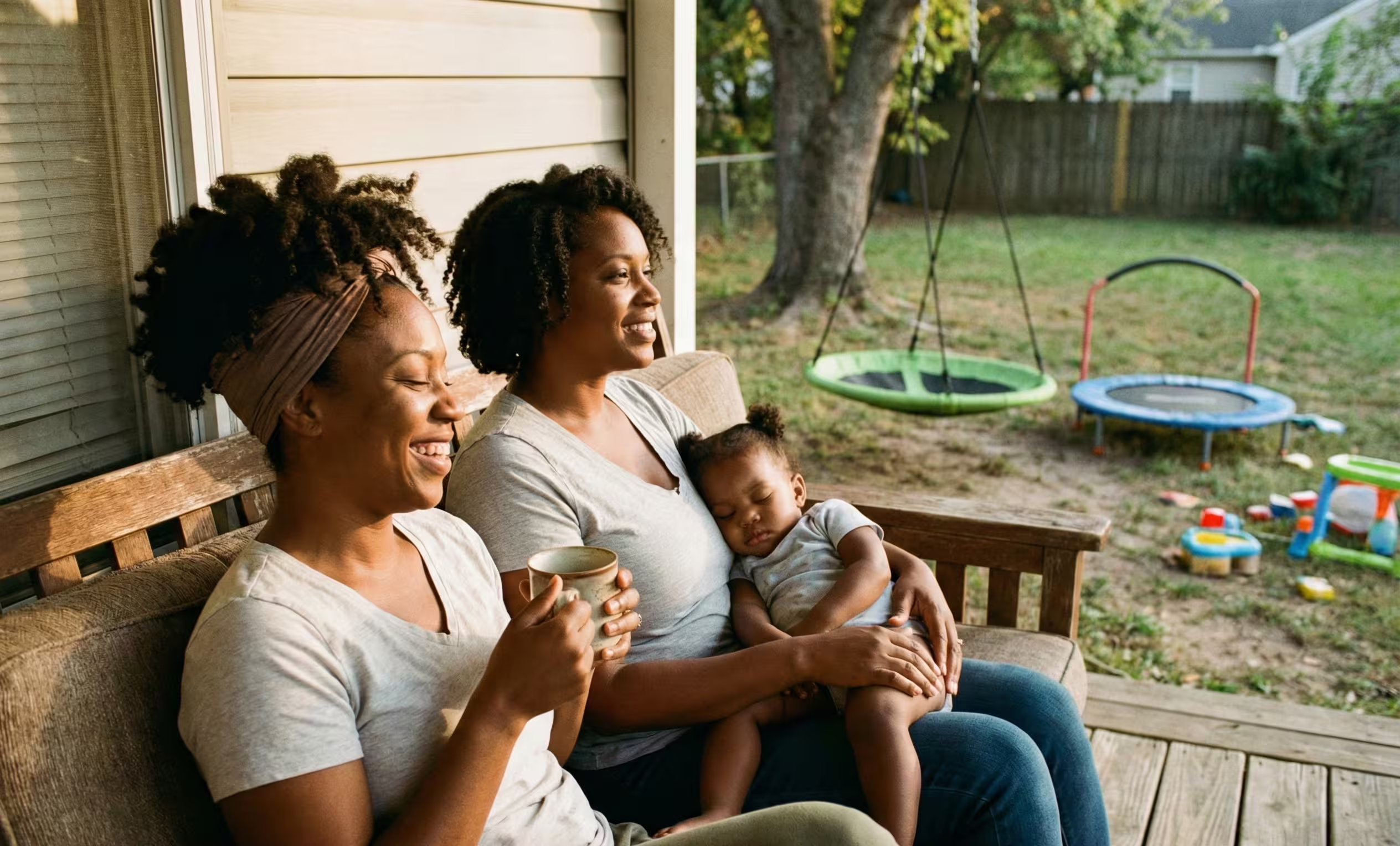
There is a specific kind of silence that settles over a home when the mailbox stays empty. No birthday party invitations with cartoon characters on the front. No casual texts for a playdate. No invites to the neighborhood barbecue because the last one involved a sensory overload meltdown that everyone is still whispering about.
It hurts. It feels like a personal rejection of your child, and by extension, you. It feels unbelievably lonely. I remember one particular afternoon, sitting with my cold coffee, staring at an empty calendar, and wondering if anyone noticed we weren't there.
If you are currently residing in this "Isolation Station," I need you to know something: it is crowded in here. You are surrounded by other parents feeling the exact same chill. We are all in this together, even if it sometimes feels like we're each on our own deserted island.
The cold, hard numbers of isolationThe feeling of being on the outside looking in isn't just a feeling; it's a statistical reality for many families like ours.
40% of parents report isolating themselves from friends and family because of their child's behaviors. We preemptively reject the world before it can reject us. I remember skipping a family reunion because I couldn't handle another round of, "Have you tried just being firmer with him?" 32% of parents say other people have explicitly excluded them from social events and activities. The rejection is real, and it stings. It's like being back in high school, but this time it's your child's heart on the line.Furthermore, over 65% of children with autism are reported to be avoided or left out of activities by other kids. It's a harsh reality that leaves many parents grappling with guilt, wondering if they're doing enough to help their child fit in.
The social isolation is profound, and it extends to the entire family. It’s not just about missing a party; it’s about the agonizing feeling that you and your child are "too much" for the rest of the world. Are we too loud, too unpredictable, too different?
I recall a time when a child at the park asked my son, "Why do you always flap your hands?" His innocent curiosity felt like a spotlight on our differences. It's moments like these that make you want to retreat, to shield your child from a world that doesn't always understand. But here's the thing: for every closed door, there's a window waiting to be opened, a chance to connect with others who see the world through a similar lens.
Building a new village (no apologies required)The old village-the one that requires constant explanations, apologies for "weird" behavior, and a child who can sit still for two hours-isn't working. It's time to build a new one. A better one.
Here is how to find a community where you can just be:
Ditch the "typical" expectations: Mourn the loss of the easy playdates and spontaneous coffee runs. It’s okay to be sad about it. But once you let go of what you thought community should look like, you make space for what it can look like. I once told a friend, "I miss the idea of just showing up somewhere without a plan." She nodded, understanding without judgment.Think of it as clearing out a closet full of clothes that no longer fit. You're making room for new, more comfortable experiences. One mom shared with me how she found joy in planning themed at-home adventures with her kids, like a "space exploration day" with homemade rockets and all. It wasn't what she imagined motherhood would look like, but it was theirs, and it was special.
Go where you are understood, not just tolerated: Look for local support groups for parents of neurodiverse children. Yes, it can be intimidating to walk into a new room, but there is nothing like the instant relief of being with people who "get it" without a single word of explanation. Online communities, like Ziggyloo's parent groups, are also a lifeline for 24/7 solidarity. You're not just finding a group; you're finding your people.Imagine the relief of sitting in a room where no one bats an eye at a meltdown, where sharing the trials of an IEP meeting is met with nods of empathy instead of blank stares. I remember my first meeting at a local support group where a mom said, "Sometimes I just wish I had a manual." We all laughed, a bittersweet acknowledgment of our shared reality.
Redefine "socializing": Maybe a chaotic birthday party at a bounce house is a nightmare. Fine. What about a one-on-one meet-up at a quiet park? What about a "parallel play" date where the kids do their own thing in the same room while the moms drink coffee? Rewrite the rules to fit your child's sensory needs. One study found that smaller, more controlled environments can significantly reduce anxiety for children with sensory processing issues.There's a magic in finding what works for your child. Perhaps it's a trip to a nature reserve where they can explore at their own pace, or an art session at home where they can express themselves freely. I remember organizing a small crafting afternoon where each child made a "feelings collage" using magazine cutouts. It was a gentle way to socialize, filled with creativity and connection.
Be the inviter (on your terms): Host a low-key gathering with clear boundaries. "Come over for an hour. We have a sensory swing and zero expectations for sitting still. If your kid needs to scream in the backyard, go for it." You will be amazed at how many other parents are desperate for that exact invitation. I once invited a mom over for a "messy playdate"-no cleanup required. She cried tears of relief.Setting the stage for these gatherings can be as simple as having a few favorite snacks and activities ready. I once put together a "sensory-friendly movie night" with dim lighting and bean bags, allowing each child to engage with the film in their own way. The laughter and relaxed atmosphere were a reminder that community feels best when it's genuine and pressure-free.
Find your "glimmer" friends: You don't need a dozen friends. You need one or two "glimmer" friends-the ones who see the beauty and humor in your chaotic life, who don't flinch when things get loud, and who text you a funny meme instead of parenting advice when you're having a hard day. These friends are like finding gold in the rubble. I have one friend who always sends me a picture of her own living room mess when I apologize for mine.These relationships are built on mutual understanding and shared experiences. They're the friends who, after a particularly rough day, will show up with a tub of ice cream and a listening ear. I once had a friend drop off a "self-care kit" at my door, complete with bath salts and a note that simply read, "You've got this." It meant the world to me in that moment.
The final wordYou were not meant to do this alone. The isolation is a symptom of a world that isn't built for our kids, not a reflection of your worth or your child's lovability. It's easy to internalize the silence, to hear it as a judgment rather than an opportunity to redefine what community means to you.
Step out of the isolation station. Your new village is out there, and it's filled with people who already understand the password. No apologies necessary. You will find your tribe, and when you do, it feels like coming home.
In this journey, remember that it's okay to feel both grief and gratitude. Grief for the paths not taken, and gratitude for the ones that are uniquely yours. As you navigate this world, know that every step you take is a testament to the love you have for your child. And that love is the strongest foundation for any community you build.
FAQ
How can parents of neurodiverse children find a supportive community?
Look for local support groups for parents of neurodiverse children and online communities such as Ziggyloo's parent groups. These spaces can offer solidarity and understanding without requiring constant explanations.
What can I do if typical playdates and social events overwhelm my child?
Redefine socializing around your child's sensory needs by choosing smaller, more controlled settings. One-on-one meetups at a quiet park, parallel play dates, nature outings, or creative activities at home may feel more manageable than a chaotic birthday party.
How can I host a sensory-friendly gathering?
Set clear, low-pressure expectations and make the gathering short if that works best for the children. You can offer familiar snacks and activities, provide options such as a sensory swing or bean bags, and allow children to engage in their own way.
Is it okay to grieve the loss of traditional social experiences?
Yes, it is okay to feel sad about missing easy playdates, spontaneous coffee runs, and other experiences you expected community to include. Letting go of those expectations can make room for new forms of connection that fit your family better.
Join the conversation
Subscribe to comment
Join the Ziggyloo family newsletter to leave a comment — and get gentle learning tips and community stories in your inbox. No spam, unsubscribe anytime.