
When the Teacher Says "He's Distracted": Decoding School Feedback
In the traditional classroom ecosystem, 'distraction' is often a mislabel applied to what is actually a valid, non-linear processing style. At Ziggyloo, we build our AI platforms on the premise that neurodiverse students aren't 'tuning out'-they are often regulating their sensory input to tune in. While our adaptive tools accommodate these behaviors automatically, bridging the understanding gap with human educators requires a specific vocabulary of advocacy.
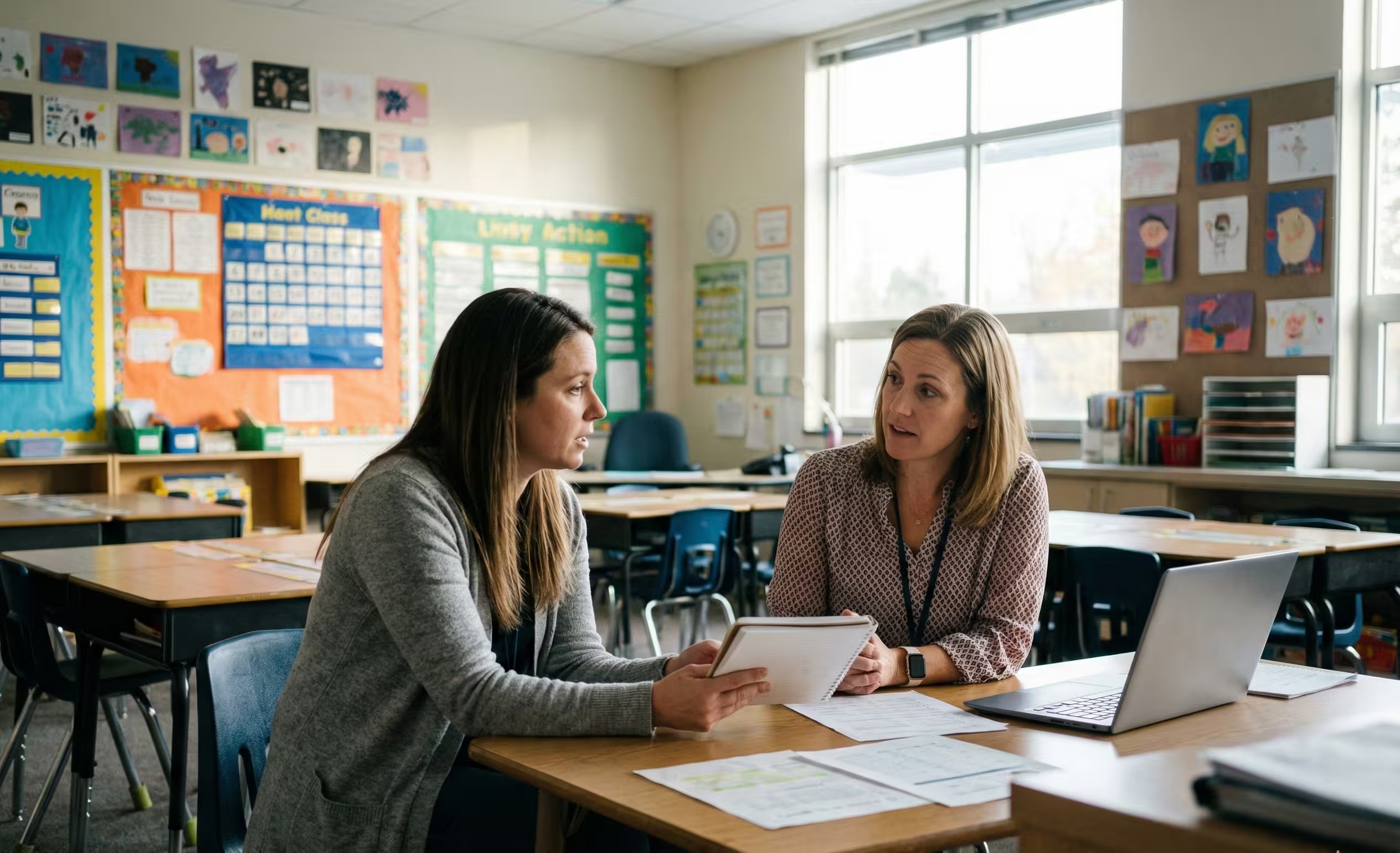
It’s the email subject line every parent dreads: “Checking in about [Child’s Name].”
You open it, your stomach already in knots, and you read phrases like: "He’s very distracted today," "She isn’t sitting still during circle time," or the classic, "We need to work on focusing."
It’s frustrating. It’s disheartening. And most of the time, it’s a massive misunderstanding.
When a teacher says your child is "distracted," what they often mean is, "Your child is behaving in a way that doesn't fit my traditional classroom management style, and I don't have the tools to understand why."
The Training Gap (It's Not Their Fault, But It Is Their Problem)Before you send a fiery reply, let’s offer some grace. Most educators are incredibly dedicated, caring professionals. But the reality is, many have received little to no specific training in neurodiversity. They are operating with outdated rulebooks.
In a world where classrooms can be as diverse as a bustling city street, teachers are often asked to manage a myriad of student needs with limited resources. A recent study on a professional development program called "Schools Unified in Neurodiversity" highlighted this gap. The good news? The study found that specific training significantly improves educators' knowledge and self-efficacy in supporting neurodivergent youth.
Imagine a teacher, fresh out of college, juggling 25 unique little humans, each with their own needs and quirks. They want to help, and they care deeply, but without the right tools, it’s like asking someone to fix a car without a wrench. The heart is there, but the hands are tied. This means teachers want to help; they just need the right information. And sometimes, Mama Bear, that information has to come from you.
Decoding the Feedback & Scripting Your ReplyHere is how to translate common teacher feedback and respond with scripts that educate gently but firmly.
What They Say: "He is so distracted. He was looking out the window during the entire lesson."What It Might Mean: "He is regulating his sensory system by reducing visual input so he can actually listen to me."
Your Script: “Thanks for letting me know. I know it looks like he isn't paying attention when he looks away, but for him, reducing visual input actually helps him process auditory information better. He’s often listening most intently when he’s not making eye contact. Could we try letting him doodle or use a fidget while he listens?”
It's like when you’re at a busy café, trying to concentrate on a book, and you find yourself zoning out the chatter around you. Some kids need to turn down the visual volume to dial up their auditory focus. One study found that students with ADHD often perform better when allowed to engage in small, self-soothing activities like doodling or using a stress ball. It’s not about being inattentive; it's about finding their own rhythm in a symphony of stimuli.
Picture a kid named Jake, who seems to drift off during every reading session. He’s not ignoring the teacher; he's actually visualizing the story, creating a mental movie that helps him understand better. This is his way of processing, and it's crucial for him to have the space to do so.
What They Say: "She can't sit still during circle time. It's disruptive."What It Might Mean: "Her body needs movement to activate her brain for learning. Sitting still is physically painful for her right now."
Your Script: “I understand that her movement can be challenging in a group setting. Because of her ADHD, movement is actually essential for her to focus. Sitting still uses up all her brainpower, leaving none for learning. Can we explore options like a wobble cushion, a standing desk at the back, or a 'movement pass' she can use when her body gets restless?”
Think of those long meetings where you shift in your seat, trying to stay alert. For some children, movement is not just a preference; it is a necessity. A wobble cushion or a flexible seating option can be a game-changer, turning the restless wiggles into productive energy. Research suggests that physical activity can enhance concentration and cognitive function in children with ADHD, transforming what seems like chaos into a conduit for learning.
Consider Mia, who is always bouncing on her toes during lessons. Her teacher initially saw this as a disruption until Mia was given a yoga ball to sit on. This small change allowed her to focus and participate more actively without drawing attention away from the lesson.
What They Say: "He knows this material, but he won't do the worksheet."What It Might Mean: "He understands the concept, but the format of the worksheet (too much text, too many problems, boring visual design) is causing a cognitive block or anxiety."
Your Script: “He definitely grasps the concept at home! I suspect the format of the worksheet might be overwhelming for his executive functioning. Could he demonstrate his knowledge in a different way? Maybe he could answer three questions orally, draw a diagram, or build a model to show what he knows?”
Worksheets can be like a dense fog for some kids, obscuring what they can easily articulate in a different format. It's not that they can't do the work; the medium is the message, and sometimes the message gets lost. By offering alternatives, you turn a potential battle into a bridge for communication and comprehension. One study found that when students were given the choice to demonstrate knowledge through alternative means, engagement and understanding improved significantly.
Imagine Alex, who freezes at the sight of a full page of text. When given the option to explain his answers verbally or through a creative project, he flourishes, showing a deep understanding of the material that paper couldn't capture.
The Bottom LineYou are your child’s most important advocate and their first expert. Don’t be afraid to share that expertise. By reframing their behavior from "distracted" to "differently wired," you aren't just helping your child; you're helping their teacher become a better educator for every neurodiverse kid who walks into their classroom.
It's the little things, like a well-timed email or a thoughtful conversation, that pave the way for big changes. When you share your child's unique needs and strengths, you also share a piece of your journey, inviting educators into a world that, while challenging, is also filled with incredible potential. This partnership not only supports your child but enriches the entire classroom community.
Remember, each email, each conversation, and each shared strategy is a step towards a more inclusive, understanding educational environment for all children.
Your Role as the BridgeBeing the bridge between your child and their school can feel like a heavy responsibility, especially when you're running on cold coffee and three hours of sleep. But it’s also a powerful position. You have the opportunity to influence not just how your child learns, but how their peers and teachers understand neurodiversity.
- Start small. Share one or two strategies that have worked at home with the teacher. Maybe it’s a sensory break every hour or using earplugs to minimize noise.
- Keep communication open. Regular updates-both positive and constructive-help build a team approach between you and the teachers.
- Be patient with yourself. It’s okay if not every conversation goes perfectly. Your efforts are planting seeds for change, even if you don’t see the blooms right away.
In those moments of doubt, remember you are not alone. There are communities of parents facing the same challenges, sharing insights and support. Tapping into online forums or local support groups can provide both practical advice and emotional solidarity.
Navigating the SystemUnderstanding the educational system’s framework can also empower you. Familiarize yourself with your child’s rights and the resources available. An Individualized Education Program (IEP) can be a game-changer, offering tailored support for your child's unique learning style.
- Keep a binder with copies of all communications, assessments, and notes from meetings.
- Review the IEP annually, or more often if needed, to ensure it evolves with your child’s needs.
- Don’t hesitate to ask for revisions or additional support if you feel something isn’t working.
The road may be bumpy, and the path isn’t always clear, but remember that your efforts today lay the groundwork for a more inclusive future. Your advocacy not only helps your child but also paves the way for other children who will benefit from the changes you inspire.
Each conversation, each email, each moment of advocacy is a step toward a classroom where all children can thrive-where "distracted" becomes "differently engaged," and every child’s potential is recognized and nurtured.
FAQ
What might a teacher mean when they say my child is distracted?
The article explains that behaviors labeled as distraction may reflect sensory regulation, a need for movement, or difficulty with the format of an assignment. A child may look away to reduce visual input, move to help activate their brain, or struggle with a worksheet despite understanding the material.
How should I respond when my child looks away during a lesson?
You can explain that looking away may help your child reduce visual input and process auditory information. The article suggests asking whether the child can doodle or use a fidget while listening.
What classroom supports can help a child who cannot sit still?
The article suggests options such as a wobble cushion, a standing desk at the back of the room, or a movement pass. It presents movement as something that may help some children with ADHD focus and participate.
What can my child do if a worksheet causes them to shut down?
You can ask the teacher whether your child can demonstrate understanding in another format. Examples in the article include answering questions orally, drawing a diagram, or building a model.
Join the conversation
Subscribe to comment
Join the Ziggyloo family newsletter to leave a comment — and get gentle learning tips and community stories in your inbox. No spam, unsubscribe anytime.