Blog
Practical strategies, real stories, and new thinking for families raising neurodiverse learners.

The Great Screen Time Debate: Why We Are Dropping the Guilt
The cultural conversation surrounding 'screen time' often fails to distinguish between passive consumption and active, assistive technology. At Ziggyloo, we champion the perspective that for neurodiverse learners, a digital interface is often the only environment that offers the predictability and sensory control required for deep focus. By leveraging AI-driven Intelligent Tutoring Systems, we transform the screen from a source of parental guilt into a personalized, judgment-free bridge for learning.

The "Explosion" After School: Managing Restraint Collapse
The phenomenon of 'Restraint Collapse' is often misunderstood as a behavioral issue, but for neurodiverse students, it is fundamentally a matter of cognitive resource depletion. At Ziggyloo, we understand that the energy required to 'mask' and navigate a neurotypical school day leaves little reserve for the evening. While our adaptive learning tools are designed to reduce this friction during study time, understanding the mechanics of this after-school release is vital for creating a home environment where true regulation—and eventually, learning—can resume.
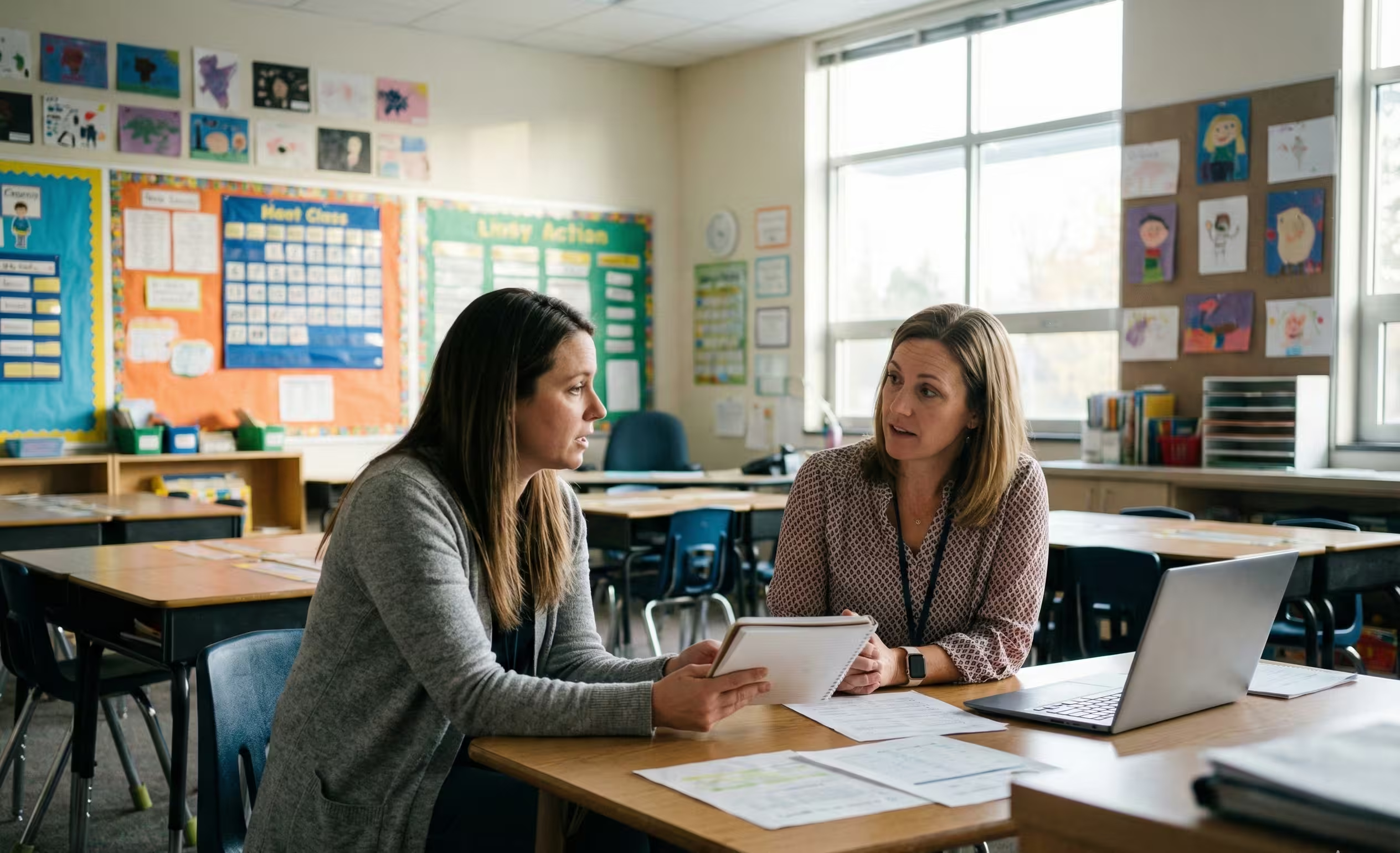
When the Teacher Says "He's Distracted": Decoding School Feedback
In the traditional classroom ecosystem, 'distraction' is often a mislabel applied to what is actually a valid, non-linear processing style. At Ziggyloo, we build our AI platforms on the premise that neurodiverse students aren't 'tuning out'—they are often regulating their sensory input to tune in. While our adaptive tools accommodate these behaviors automatically, bridging the understanding gap with human educators requires a specific vocabulary of advocacy.
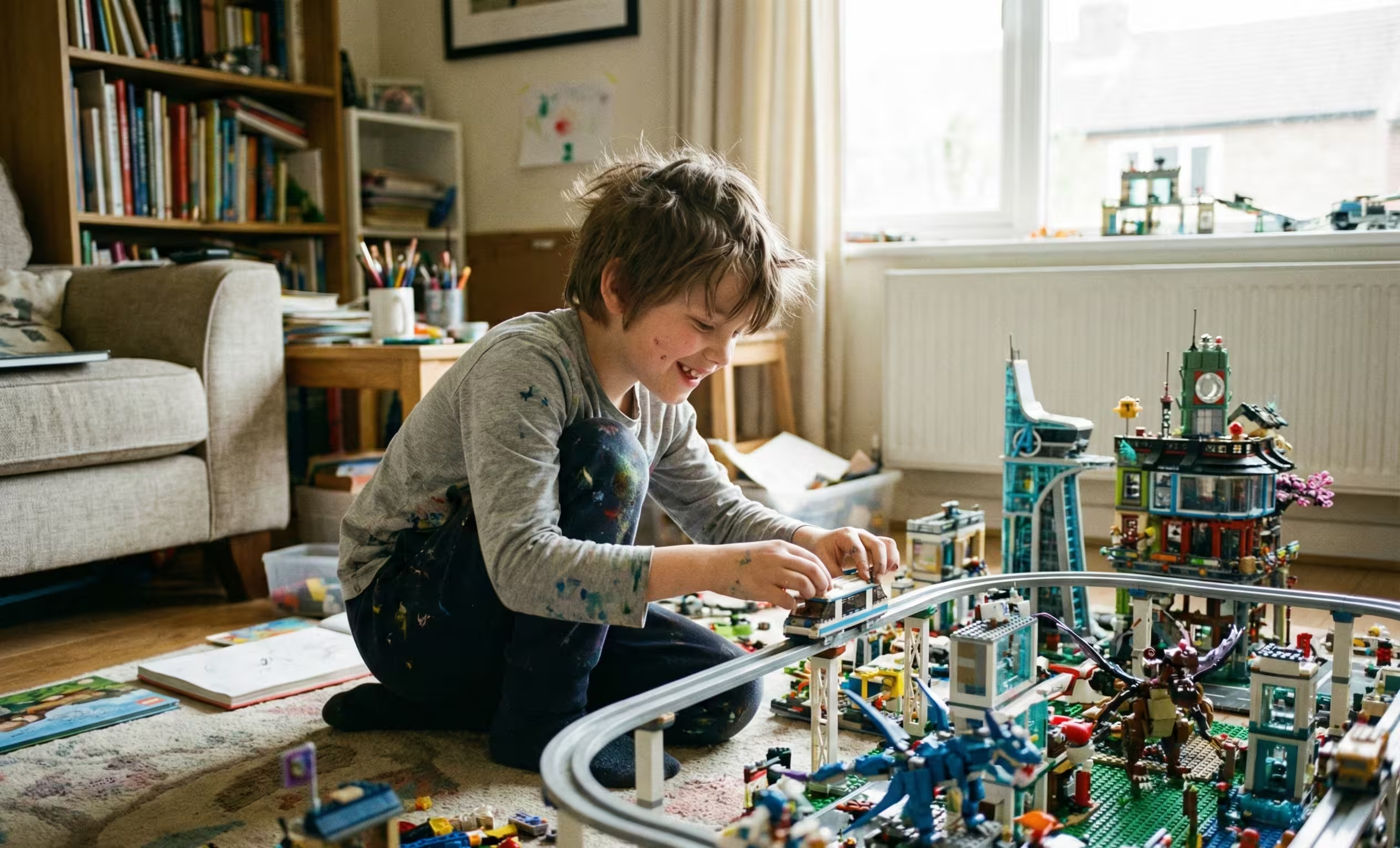
Dyslexia, ADHD, and the "Hidden" Strengths: Flipping the Script on Neurodiversity
The narrative surrounding neurodivergence—specifically diagnoses like Dyslexia and ADHD—often centers on remediation and deficit management. At Ziggyloo, our AI-driven philosophy flips this script by viewing these cognitive differences not as barriers, but as specialized processing styles. We design our educational tools to leverage 'hidden' strengths such as hyper-focus and pattern recognition, moving the focus from correcting weaknesses to optimizing potential.

The "Sidekick" Strategy: Why Tutoring Isn't a Punishment
For neurodiverse students, traditional tutoring often feels like a penalty for thinking differently, rather than a tool for success. At Ziggyloo, we challenge this narrative by redefining educational support not as remediation, but as strategic reinforcement. Our AI-driven platform acts as an adaptive 'sidekick,' leveraging your child's unique cognitive strengths to navigate academic challenges without the stigma of 'extra work'.
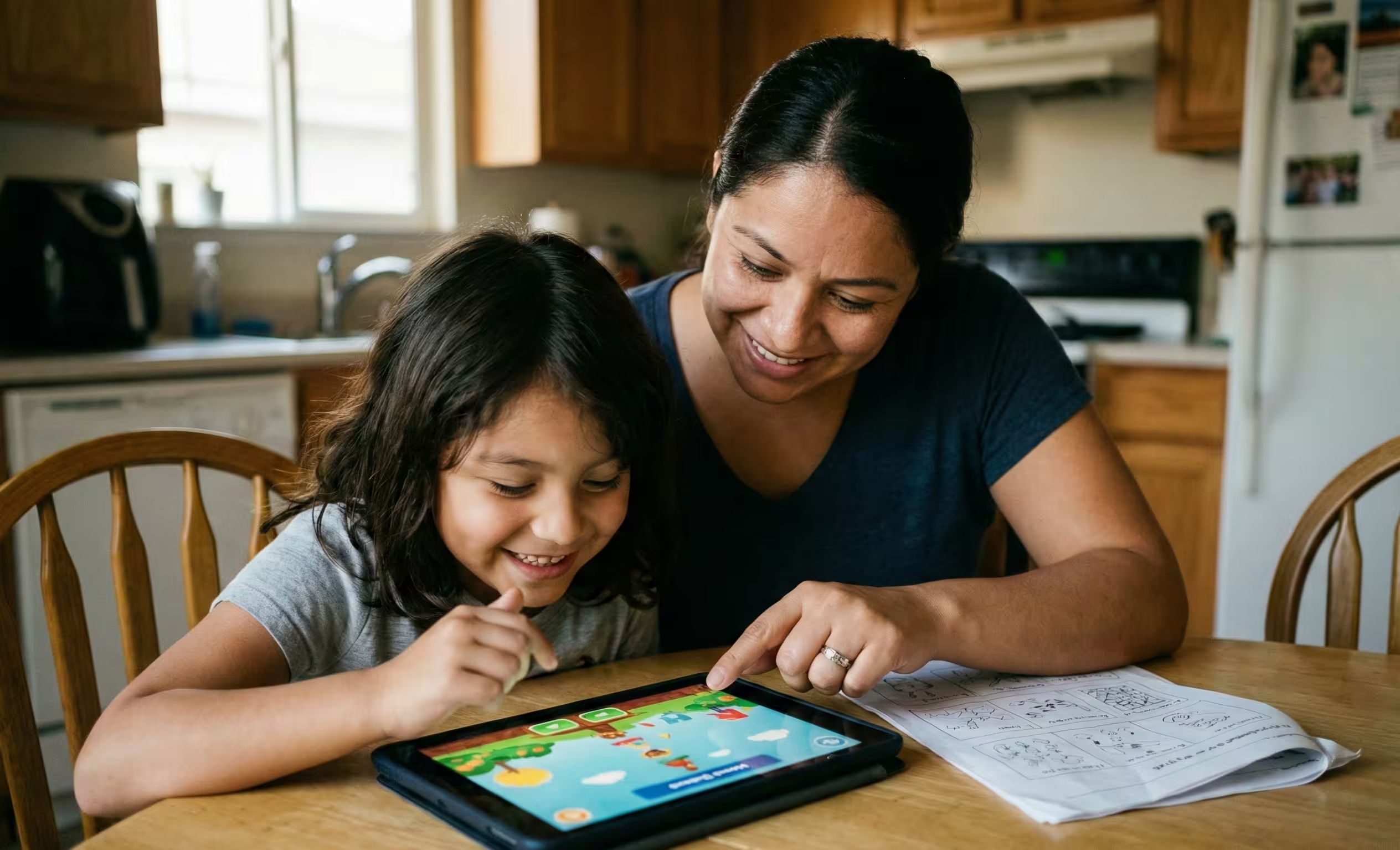
I Don't Get It! - Why Traditional Homework is a Square Peg
For neurodiverse students, the phrase 'I don't get it' is rarely an admission of inability; it is a signal that the delivery method does not match the processing style. At Ziggyloo, we believe that traditional homework often acts as a 'standardized filter' that unfairly penalizes unique thinkers. Our AI platform is designed to replace this rigid structure with adaptive learning pathways, but understanding why the traditional model fails is the first step in advocating for your child’s educational success.
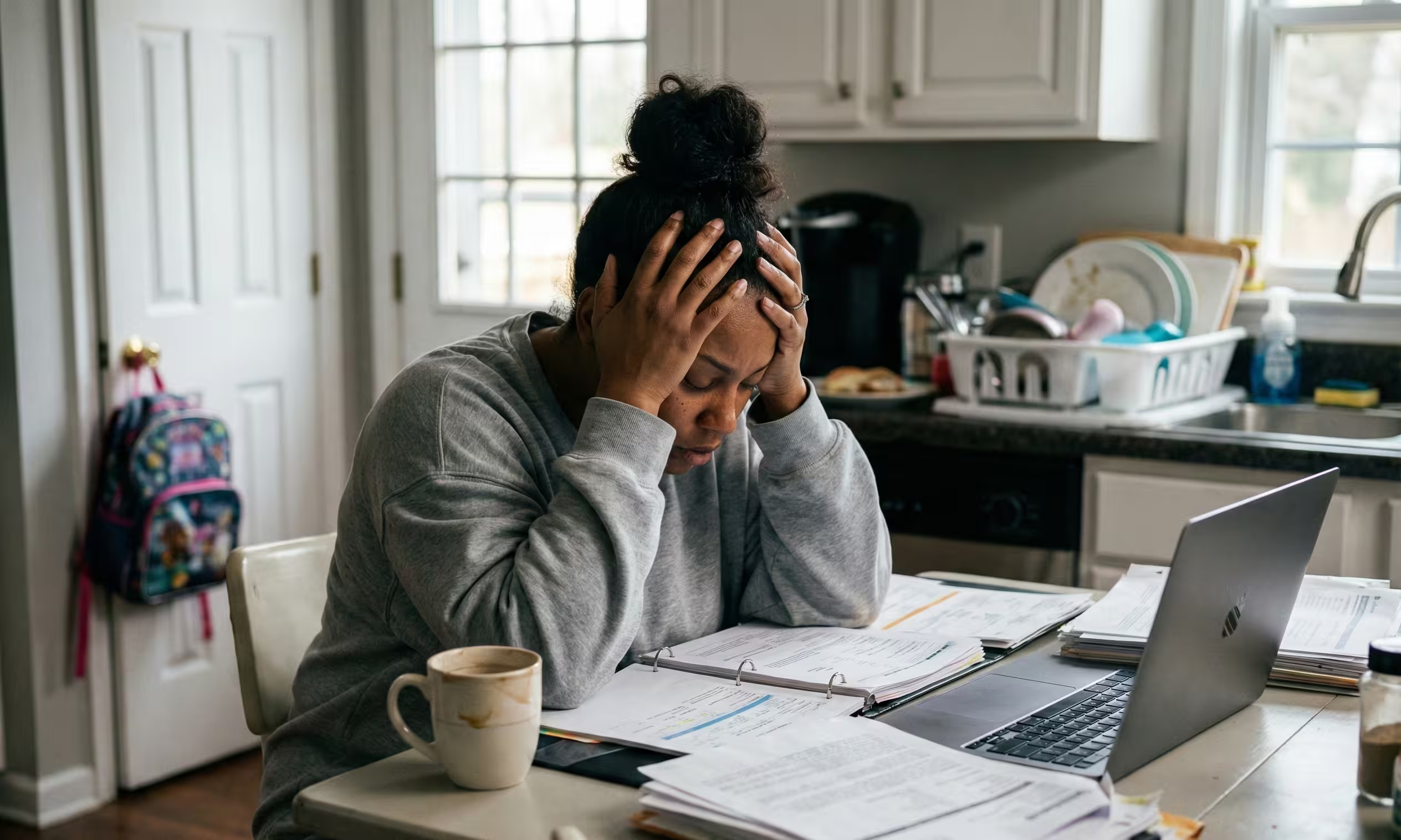
The IEP Meeting Hangover: A Survival Guide
The Individualized Education Program (IEP) is the legal framework that ensures your neurodiverse child receives the education they deserve, but the process of securing it is often an exhausting feat of advocacy. At Ziggyloo, we design our AI tutoring to work in tandem with these formal support systems, providing the consistent learning data you need to advocate effectively. However, we also recognize that the 'business' of managing your child's education comes with a heavy emotional toll that requires its own recovery strategy.

Homeschooling vs. Traditional School: Which Is Best for Your Child?
A balanced comparison of homeschooling and traditional schooling for neurodiverse learners.

Does my child need tutoring? - 10 Signs Your Child Could Benefit from Tutoring
10 signs your child could benefit from personalized tutoring and what steps to take next.
Never miss a story
One gentle email a week — learning strategies, community stories, and tools for neurodiverse families.